
Best Custom Badges for Euro Wagons: Audi Avant and VW Estate Tuning
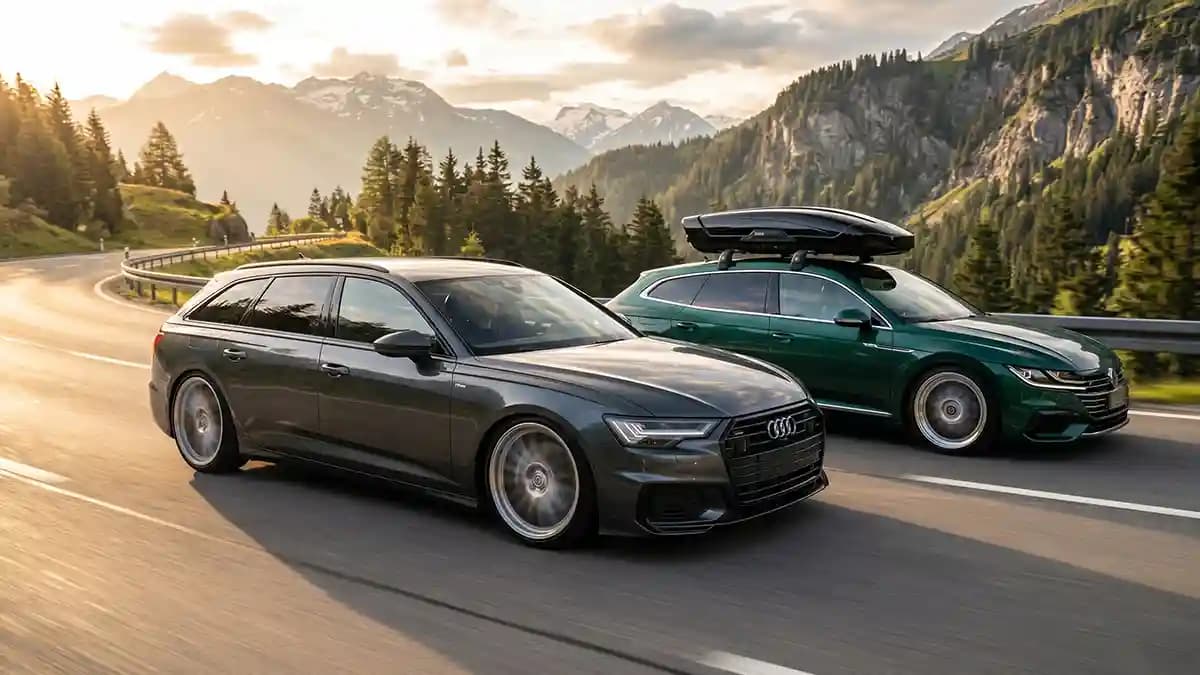
Custom badges for Euro wagons work best when they look like they belong to the whole build, not like you slapped a shiny coin on the wheel and hoped nobody would notice. I saw this last weekend on a gray Audi Avant with a roof box, silver rails, black wheels, and red calipers. The car had the stance right, the paint clean, the tire fitment mean, but the center caps looked like tired cereal tokens. That is the answer to the title right away, the best custom badges for Euro wagons are sized right, color matched, and tied into the wagon story.
Euro wagons are weird in the best way. They haul dogs, tools, kids, bikes, and a shocking amount of junk, then still look cooler than half the sports cars in the parking lot. Audi is still pushing the A6 Avant as a tech rich estate with front wheel or quattro options, MHEV plus on selected powertrains, and up to 204 PS in the A6 Avant 40 TDI quattro. The 2026 RS 6 Avant performance keeps the silly part alive too, with 621 HP, 627 lb ft of torque, and split folding rear seats because groceries need supercar drama now.
VW has the same long roof pull, just with a more honest face. The current Passat estate family in the UK includes Life, Elegance, and R Line trims across 7 speed and eHybrid 6 speed versions, so yes, the wagon thing is not dead, it is just wearing cleaner shoes now. If the car has this much shape and use built into it, the wheel badge cannot look like a lazy afterthought. That tiny circle has to earn its keep.
Why Euro wagons make badges matter more
A sedan can hide a boring center cap. A wagon cannot. That long side view gives your eye more time to judge every small part, like a nosy aunt at a wedding. The wheels sit under a long body, the roof box adds another line above it, and suddenly the center cap becomes the tiny dot that either ties it all together or ruins the mood.
Here is what I check first when I look at an Audi Avant or VW Estate build.
Wheel color, because silver, graphite, black, and bronze all ask for different badge styles.
Brake caliper color, because red, yellow, blue, and silver can guide the accent.
Roof hardware, because roof boxes and rails change the visual weight.
Body trim, because chrome, black optic, and gloss black do not speak the same language.
Badge size, because a perfect design in the wrong diameter is still wrong.
That last one hurts people. I have seen nice custom wagon wheels ruined by center caps that were 2 mm too small. From five meters away, you just feel something is off. Up close, it looks like the badge is hiding in a bucket.
Audi Avant tuning needs restraint
Audi Avant tuning is not about throwing every color at the car like a toddler with markers. The shape is clean, the body line is sharp, and the front end already has enough attitude. The badge should add depth, not noise. Think black, silver, graphite, brushed metal, small red RS accents, or a clean ABT style mark if the rest of the car supports it.
If you are working with an Audi long roof, start with the mood before you choose the badge.
Clean daily Avant, use silver, black, or factory style rings.
Black optic Avant, use gloss black with a soft silver edge.
RS style build, use red or dark red accents in a small dose.
Roof box setup, match the badge to box color or roof rail finish.
Aftermarket wheel setup, match the cap face to the wheel finish first.
I like Audi wheel emblems when the car needs a clean badge refresh without buying new caps. If the build leans more direct and factory style, the Audi Emblem Wheel Center Caps Limited Edition can fit that clean raised look. The trick is not picking the loudest badge. The trick is picking the one that makes people think the wheels came that way.
VW Estate badges need a bit more bite
VW Estate badges can be more playful than Audi badges. A Passat Variant, Golf Estate, or Golf R style wagon can take a bit of color if the rest of the build has the muscle for it. Red works when you already have GTI or R mood on the car. Blue works on clean R style builds, but only when it does not look like a random button from a toy robot.
The safe VW wagon badge path looks like this.
Keep the logo clear and centered.
Match red accents only when the car already has red details.
Use blue carefully on R style builds and dark paint.
Use black and silver when the car is low, clean, and simple.
Avoid tiny text around the edge, it turns into soup once the wheel is dirty.
The VW wheel emblems page is the place I would start for a badge refresh. The VW Emblem Wheel Center Caps Premium Quality is a good fit for the owner who wants the raised VW look without turning the wheel into a birthday cake. And yes, I have seen the birthday cake version. It had chrome, red, blue, and fake carbon.
Match the badge to the roof box
The roof box changes everything. People act like it is just storage, but visually it is a giant hat for your car. A gloss black box on a silver Avant pulls the eye upward. If your wheel badge ignores that, the build feels split in two.
Here is the simple roof box rule I use.
Gloss black box, use gloss black or black and silver badge details.
Matte black box, use matte style artwork with a soft gloss dome.
Silver rails, use silver edge details in the center cap.
Black rails, keep the badge darker and cleaner.
Color matched box, pull a small color cue into the badge and stop there.
That last part matters. You do not need the whole badge to match a green box or a blue box. A thin ring or small mark is enough. More than that and it starts looking like you let the roof box pick the outfit.
Match the badge to the brake calipers
Brake calipers are the loud friends of the wheel area. They sit behind the spokes and shout every time the car stops. If your calipers are red, yellow, blue, or green, the badge has to know that. If it does not, the wheel can look like three different projects fighting in a small room.
This is where I would keep it simple.
Red calipers, use red only as a small stripe, ring, or logo accent.
Yellow calipers, pair with black, graphite, or dark gray.
Blue calipers, use silver or black with a tiny blue cue.
Silver calipers, stay clean with chrome, graphite, or black.
Painted custom calipers, match one small part of the badge, not the whole face.
The badge is not trying to be the caliper. It is trying to nod at it from across the room. Like, I see you buddy, but I am not wearing your whole jacket. That is how a small detail stays sharp instead of getting silly.
The size check that saves the build
This is where most people mess up. They order by car model, then get mad when the badge does not fit the wheel. I get it. You drive an Audi Avant, so an Audi badge sounds right. But the wheel does not care what is on your trunk lid.
Measure the flat visible face of the center cap. Not the whole plastic cap. Not the lip. Not the curved edge that your sticker cannot sit on. Measure the flat circle where the badge will live, edge to edge, in millimeters.
Use this order.
Clean the center cap enough to see the real edge.
Use digital calipers if you have them.
Measure the flat badge area only.
Check the number twice because your first number is often a lie.
Pick exact size or 1 mm smaller for a clean edge.
That 1 mm smaller trick saves a lot of pain. It gives the badge a tiny bit of room so the edge does not hang over a curve. Overhang is how lifting starts. Lifting is how you end up pressing the same edge every morning like a worried parent checking a fever.
For aftermarket wheels, this step matters even more. BBS, Rotiform, Vossen, Japan Racing, OZ, and other wheel brands do not all use the same center cap face. Even one brand can use different cap designs across different wheel styles. The BBS center cap sticker sizing guide is a good reminder that wheel name, cap face, and rear clip layout can all be different things.
Finish choice for custom wagon wheels
Custom wagon wheels can handle several badge finishes, but not all of them belong on every car. A slammed black Passat Estate on bronze wheels does not need the same badge as a silver A6 Avant with roof rails and factory sport wheels. This sounds clear until you are staring at a shop page at midnight with 19 tabs open. Then suddenly every badge looks like the one.
Here is the finish cheat sheet.
Gloss black wheels, use silver, dark red, or gloss black with contrast.
Silver wheels, use factory style color, chrome, or clean black.
Bronze wheels, use black, cream, gold tone, or warm graphite.
Gunmetal wheels, use black, silver, red, or dark blue.
White wheels, use bold contrast and keep the design very simple.
The dome changes the finish too. A flat print can look good on a desk, then boring on a wheel. A clear raised dome adds depth, catches light, and makes the design feel more like a badge than a sticker. That is why wheel emblems make sense on wagon builds where the whole car is built around small details.
My install routine for long roof builds
I treat wagon badges like any other small detail that can make a car look expensive. Prep first. Placement second. Pressure third. If you rush the first step, the other two steps become a magic trick with no magic.
Use this install flow.
Wash the cap with mild soap and water.
Dry it fully with a clean cloth.
Wipe the flat badge area with isopropyl alcohol.
Let the surface flash dry.
Test the badge position before peeling the backing.
Line it up with the valve stem or a spoke.
Press from the center outward with steady pressure.
Keep it dry for at least 24 hours.
That is it. No prayer circle needed. If the cap is flat, clean, and dry, the job is simple. If the cap is oily, curved, dusty, and cold, you are setting yourself up for sadness with wheels.
The style formula I trust
A good wagon badge formula has three parts. Size, finish, and story. Size makes it fit. Finish makes it look right. Story makes it feel tied to the rest of the car.
For an Audi Avant with black wheels, silver rails, and a black roof box, I would pick a dark badge with a small silver cue. For an RS style wagon with red calipers, I would use a small red accent and keep the rest calm. For a VW Estate with bronze wheels and a roof box, I would go black, warm graphite, or cream instead of bright chrome.
The 3D gel badges for Volkswagen Golf GTI and R Series article covers this same point from the VW performance side. Match the car mood first. Then pick the badge. Do not let one tiny center cap bully the whole build.
Quick Q and A
Q: What are the best custom badges for Euro wagons?
The best custom badges for Euro wagons are measured to the exact flat face of the center cap and matched to the wheels, roof setup, and calipers. For Audi Avant and VW Estate builds, clean designs beat loud ones most of the time.
Q: Should Audi Avant tuning badges match the body color or wheel color?
Start with the wheel color first. The badge lives inside the wheel, so it has to make sense there before it makes sense with the paint.
Q: Can VW Estate badges use red or blue accents?
Yes, when the car already has red or blue details. Red works well for GTI style cues, and blue can fit R style builds, but keep the accent small.
Q: Do roof boxes matter when choosing wheel badges?
Yes. A roof box changes the visual balance of the car, so the badge should echo its color or finish in a small way.
Q: What size badge should I order for custom wagon wheels?
Measure the flat visible face of the center cap in millimeters. Do not order by car model alone, because aftermarket wheels often use different cap faces.
Q: Are domed badges better than flat stickers for wagon builds?
For most wheel center caps, yes. The raised dome adds depth, gloss, and a cleaner badge feel, which suits detailed Euro wagon builds well.
The payoff is simple. A Euro wagon already has the cool part baked in, because long roofs have that useful, weird, grown up style you cannot fake. When the center caps match the wheels, rails, roof box, and calipers, the car stops looking like a pile of parts and starts looking planned. Measure the cap, pick the finish, keep the design clean, and do not let a tiny badge make a great wagon look half done.