
Cleaning Domed Emblems: Why You Should Avoid Ammonia Based Sprays
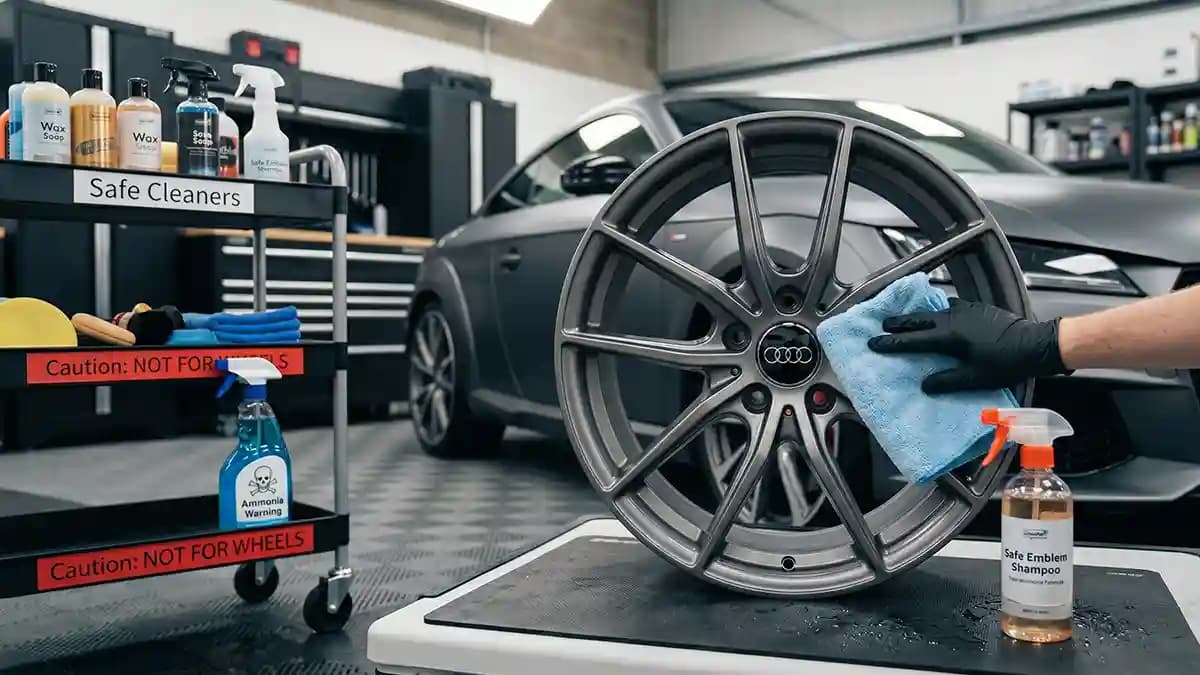
Cleaning domed emblems is simple: skip ammonia based sprays because they can dull the clear resin, stress the edge glue, and leave that sad cloudy look that makes a wheel seem old even after a fresh wash. I learned that beside a clean black wheel with one badge that looked like someone sneezed on it forever. The owner used a household glass cleaner, and the emblem answered with haze. That is the whole title in one greasy garage sentence: use mild soap, cool water, and microfiber, not harsh glass cleaner.
The bottle that starts the trouble
Last week I was cleaning a set of center caps on a daily driver that sees rain, brake dust, and the kind of parking lot grime that sticks like cheap gum. He handed me a blue glass spray and said, this stuff makes mirrors perfect. I looked at the bottle, then looked at the domed emblem, and my brain made the sad trombone noise.
The problem is not that every spray melts a dome on sight. That would be easy, like a villain wearing a name tag. The real problem is slower and more annoying. One harsh cleaner here, one hot wheel there, one rushed wipe with a dirty towel, and the clear dome starts losing the deep glassy look that made you buy it.
Current car care advice backs up the gentle route. Toyota tells drivers to use microfiber and avoid ammonia based cleaners or abrasive stuff on sensitive car screens, while Car and Driver says ammonia free glass cleaner is a must for auto glass because ammonia attacks tint. Your domed emblem is not window tint, but the lesson travels well: delicate clear surfaces do not need angry chemicals to get clean. They need patience, clean cloth, and not being scrubbed like a burnt pan.
Why ammonia free cleaning is not being picky
A good polyurethane dome is tough, but tough does not mean it wants to live under a chemical bath. Think of it like your phone screen. It survives your pocket, keys, and crumbs, then one bad cleaner makes it look like it was wiped with a sandwich. Same deal here, just with wheels.
Here is what ammonia based sprays can do wrong when you use them around domed emblems:
They can leave haze on clear resin when the surface gets hot or the spray dries too fast.
They can creep to the edge and mess with the bond where the dome needs full contact.
They can strip away any light wax or detail spray sitting around the cap.
They can make you scrub harder because fast drying glass cleaners streak on curved shiny parts.
They can fool you into thinking stronger means better, which is how wallets get hurt.
The sneaky part is the edge. The dome face gets all the love because it shines, but the edge is where the sticker lives or dies. That thin line catches water, soap, brake dust, and whatever cleaner you spray like a maniac. If the edge gets dry, lifted, or dirty, the rest of the badge can look fine while the problem starts under the rim like a tiny raccoon in a vent.
Solvent resistance facts in plain garage talk
Solvent resistance sounds like a lab coat phrase, but it just means this: some materials can handle some chemicals for some amount of time. That is not the same as saying they love every cleaner forever. PSI Urethanes says chemical resistance changes with the urethane formula, chemical strength, temperature, and contact time, and its guide rates ammonia and ammonium hydroxide as severe effect chemicals for urethane in that chart. That is enough for me to keep ammonia away from clear domes when mild soap already works.
This is where most people get tricked. They hear polyurethane and think bulletproof. Then they grab the harshest bottle in the cabinet and blast a tiny emblem like they are cleaning a crime scene. The dome survives road spray because it was made for outdoor abuse, not because it wants a weekly swim in mystery juice.
Use this quick test before you spray anything:
Would I use this on a glossy clear plastic screen without checking first?
Does the bottle say glass, bathroom, grease, oven, or disinfectant?
Does it smell strong enough to wake a sleeping dog?
Is the wheel hot from driving or sitting in the sun?
Do I actually need a chemical, or am I just being dramatic?
If you answered yes to any of the scary ones, put the bottle down. Nobody needs to be brave while cleaning a center cap. Bravery is for stuck lug nuts and asking the parts guy for help after you bought the wrong thing twice. Emblems reward boring choices, and boring choices usually look better after six months.
Clear resin care starts before the wipe
The best way to clean a dome is to stop treating it like the wheel barrel. The barrel gets the nasty brush, the strong cleaner, and all the grunting. The emblem gets the soft towel and the gentle touch. If you mix those jobs, you drag brake dust across clear resin and make tiny scratches that catch light like bad decisions.
My basic kit is boring, cheap, and works:
Clean microfiber towels, one wet and one dry.
Mild car shampoo mixed with cool water.
A soft detailing brush for the seam around the cap.
A spray bottle filled with plain water for rinsing.
Cotton swabs for tight gaps when grime sits in the edge.
Start with a cool wheel. Heat makes cleaner dry fast and turns a simple wipe into streak city. Rinse loose dirt first, because dry grit on a towel is just sandpaper wearing a cute outfit. Then use soap, water, and light pressure on the emblem face.
If the emblem is fresh, I treat it even softer. New adhesive needs time to settle, and even a strong bond does not love being poked, soaked, and blasted right away. The wheel detailing center caps guide makes the same point in a bigger wheel care setup. Clean the center, yes, but do not turn it into a wrestling match.
My safe cleaning routine for domed emblems
This is the routine I use when I want the dome to stay glossy and the edge to stay quiet. Quiet edges are good. Loud edges peel, catch dirt, and make you stare at your wheel in a grocery store lot like a man having a small life crisis. I have done that stare, and it is not a proud pose.
Park in shade and let the wheels cool.
Rinse the wheel face with low pressure water.
Mix mild car shampoo with clean water.
Dip a microfiber towel in the soap mix.
Wipe the dome face in light circles with almost no pressure.
Use a soft brush only around the cap seam.
Rinse with clean water so soap does not dry on the edge.
Pat dry with a fresh microfiber towel.
Check the edge for trapped water or grit.
Leave harsh shine sprays off the emblem face.
That last step matters. A lot of dressings and shine sprays look great for ten minutes, then attract dust like the wheel owes them rent. If the dome already has gloss, let it be glossy. You do not need to add five potions to a part whose whole job is to shine.
When I replace a tired badge, I use the same calm mindset. The custom wheel emblems page is where I send people when cleaning will not fix age, cracking, or a logo that has faded into sadness. Cleaning can remove dirt. It cannot bring back a dead print that has been cooked for years.
What to use when the emblem is really dirty
Normal dirt is easy. Brake dust mixed with old tire shine is less fun. That gray film laughs at weak wiping, and then you start pressing harder. Stop there, because hard pressure on clear resin is how little swirl marks show up.
Try this instead:
Lay a warm damp microfiber towel over the emblem for one minute.
Add mild soap to the towel, not straight cleaner to the badge.
Work the edge with a wet cotton swab.
Rinse, dry, and inspect under shade.
What not to use on clear resin care days
Some bottles should not come near a domed emblem unless you enjoy making small problems expensive. I keep a mental no pile on my shelf. It has saved me from doing dumb stuff when I am tired, which is when most garage sins happen. Nobody ruins a badge at 10 in the morning with coffee and good light, it happens at dusk when you say, good enough.
Avoid these on the dome face:
Ammonia based glass spray.
Bathroom cleaner.
Oven cleaner.
Undiluted degreaser.
Acid wheel cleaner.
Abrasive polish.
Magic sponge style pads.
Rough shop rags.
Petroleum based adhesive remover.
Tire shine overspray.
Household ammonia cleaners are not rare. CDC says many household products can contain ammonia, including window cleaners, and household ammonia cleaning products commonly sit around 5 to 10 percent. OSHA also warns that mixing bleach and ammonia can cause severe lung damage or death, so do not play chemist in the driveway. I like shiny wheels, not emergency vehicles.
When cleaning is not enough
Here is the truth nobody likes. Sometimes the emblem is not dirty. It is done. You can scrub a faded dome all weekend and it will still look tired because the damage sits in the clear layer or under the resin.
Signs that cleaning will not save it:
The dome looks yellow even after washing.
The clear top has tiny cracks near the edge.
The print under the dome has faded.
The edge lifts when you dry it.
The badge has cloudy spots that do not move.
That is when replacement makes more sense than another bottle of cleaner. A fresh dome on a clean cap can make the wheel look cared for again in five minutes. The what a domed resin sticker is guide breaks down the layers, which helps you see why damage under the clear top does not wipe away. Once the stack is aged out, you stop cleaning and start replacing.
If you are unsure, send a close photo before you buy. A straight shot of the wheel cap, one angle from the side, and a rough size gets the job moving. The contact page is useful when the cap is odd, curved, or no longer sold by the dealer. Guessing is fun until the new badge lands one millimeter too big and sits on a bevel like a sad little hat.
The quick care schedule I trust
You do not need a full detail every time the car sees dust. That is how people turn car care into homework and then quit. Keep it easy. Small, steady cleaning beats one giant panic wash after the wheels look like they were dipped in fireplace ash.
Use this rhythm:
After a normal wash, wipe the emblems with clean rinse water and dry them.
Once a month, use mild soap and a soft towel on the dome face.
After winter roads, rinse the cap edge well so salt does not sit there.
After tire dressing, check for overspray and wipe it off fast.
Before a show or meet, clean the center cap last with a fresh towel.
After any harsh wheel cleaner, rinse the emblem area longer than you think.
I like cleaning the emblem last because it keeps dirty wheel tools away from the clear face. It also gives you one final look at the center of the wheel. That little badge decides if the whole wheel looks finished. Tiny part, big ego, just like a chihuahua with chrome trim.
FAQ
Can I use Windex on domed emblems?
I do not use it on domed emblems. Even when a glass cleaner works on glass, the dome, edge, adhesive, and wheel heat make this a different job. Mild soap and water is safer.
What is the safest cleaner for polyurethane domes?
Use mild car shampoo and water with a clean microfiber towel. That handles normal dust, road film, and fingerprints without picking a fight with the clear resin.
Should I pressure wash domed wheel emblems?
Keep strong pressure away from the edge. Rinse gently, wash by hand, and dry the emblem instead of blasting it like it owes you money.
How do I know if the haze is dirt or damage?
Clean it once with mild soap, rinse it, and dry it with microfiber. If the cloudy look stays in the same place, the dome is likely dulled or aged. Dirt moves, damage stays.
My final take
Cleaning domed emblems is not about finding the strongest spray. It is about protecting the clear resin, the print under it, and the edge bond that keeps the whole badge looking factory clean. Ammonia based sprays are built for other jobs, and using them here is like wearing work boots to polish a watch. Wrong tool, wrong mood, wrong result.
Use mild soap, clean water, and soft towels. Keep harsh chemicals off the dome face, especially when the wheel is hot. If the emblem is too far gone, replace it instead of trying to scrub age backward. Do that and your center caps keep that deep glossy look, the kind that makes the wheel feel finished before anyone knows why.