
Marine Durability: Branding That Survives the Salty Sea
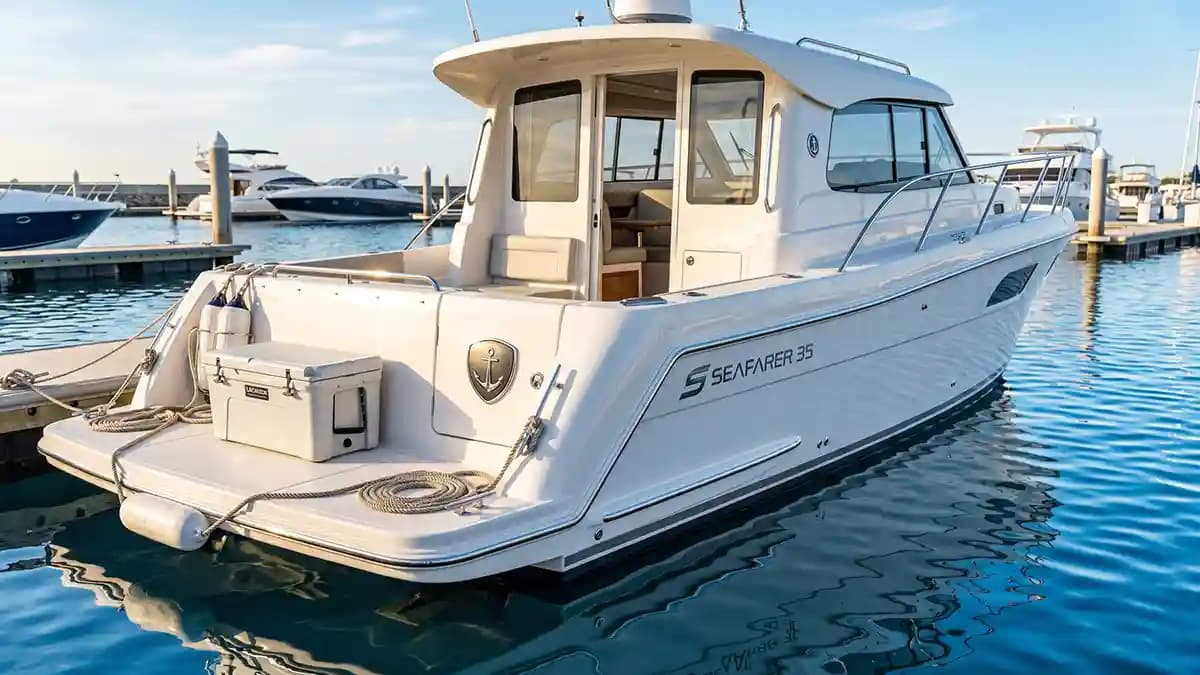
Marine durability is simple, boat branding survives the salty sea only when the sticker fights sun, salt, water, and lazy surface prep at the same time. I learned that while helping a friend clean up an old outboard cover with three faded stickers stacked on each other. The top one had curled like a potato chip, the middle one had turned gray, and the bottom one was hanging on with the grace of wet toast. That was the day I stopped calling marine stickers “just stickers.”
A boat is rude to anything you stick on it. It bakes it in sun, throws water at it, rubs it with rope, sprays it with salt, then sits all week like nothing happened. Marine and offshore labels are expected to face water, salt spray, UV, temperature swings, and abrasion, so proper marine labeling depends on strong films, protected print, and serious adhesives instead of weak paper labels. Sounds dramatic, but your boat does not care. It eats bad decals for lunch.
Why salt is the mean little villain
Fresh water is annoying. Saltwater is personal. It dries on the surface, leaves sharp little crystals, creeps into edges, and waits for the next splash to start the same mess again. If the sticker edge is weak, salt finds it.
That is why I treat marine branding different from car branding. A car wheel gets road salt in winter, sure, and that is already harsh. But a boat can live in salt air even when it is not moving. The enemy is not one big wave, it is a thousand small attacks that keep showing up like a neighbor who borrows tools and never brings them back.
Here is what salt and sun do when the decal is not built for marine use:
They fade the ink until the logo looks sunburned.
They creep under the edge and start lifting the sticker.
They dry into salt film that scratches when you wipe it.
They make cheap clear resin turn yellow or dull.
They expose every bad install choice you made in five minutes.
Salt spray testing exists for this reason. Labs use methods like ASTM B117 and ISO 9227 to place materials in controlled salt fog so coatings and materials can be compared under harsh conditions. Your dock is not a lab, thank God, but salt fog is still a known bully.
Boat branding has to work harder than it looks
A clean logo on a boat makes the whole thing feel cared for. I do not care if it is a fishing boat, a yacht tender, a kayak, or an outboard cowling. When the branding is sharp, the gear looks newer. When the branding is cracked and peeling, the whole setup starts to look tired.
That is why a simple custom dome can do more than people think. It gives the logo a raised glossy face, protects the print underneath, and makes the badge feel like part of the gear instead of a random flat sticker. If you have used domed stickers on wheel centers, the idea is the same.
I would use marine ready domed branding on these spots:
Outboard motor covers with flat badge areas.
Boat dashboards and dry cabin panels.
Tackle boxes, tool cases, and dock gear.
Trailer accessories that see spray and sun.
Coolers, storage tubs, and marine equipment.
Club plaques and event tags for boat groups.
The trick is not slapping a sticker on every wet thing you own. That is how boats start looking like a teenager decorated them with a sticker bomb pack. Pick a few spots that make sense. Put the good badge there. Let it breathe.
What the clear dome actually does
The clear dome is not just shiny candy on top. A real polyurethane dome acts like a protective lens over the print. It gives the label depth, gloss, and a smooth wipeable face. That clear layer is the little helmet your logo wears when the weather gets dumb.
The Impossible Stickers product pages describe the build as a premium vinyl base topped with a 3D domed resin coating, with scratch resistant, waterproof, tear resistant, and UV resistant features. That is the type of build I want near water. Not because the words sound nice. Because the layers do different jobs.
Think of it like this:
The vinyl base holds the print and shape.
The ink carries the logo, color, text, or design.
The adhesive grips the clean flat surface.
The dome protects the face from splash, sun, and scuffs.
The curved edge helps shed water instead of catching it.
Flat vinyl can work for many indoor jobs. On a boat, flat cheap vinyl often starts looking old fast if the surface gets heavy sun and salt. A dome gives you that smooth raised face that wipes cleaner and feels tougher under your thumb.
The surface matters more than your hope
This is where most people mess it up. They buy a good sticker, then press it onto a dirty, waxy, curved, wet surface and act shocked when it lifts. Hope is not an adhesive. Hope did not pass shop class.
Marine surfaces are tricky because they often have wax, polish, old glue, sunscreen, fish oil, salt film, or mystery slime from a place nobody wants to discuss. If you stick over that, the glue bonds to the dirt, not the boat. Then the first hot day comes. The sticker starts lifting like it has somewhere better to be.
Here is my basic prep list for boat branding:
Wash the area with mild soap and clean water.
Rinse away salt, grime, wax, and cleaner film.
Dry it fully, not “kind of dry.”
Wipe the flat area with isopropyl alcohol.
Let the alcohol flash off before applying.
Test place the sticker before peeling the backing.
Press from the center outward with firm even pressure.
Leave it alone while the adhesive builds strength.
If the spot is curved, rough, chalky, oily, or deeply textured, stop. A fresh dome will not fix a bad surface. It will only make the bad surface more expensive.
UV is the quiet killer
Salt gets all the blame because you can see it. UV is sneakier. It fades color, breaks down weak plastics, and turns cheap clear layers cloudy or yellow. By the time you notice it, the sticker looks like it spent a year sleeping in a toaster.
Good outdoor label systems treat UV as a core problem. 3M describes protective overlaminate label material as offering UV resistance to help prevent color fading, with resistance to abrasion, scuffs, and weathering. That is the same type of thinking I want in marine branding. Protect the print. Protect the color. Protect the surface.
For color choice, I keep boat decals clean and bold. Tiny details are cute on a design screen and sad on a wet dock. The sun does not care that your logo has twelve hair thin lines. Make the mark readable from a few steps away.
Good marine design choices:
Strong contrast between logo and background.
Simple shapes that stay clear under gloss.
Larger text with easy spacing.
Dark colors for light surfaces.
Light colors for dark panels.
No tiny text that needs a magnifying glass and emotional support.
This is also why I like the raised dome for boat branding. The lens effect can make colors look deeper and the edge feel finished. But it will not rescue a messy file.
Where I would put saltwater resistant stickers
I always start with the places that stay mostly flat and get seen often. The side of an outboard cover is a great spot if the panel is clean and not too curved. Boat dashboards work when the area is dry enough and away from controls that get heavy hand wear. Storage boxes and tool cases are often perfect because they are flat, useful, and easy to prep.
I would avoid soft inflatable areas, flexible fabric, rubber grips, raw wood, rough floor texture, and anything that bends hard during use. I would also avoid spots that get dragged across docks or slammed by rope all day. A sticker is tough, but it is not magic armor.
My favorite marine uses are simple:
A small brand mark on an outboard cover.
A club logo on a dry gear case.
A raised ID label on marine tools.
A charter company mark on storage tubs.
A boat name badge on a flat interior panel.
A service label on clean equipment.
A QR code style asset tag, only if sized well.
If the sticker must carry a code, test scan it before you order a full batch. Domes can add gloss, glare, and optical depth. That can look beautiful on a logo, but a tiny code under heavy glare can be fussy.
When flat vinyl is enough
I love domed stickers, but I am not going to pretend every job needs one. Flat vinyl can be better when the surface bends, when the graphic is huge, or when the decal needs to wrap across a curve. For big boat names on hull sides, cut vinyl or proper marine graphics are often the cleaner choice. Use the right tool, not the shiny tool.
Domed stickers shine when the decal is small to medium, the surface is flat, and the job needs a premium badge feel. Think logos, labels, center marks, product tags, and gear branding. Use nothing if the surface is dirty, curved, or falling apart. A good sticker on a bad surface is just a tiny disappointment with adhesive.
How to order boat branding without wasting money
The best order starts with photos and measurements. I want one close photo, one wider photo, and the exact size of the flat area. Not the whole panel.
When you send a custom boat branding order, include the surface type, the size, the use case, and whether the sticker will live outside full time. That saves messages. It also keeps you from ordering a badge that looks great in your hand and wrong on the boat. Been there. The badge was perfect. The spot was stupid.
Use this order checklist:
Measure width and height in millimeters.
Tell us if the surface is plastic, painted metal, glass, or gelcoat.
Send the logo file if you have one.
Send a photo of the planned placement.
Tell us if it faces direct sun.
Tell us if it gets regular salt spray.
Ask for a simple design if the badge is small.
Pick one size that fits cleanly inside the flat area.
If you are new to domed labels, read the Impossible Stickers blog before you order. It helps you understand why the clear top layer matters and why cheap resin can fail faster outside. It also makes you harder to trick by shiny bargain photos.
The small care routine that keeps them fresh
Once the badge is on, do not treat it like barnacles. Clean it with mild soap and water. Use a soft cloth. Rinse salt away instead of grinding it into the face like you are seasoning a steak.
Avoid harsh solvents, rough pads, and strong ammonia cleaners. You are cleaning a clear glossy dome, not scrubbing a grill grate. If the sticker is on an outboard or gear box, give it a quick rinse after salty use. Two minutes now beats peeling later.
My easy care routine:
Rinse salt off after use.
Wash with mild soap when the boat gets cleaned.
Dry with a soft towel if water spots bother you.
Do not pick at the edges.
Do not blast the edge with a pressure washer.
Do not rub dried salt across the dome.
Inspect edges during normal cleaning.
That is it. No sacred ritual. No special dance. Just clean the thing like you paid for it and want it to stay nice.
Quick Q and A
Q: Are domed stickers good for boat branding?
Yes, when the surface is flat, clean, and smooth. They work well for small logos, outboard badges, gear tags, and marine equipment branding where a raised glossy finish makes sense.
Q: Do saltwater resistant stickers survive full time outdoor use?
Good ones are built for sun, water, salt spray, and normal cleaning. Bad prep still ruins them, so the install matters just as much as the material.
Q: Can I put a domed sticker on a curved boat surface?
I would avoid deep curves. A gentle curve can work only with the right size and material, but flat surfaces are the safe bet for clean long term adhesion.
Q: What is the best size for marine logo badges?
Use the largest size that fits inside the flat area without touching curves or edges. If the badge sits too close to a bend, water and tension will start picking at it.
Q: Can I use domed decals on an outboard motor?
Yes, on a flat clean area of the cover. Avoid hot spots, rough textured plastic, cracked panels, and areas where hands or ropes rub all the time.
Q: How do I clean marine domed stickers?
Use mild soap, clean water, and a soft cloth. Rinse salt first so you do not drag dry crystals across the clear dome.
Final thought
Marine durability is not one feature. It is the whole setup, good print, strong vinyl, clear dome, right glue, clean surface, smart placement, and basic care. Miss one part and the sea finds it. Do it right and your boat branding keeps looking sharp while cheap stickers curl up and surrender.