
Sticker Storage: Long Term Care to Keep Spare Emblems Fresh for Years
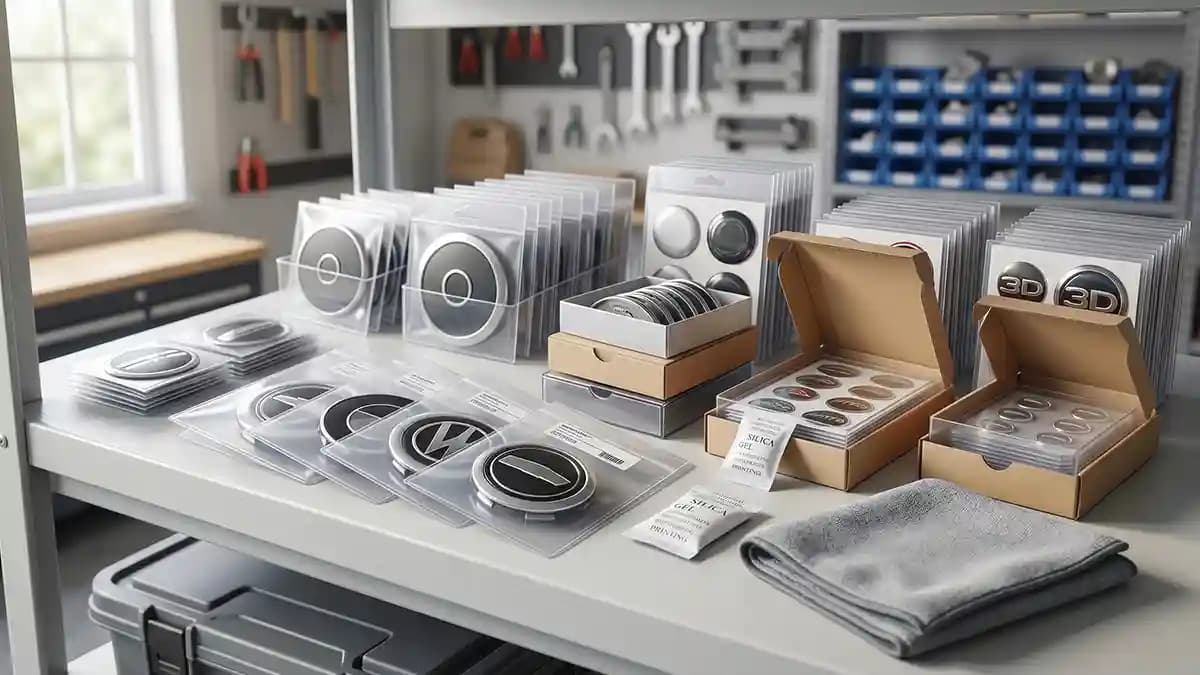
Sticker storage is simple, keep spare emblems flat, sealed, cool, dry, and out of sun, because the title Long Term Storage: How to Keep Spare Emblems Fresh for Years is really about saving the adhesive before it ever touches your car. I learned that while standing in my garage with a perfect spare badge in one hand and its sad twin in the other. Same batch, same size, same pretty dome, but one still felt fresh and the other curled like a gas station hot dog. The only real difference was where I kept them.
I used to toss spare wheel emblems in a drawer with zip ties, old valve caps, and one mystery bolt that has judged me for years. It felt harmless because the emblems were not installed yet. Then a customer asked why his spare sticker would not peel clean from the liner after sitting in a hot shed all summer. That was the moment the drawer of doom became a storage lesson with receipts.
Why spare emblems age before you use them
A spare emblem is not dead stock, it is a small stack of materials waiting to be used. You have the clear dome, the printed layer, the adhesive, and the backing liner. Pressure sensitive adhesive bonds with pressure, not water, solvent, or magic words, so the liner has one job, protect that sticky side until install day. Once heat, moisture, dust, and bad handling get involved, that neat little stack starts acting weird.
The ugly part is that storage damage looks small at first. A corner lifts a hair. The liner feels wavy. The dome has a dull spot from rubbing against something sharp. You tell yourself it is fine, then you install it and spend the next week staring at the edge like it owes you money.
Here is what usually hurts spare emblems in storage:
Heat that softens or ages the adhesive.
Cold that makes some materials stiff.
Damp air that warps liners.
Sunlight that ages adhesives and backing.
Dust that sneaks onto the edge.
Heavy stuff stacked on top of the dome.
Finger oil from checking the sticky side.
That last one is my favorite dumb mistake because I have done it. You peel a corner just to see if it still feels sticky. Congratulations, you have now tested it and made it worse at the same time. That is like licking a battery to see if it is charged, except somehow less useful.
The best temperature for sticker storage
The best sticker storage temperature is boring room temperature. American Flexible says 70°F is ideal for most adhesive materials, and Engineered Materials points to a controlled range around 60 to 80°F with 40 to 60% relative humidity for pressure sensitive adhesive tapes. That lines up with what I see in the garage, if you feel fine in the room, the spare emblem usually feels fine too. Keep them in the house, not in the trunk, attic, shed, or glove box that turns into a tiny oven.
Use this simple temperature plan:
Store spare emblems indoors.
Pick a closet, cabinet, desk drawer, or clean parts bin.
Keep them away from heaters and window sun.
Do not leave them in a parked car for weeks.
Let cold delivered stickers warm up inside before handling.
Keep storage boring, because boring keeps money in your pocket.
Humidity control matters more than people think
Humidity control sounds fancy until you see what damp air does to a liner. It can make paper backing curl, wrinkle, or grab the adhesive in odd spots. Engineered Materials warns that moisture can hurt paper liners and alter tack, while American Flexible recommends stable humidity with 50% relative humidity as a good target. That means the enemy is not one rainy day, it is weeks of damp storage with no air control.
I keep spare emblems in a sealed bag or small plastic box, not loose in a toolbox. Tossing them loose with metal sockets is a great way to make a glossy dome look like it went through a tiny bar fight. A small silica gel pack helps in damp rooms, as long as it is clean and not leaking dust. Keep that little packet in the corner, not stuck to the emblem.
Light is sneaky, especially through windows
Sunlight is not just warm light with good vibes. It ages materials, fades weak prints, and can make liners brittle over time. American Flexible flags UV exposure as a shelf life risk, especially when sunlight joins heat, and Engineered Materials says long light exposure can degrade polymers and liners. So do not store spare emblems on a windowsill, dash, or open garage shelf where afternoon sun hits them every day.
This part gets people because the emblem itself is built for outdoor use once installed. A quality dome can handle rain, wash spray, road grime, and sun after it bonds to the wheel cap. Unused stock is different because the adhesive and liner are still exposed at the cut edges. Before install, the backing liner is part of the system, so protect the whole thing.
My light rule is simple:
Keep spare emblems in the dark.
Use the original sleeve when you have it.
Add a clean envelope inside the storage box.
Avoid clear boxes on sunny shelves.
Mark the package so you do not keep opening it to check.
If you are buying extras with a fresh set from the wheel emblems and domed stickers shop, keep the extras in the same calm conditions from day one. Do not install four and throw the fifth into a cup holder until future you needs it. Future you will not be proud. Future you will make the disappointed garage face.
Preserving decals starts with a flat clean liner
The liner is not trash until the emblem is installed. It is the shield for the adhesive. If the liner bends hard, gets wet, or fills with grit, it can fight you when you peel it later. A good spare emblem should peel clean, lay flat, and feel ready, not like it spent three years under a floor mat.
Store emblems like this:
Keep them on the original backing liner.
Store them face up or stacked with smooth paper between layers.
Avoid tight rubber bands.
Do not fold the sheet.
Do not trim the liner close to the dome.
Write size notes on the sleeve, not the emblem.
I write the size and car on the outside of the bag. Something like BMW 56 mm wheel centers or Rover spare front cap. That saves me from holding a badge under bad garage light and guessing like a sleepy wizard. Guessing is how you end up putting a 58 mm emblem on a 56 mm cap and pretending the lip is not there.
What to do when a new set arrives
Fresh emblems deserve a tiny check before they go into storage. Not a drama check. Just a calm look so you know what you have. Impossible Stickers product pages list common domed emblem builds as premium vinyl with a 3D resin coating, wide size options, and pressure sensitive acrylic adhesive backing, so the storage goal is to protect that finished stack until install day.
Use this arrival routine:
Open the package on a clean table.
Check that the domes are flat on the liner.
Confirm the size before the bag gets lost.
Keep the protective liner on.
Put spares back into a sleeve or zip bag.
Add the order note or size note.
Store them flat in a dark box.
Use the oldest good spare first
If you order spare emblems often, use the oldest good set first. This is the first in, first out habit, and yes, it sounds like a grocery store rule because it basically is. Fresh stock stays fresh longer when you do not keep ignoring the older set at the bottom of the box. 3M storage guidance for some pressure sensitive cover tape also points to original packaging, indoor climate control, protection from sunlight, and first in, first out use.
Here is the low tech method:
Write the month and year on the storage sleeve.
Put the newest set behind the older set.
Check old stock before ordering more.
Use stored spares on clean flat caps only.
Retire any emblem with dirt under the liner.
Do not save junk just because it feels wasteful.
Saving bad spare parts is not smart. It is garage hoarding with better lighting. If the adhesive is dusty, the liner is torn, or the dome is dented, you are not preserving value. You are preserving a future headache in a tiny bag.
How to inspect old spare emblems before install
Before you install an old spare, do a quick inspection. Not with panic. With light, clean hands, and a little patience. The sticker handling guide gives a good reminder here, oils, wax haze, and fingerprints can ruin a bond before the emblem gets a fair shot.
Check these things before peeling:
Is the dome still clear and smooth.
Is the backing liner flat.
Are the edges sealed and clean.
Is there dust near the adhesive edge.
Does the emblem still match the cap size.
Did the part sit in heat, damp air, or sunlight.
If the answer feels ugly, replace it. That is cheaper than installing a weak spare and then removing it after it lifts. I know everyone wants to save the one spare in the drawer. But a bad spare is not a spare, it is a prank from your past self.
Long term adhesive care means warm it before install
Storage wants calm. Install wants the right surface temperature and pressure. Those are different jobs. The heat gun adhesive guide explains that heat can help adhesive flow into a surface, but it does not replace cleaning.
For old spare emblems, I do this:
Bring the emblem indoors first.
Let it sit at room temperature.
Clean the cap with wash, dry towel, then IPA.
Dry fit with the liner still on.
Peel once you are sure.
Press from the center outward.
Leave it alone after install.
Do not heat the storage box every month to keep the glue alive. That is not care, that is weird sticker sauna behavior. Heat is for a cold install surface, not for long term storage. The best stored emblem is the one you barely messed with.
When spare emblems are worth keeping
Some spare emblems are worth keeping for years because the car is rare, the cap size is odd, or the finish is hard to match. Older wheels, discontinued caps, and custom club badges all fall into that camp. If you have a set of MOMO domed wheel emblems or Rover domed wheel center cap emblems in a hard to find size, storing spares right makes real sense. The part you protect today can save you from hunting for a match later.
Keep spares when:
The size is uncommon.
The design was custom made.
You have aftermarket wheels with odd cap faces.
The finish matches a full set already on the car.
The car sees winter or harsh sun.
You hate buying the same thing twice.
Do not keep spares forever just because they exist. Use common sense. If you can buy the same size and finish any time, one spare set is plenty. If the design is rare, label it well and store it like it matters.
FAQ
How long can spare emblems last in storage?
A well stored spare emblem can stay useful for years, but adhesive stock is still best used sooner rather than treated like a family heirloom. Acrylic pressure sensitive adhesives are known for strong storage stability compared with many other adhesive types, but heat, humidity, light, and bad handling still shorten useful life.
Should I store spare emblems in the fridge?
No, use a cool indoor room instead. A fridge adds moisture risk and temperature shock when you take the emblem out. A closet is less dramatic and far better for normal sticker storage.
What humidity is best for spare decals?
Aim for stable indoor humidity around the middle range, close to 50% when you can. The main thing is avoiding damp storage that warps liners or lets moisture sit near the adhesive edge. A clean sealed box with a small silica gel pack is a cheap win.
Should I peel the backing to check the adhesive?
No, leave the backing alone until install day. Peeling exposes the adhesive to dust, finger oil, and edge damage. If you need to inspect it, check the liner, edge, and dome without lifting the adhesive.
What is the fastest way to ruin spare emblems?
Leave them in a hot car, sunny shed, or messy toolbox. Heat, light, dust, and pressure from loose parts are the four little gremlins of bad sticker storage. They do not look scary until your fresh spare lifts at the edge.
Final garage rule
Spare emblems stay fresh when you stop treating them like scraps. Keep them flat, sealed, cool, dry, dark, labeled, and clean. That is the whole trick, no secret sauce, no fancy cabinet, no tiny sticker ceremony. Do that and the spare you grab next year still feels like a spare, not a sad little circle that retired before it worked.