
Cherry Blossom Car Sticker and Geisha Art Elevating JDM Aesthetics with 3D Resin
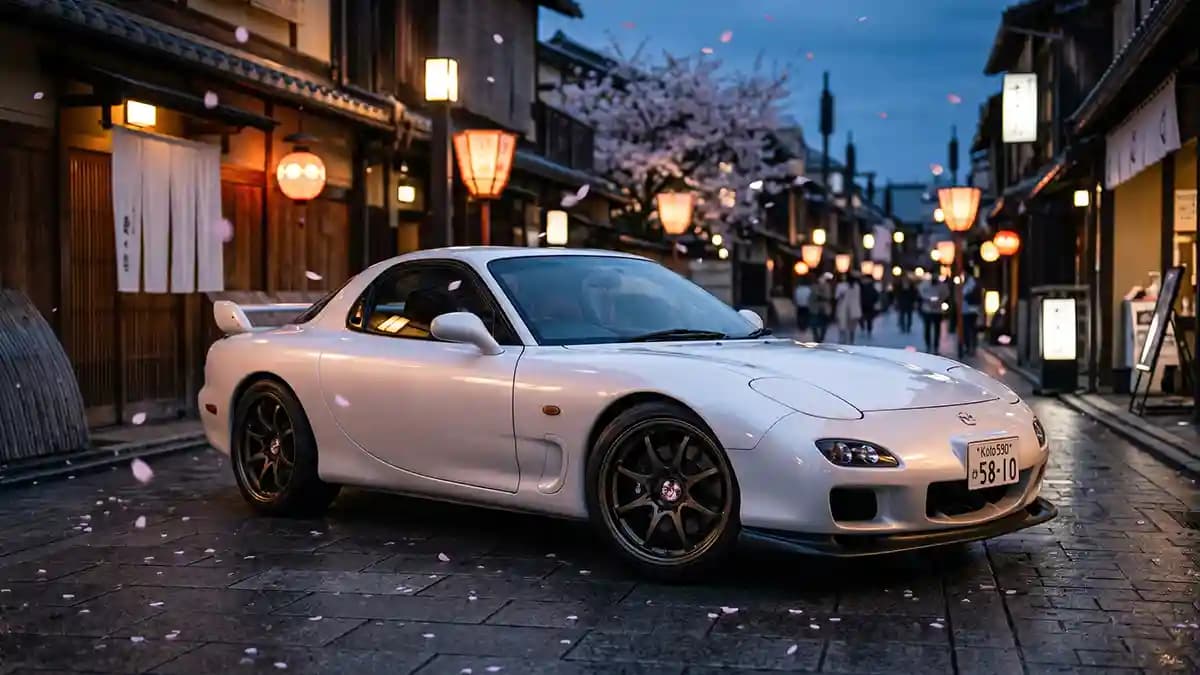
A cherry blossom car sticker with geisha art elevates JDM aesthetics only when the design feels planned, measured, and clean under 3D resin, not like a sticker box sneezed on your wheel caps. I learned that while standing beside a white coupe with nice wheels, good stance, and a pink flower graphic that looked like it had been placed by a nervous raccoon. The idea was good. The fit was not. That is the whole title right there, Japanese art can look stunning on a car, but only when the badge respects the design, the surface, and the size.
Cherry blossoms, or sakura, are tied to renewal, short beauty, and the passing of time in Japanese culture. That is why the flower works so well on JDM builds when it is not thrown everywhere like confetti at a toddler party. Geisha art adds another layer, but it needs care because geisha are tied to traditional arts, music, dance, and trained performance, not just a random pretty face for a decal. The art can be bold, but the thinking behind it needs to be calm.
Why cherry blossom art works on JDM wheel caps
The reason a cherry blossom car sticker works is simple. It gives contrast without needing to shout. A wheel is hard, round, dirty, and hot. A blossom is soft and short lived, so that small detail can make the whole wheel feel more thought out.
Most people mess this up because they treat Japanese inspired design like a shopping basket. They grab blossoms, kanji, a rising sun, a geisha face, a wave, a koi fish, and maybe one angry cat because the internet said yes. Then the car looks confused. Like it left the house wearing every jacket it owns.
I use this filter before I design or install anything.
Pick one main idea.
Use one main color family.
Keep the wheel cap design simple enough to read from two steps away.
Save fine detail for larger flat areas.
Use kanji only when the meaning is checked.
Let the car color decide how loud the badge can be.
Measure the flat face before picking the size.
That last point is boring. It is also where money goes to die. If the cap face is 56 mm and you order 58 mm because your cousin said all caps are close enough, congratulations, you just bought four tiny pancakes that do not sit flat. I have seen people blame the sticker, the glue, the moon, and sometimes their postman.
Geisha art needs taste or it gets weird fast
Geisha art can look rich on a JDM art badge, but it also turns tacky at full speed. The trick is not to cram a whole poster into a 60 mm circle. You are not painting the side of a tour bus. You are making a small, sharp emblem that sits in the center of a wheel.
When I use geisha inspired art, I keep the face simple and the mood calm. A clean profile, a hint of hair shape, a small fan, a soft red lip, or a patterned kimono cue can work. Tiny eyes, tiny text, and too many lines turn into soup under resin. Nobody wants soup wheels.
Here is the safe way to think about it.
Use geisha art as a design cue, not a costume.
Avoid cheap cartoon faces if the car has a clean build.
Use one blossom branch or one fan shape, not every symbol at once.
Leave space around the main figure so the dome can catch light.
Keep the final print test at the real cap size.
Geisha themed wheel centers work best on cars with calmer color plans. White, silver, black, dark blue, and gray give the art room to breathe. Loud wheels need a simpler badge, or the whole thing starts looking like a vending machine had a bad day.
Why 3D resin changes the whole feel
Flat vinyl can look fine on glass. On wheel centers, I prefer 3D resin because the cap is already a small focal point. The clear dome adds shine, depth, and a lens like feel that makes color look richer. Impossible Stickers describes its domed stickers as high resolution prints with precision cutting and a clear resin dome made for depth, gloss, and long lasting wear.
That matters more with cherry blossoms than with bold logos. A simple black logo can survive being flat. A soft petal gradient needs help. The dome lets light roll over the surface, so pale pink does not vanish on a sunny wheel face.
The dome also protects the print from normal road life, which matters on wheel centers, key fobs, small interior badges, club emblems, and older aftermarket caps. Wheels see sun, water, soap, heat, brake dust, and people with pressure washers who stand way too close because they enjoy danger. A good dome will not save a bad install. But it gives a clean install a real chance.
If you want to compare small cap styles before you design, start with wheel emblems and look at what works at small sizes. Clean shapes win. Strong contrast wins. Tiny clever bits usually lose unless the print and dome are made very well.
Kanji wheel cap rules so you do not look silly
A kanji wheel cap can look hard, clean, and very JDM. It can also look like you copied a restaurant menu with confidence. That is why I always tell people to check the meaning before printing. If you cannot explain what it says, do not put it on the car.
Kanji works because the shape itself has power. The strokes can feel sharp on a dark wheel. The problem is size. A 60 mm wheel cap is not a billboard, and resin makes tiny lines look thicker once light hits the dome.
Use this rule set.
Choose one character or a very short phrase.
Use high contrast, black on white, white on black, or red on dark gray.
Avoid thin brush strokes on very small caps.
Do not stack kanji over a geisha face.
Do not place kanji across busy blossom art.
Test the design at the real millimeter size.
Ask someone who reads Japanese if the phrase matters.
That last one saves embarrassment. I once saw a guy proudly explain his sticker meant street spirit. It did not. It was closer to spicy soup. He laughed, but his wheels did not.
For a deeper JDM design mood, the JDM Style Guide pairs well with this post because it covers kanji, night culture cues, and why random graphics make clean cars look cheap. If your art leans toward anime and mountain run energy, the Initial D car sticker guide is the better next read.
Picking colors that do not fight the car
Color decides if your custom JDM aesthetics look calm or cooked. Pink blossoms are not the issue. Bad pairing is the issue. Soft pink on white wheels can look clean. Soft pink on red wheels can look like two paints are arguing in public.
I start with the car, not the sticker. Body color first. Wheel color second. Brake calipers third. Interior accent last. If the car already has red seats, red calipers, or red tow hooks, you can use that red in the geisha fan or blossom center.
My safe color plans look like this.
White car, silver wheels, pale pink blossoms, black fine lines.
Black car, gloss black wheels, dark gray badge, soft pink petal hit.
Silver car, bronze wheels, cream background, red fan detail.
Blue car, gunmetal wheels, white blossom line art, tiny red accent.
Red car, black wheels, white geisha profile, almost no extra pink.
The easy mistake is matching the sticker to itself instead of the car. A beautiful badge can still be wrong. Nice sticker. Wrong build.
Sizing the badge so it does not look drunk
The fastest way to ruin a cherry blossom car sticker is to guess the size. Wheel caps punish guessing. They sit in the middle of the wheel like a judge with no hobbies. If the circle is off, your eye finds it at once.
I measure the visible flat face, not the whole cap. The outer lip does not count. The curved edge does not count. The shiny bevel that looks tempting also does not count, because adhesive does not bond well when half the sticker is hanging over a curve.
Use this quick routine.
Clean one cap so dirt does not hide the edge.
Find the flat circle where the sticker will sit.
Measure that flat area in millimeters.
Check the same cap twice.
If the cap curves at the edge, choose 1 mm smaller.
Test the paper mockup before ordering.
This is also why custom sizing matters. JDM builds often use old wheels, mixed caps, repainted centers, aftermarket hardware, and parts that have lived three lives already. A car model alone does not tell the whole story. A 1 mm border can make the badge look placed on purpose.
If you want a ready product mood for Japanese performance wheels, Advan 3D domed center cap emblems are useful for studying clean JDM wheel branding. For Toyota builds with a tougher TRD mood, Toyota TRD domed center cap emblems show how bold marks stay readable on small caps.
Where the art should go on the car
Wheel centers are my first choice for this style because they are small and clean. A sakura badge on all four centers can change the mood without turning the car into a rolling mural. That matters if you still drive the car every day. You want the detail to age well, not make you explain yourself at every fuel stop.
The second best place is the key fob. Small domed art on a key fob feels personal. You see it every day, and nobody has to approve it but you. It is the safest place for more playful geisha or blossom art because it is not fighting the whole car.
Here is my placement order.
Wheel center caps for the main theme.
Key fob for a small matching detail.
Interior trim badge for a quiet repeat.
Rear quarter glass for larger flat vinyl.
Body panels only when the design has enough space.
Do not start with the biggest decal first. Start with the smallest part that has the most control. Wheel centers teach you what works. If the art looks good there, you can build outward. If it fails there, the car just saved you from buying a huge side graphic.
Installation decides if the art survives
I do not care how pretty the geisha art is. Dirt beats art. Wax beats art. Cold plastic beats art. If you slap a domed badge onto a greasy cap, that thing will lift faster than my mood when someone says they measured with a phone app.
The install is plain, and plain works.
Wash the cap with soap and water.
Dry it fully.
Wipe the flat face with isopropyl alcohol.
Let the surface dry again.
Test the badge without peeling.
Place from one edge and roll it down slowly.
Press from the center outward.
Hold firm pressure around the edge.
Do not wash the car right after. Give the adhesive time to bond. Also do not blast the edge with a pressure washer like you are trying to remove paint from a ship. Hand wash around the caps at first, and be kind to the edge.
The clean setup I would build
If I were building this today, I would start with four wheel center caps. The design would use one black kanji mark, one small cherry blossom branch, and a soft geisha fan cue instead of a full face. I would keep the background dark if the wheels were bright, and light if the wheels were dark. Simple on paper. Great on the car.
Then I would add one matching key fob dome. That little repeat makes the car feel planned. It is not loud, but you notice it when you grab the keys. Tiny detail, big smile. I am a sucker for that.
The real trick is restraint. A good cherry blossom car sticker does not need ten symbols to prove it is JDM. A clean JDM art badge uses space, meaning, color, and size like tools. The 3D resin does the last bit of work by giving the art shine and depth. That is how Japanese inspired wheel caps look like part of the build, not a souvenir from a gift shop.
Quick Q and A
Q: Are cherry blossom car stickers good for wheel center caps?
Yes, if the design is simple and the size is exact. Cherry blossom art works well on wheel centers because the soft shape gives contrast against metal and tire rubber. Keep the detail readable and avoid crowding the cap.
Q: Can I mix geisha art and kanji on one wheel cap?
Yes, but keep one of them as the main focus. A full geisha portrait plus large kanji plus blossoms usually gets messy. I would use a geisha cue with one small kanji mark, or kanji with one small blossom accent.
Q: What finish works best for JDM art badges?
Gloss 3D resin works best for wheel centers because it adds depth and catches light. Matte can look good on glass or body decals, but the wheel cap usually needs that raised clear finish to feel like a real emblem.
Q: What size should I order for custom JDM wheel caps?
Measure the visible flat circle in millimeters. Do not measure the whole cap or the outer lip. If the edge curves down, choose the exact flat size or 1 mm smaller.
Q: Is geisha car art respectful?
It can be, when it treats the theme as art and not a cheap costume. Keep the design clean, avoid lazy stereotypes, and focus on graceful details like fans, hair shape, fabric patterns, and color mood.