
Epoxy vs. Polyurethane: The Science of Why Cheap Stickers Fail
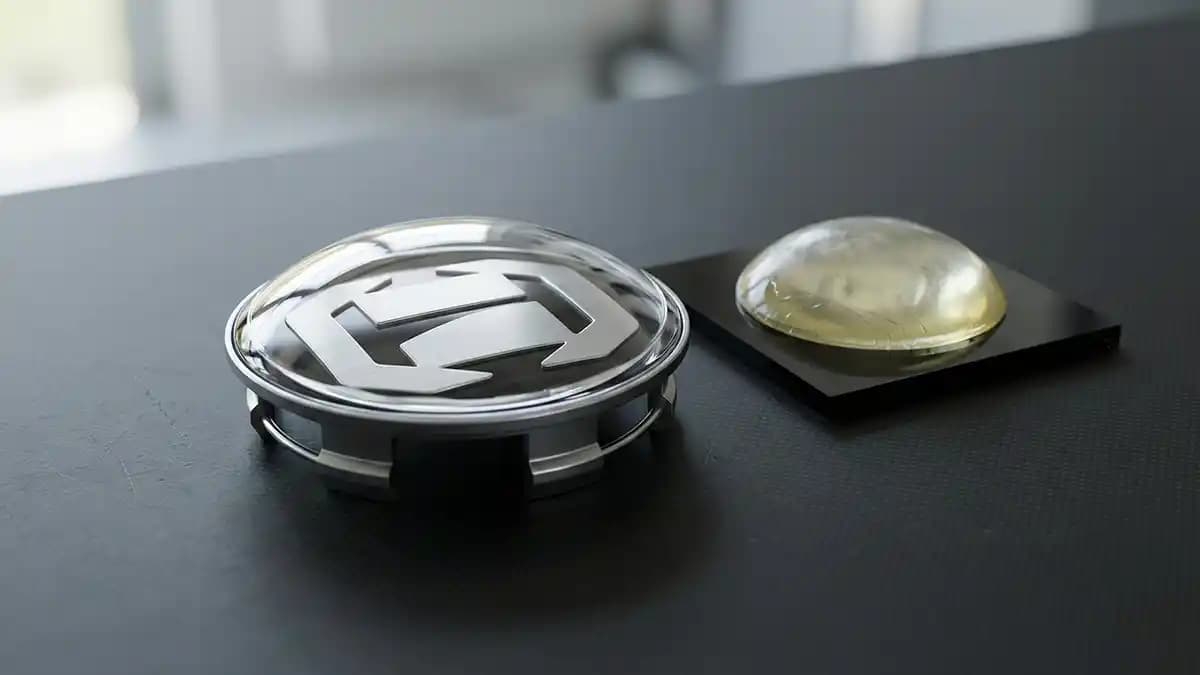
Epoxy vs polyurethane is simple, epoxy domes can look great for a short time, then they yellow, shrink, and crack, while a good polyurethane dome stays clear and flexible outside. I learned this the dumb way, standing in a parking lot with a buddy who had brand new wheels and one sad center cap that looked like old tea. He swore it was “the same thing” because it was shiny in the listing photos. In real life it was already going amber and the edge was lifting like a bad sunburn.
I popped the cap off, held it up to the light, and you could see the dome was fighting itself. The surface felt hard, almost glassy, but not in a good way. When I pressed the edge with my thumb it made a tiny crackle sound, like stepping on a potato chip. That is when I knew what it was, an epoxy style dome pretending to be a proper outdoor badge.
Here is the part most people miss, “domed” is not one material, it is a whole family of resins and cure methods. In doming, you dispense a clear resin over a printed sticker, the liquid flows and stops at the cut edge because of surface tension, then it cures into a raised lens. That lens is the thing you touch, the thing that takes scratches, and the thing that either stays clear or turns ugly. If you pick the wrong resin, the print can be perfect and the badge still looks cheap six months later.
I get emails that sound like this: “The sticker looked fine, then it got yellow, then it curled.” That is not bad luck. That is chemistry plus sun plus heat doing what they always do. Many doming guides and label manufacturers spell it out, epoxy doming is cheaper but tends to yellow over time, while polyurethane is used for better outdoor resistance.
What epoxy does well, and why it still fails on cars
Epoxy is not evil, it is just the wrong tool for a lot of outdoor sticker jobs. Epoxy domes cure hard, and that hardness can feel “premium” when you tap it. The problem is that wheels live a rough life, heat cycles, winter salt, brake dust, and sun all day. A hard dome that hates UV and hates flex will eventually act like a brittle shell.
Yellowing is the big tell, and it is not you being picky. Multiple resin and coating sources explain that epoxy can amber or yellow with UV exposure over time, and you see it even when the badge is not sitting in direct noon sun every day. That yellow tint kills whites first, then it makes silver look dirty, then it makes every color feel dull. If your badge is supposed to look like factory, amber is a deal breaker.
Now add shrink. A lot of cheap domes shrink as they cure and as they age, and shrink pulls on the edge like a tight belt. When the edge lifts, water and grit get under it, then the adhesive gets stressed, then the whole thing peels. Some industry comparisons call out epoxy shrinkage as a cause of edge curl and lifting, and that matches what I see when I peel failed badges off wheels.
Cracking is the final insult. A hard dome does not like impact, and wheels get hit with gravel, curbs, and the occasional brush with a pressure washer wand. Once you get a crack at the edge, it spreads, and now the dome looks like a broken phone screen. You can still drive the car, but every time you walk up to it, your eyes go right to the damage.
If you want the fast cheat for spotting epoxy issues, look for these failure patterns:
Yellow tint that starts at the thickest part of the dome.
A hard “plastic” feel that does not give at all when you press the edge.
Fine cracks at the edge, like tiny spider lines.
A dome that looks slightly shrunken away from the cut line.
Why polyurethane behaves different
Polyurethane domes are popular in outdoor labels for a reason, they stay flexible enough to handle real life. When you bend a wheel cap a tiny bit, or when it heats up then cools down, polyurethane can move without snapping. A lot of doming and label resources describe polyurethane as more resistant to yellowing and better suited for outdoor use than epoxy. The best versions are formulated for UV stability, and that is the whole game for long term clarity.
There is also a big difference inside the polyurethane family. If you have ever heard someone say “aliphatic polyurethane,” that is not marketing, it is a type choice tied to UV stability. Industry guides point out that high quality aliphatic polyurethanes resist yellowing over time, even with sun exposure, which is exactly what you want for a clear dome that sits outside. When you see a brand talk about non yellowing domes, this is often what they mean, not magic.
Here is what a good polyurethane dome tends to give you on a car:
A clear lens look, not a warm amber tint.
A smooth edge line that seals the print.
Enough flex that the perimeter does not crack when the cap moves.
Better resistance to outdoor wear like sun and moisture.
The science part, in plain garage words
UV light breaks stuff down. Heat speeds it up. Oxygen joins the party and turns your clear resin into a tinted resin over time, kind of like how clear plastic lawn chairs turn ugly after a few summers. That is basically what resin yellowing is, and multiple epoxy guides list UV and oxidation as common drivers.
Polyurethane can be built to handle UV better, especially aliphatic systems that are used when color stability matters. That is why polyurethane is used as a topcoat in settings with lots of light, while epoxy often needs UV protection or a different top layer. You do not have to memorize chemical names, just remember the result, outdoor clarity costs more and it is worth it.
Shrink is also simple. When a resin cures, it changes, and some resins pull in more than others. If that pull is strong and the dome is stiff, the edge wants to curl up. On a wheel cap, the edge is everything, because the edge is where water gets in and where pressure washers hit first.
The two minute inspection I do before I trust any dome
I do not care how nice the logo is, I look at the clear first. If the clear is wrong, the badge is wrong. You can do this on your couch while you are shopping, and you can do it again when it arrives. It saves you buying twice.
Check these things in photos before you order:
Look for true clarity, white should look white, not cream.
Look for a clean highlight, a dome should reflect light evenly.
Zoom in on the edge, a messy edge is a future peel.
Watch for trapped bubbles near the perimeter.
Then do these quick checks in your hand:
Press the edge gently with your thumb, it should not crack or feel like glass.
Tilt it under a lamp, the lens should look even, not wavy.
Look at the side profile, the dome height should look consistent.
Rub the surface with a clean microfiber, it should feel slick, not grabby.
If that split scene looks dramatic, good, because this is the real difference. When the dome stays water clear, the wheel looks finished. When the dome goes amber and curls, the wheel looks like it has a sticker from a kid’s notebook. Harsh, but true.
Why “my sticker fell off” is often a resin problem, not a glue problem
People blame adhesive first because it is easy to picture. But the dome material can be the thing that starts the failure. If the dome shrinks and curls, it pries at the edge and it helps the adhesive fail. Some comparisons even point out that domed labels can peel because the doming material shrinks and lifts edges, and that matches what I see when a cheap dome comes off in one sad piece.
This is also why surface prep matters, because you are asking that adhesive to fight stress for years. Clean the cap well, use isopropyl alcohol, let it dry, then apply the badge when the surface is not freezing cold. If you slap a dome onto a dirty cap and then blast it with a pressure washer the next day, you are doing science experiments on your own car. And the car always wins.
My rule is simple, do not test a fresh dome in the first couple days. Let it bond, let it settle, then wash it like a normal person. If you want the best odds, treat it like a small piece of clear coat, not like tape. Boring works.
The buying checklist that keeps you out of the cheap sticker trap
If you are shopping for wheel emblems, start at a real category page, not a random marketplace listing. I point people to the Wheel Emblems collection because it keeps you in the right lane from the start, and you can browse sizes and finishes without guessing. If you just want to see everything, the full shop is the fastest way to compare options side by side.
Here is my checklist before I buy any domed badge:
The listing clearly says polyurethane dome, not just “resin.”
The photos show a clear lens with clean highlights and no haze.
The edge line looks smooth and sealed, not sharp and jagged.
The seller talks about outdoor use, not just “looks shiny.”
The size range makes sense, because “close enough” looks wrong on wheels.
The dome is described as flexible or impact resistant, not only “hard.”
The product is meant for flat caps, because deep curves lift.
If I cannot tell what the clear is, I do not buy it.
If you want proof of work instead of words, use a gallery. The gallery helps because you can see real installs and how domes look in normal lighting, not just studio glare. It is way easier to decide when you can see it. And if you want the layer stack explained, read The Anatomy of a Dome for a simple breakdown.
Two product examples, just to make this less abstract
If you need a concrete reference, something like the Porsche Domed Sticker Limited Edition shows the idea, a crisp print under a real dome, meant to be touched and washed. And the Porsche Wheel Emblems Limited Edition shows the same construction as a wheel center overlay, with a clean edge that is made to live outside.
Do not get hung up on the brand name if you drive something else. The point is the build, a clean print plus a proper dome plus a clean edge. That is what lasts. Fit and clear beat brand names.
The real takeaway, and what I want you to do next
If you remember one thing from this epoxy vs polyurethane talk, remember this, the clear layer is the product. The print is decoration, the dome is the armor and the lens. Cheap epoxy domes fail outside because UV and time turn them amber and brittle, and that usually ends with edge lift and cracks. Polyurethane, especially UV stable formulas, is built to stay clear longer and flex with the wheel cap instead of fighting it.
So do this next. Pick your size, pick a polyurethane dome, clean your cap like you mean it, and press the edge like it owes you money. Then leave it alone for a bit and enjoy wheels that look finished again. If you are also into clean modern looks, the 2026 EV minimalist aesthetic post has style ideas that work on almost any car.
Quick Q and A
Q: Is epoxy always bad for domed stickers?
A: No, epoxy can be fine for indoor labels and low UV use. The problem is outdoor sun and heat, especially on wheels, because epoxy tends to amber over time.
Q: Why does my clear dome turn yellow even if I park in shade?
A: UV still bounces around, and heat plus oxygen also age resins. Many resin guides point to UV, heat, and oxidation as common causes of yellowing.
Q: What does “aliphatic polyurethane” mean for me as a buyer?
A: It is a common way to say the polyurethane was picked for UV stability and clarity. Some industrial doming guides call out aliphatic polyurethane as a better choice for resisting yellowing over time.
Q: My sticker lifted at the edge, can I save it?
A: Sometimes, if it is early, you can clean the edge, warm it slightly, and press it down firmly. If the dome is shrinking and pulling up, it usually keeps fighting you until you replace it with a better dome.
Q: What is the fastest way to spot a quality dome online?
A: Look for a water clear lens, clean highlights, and a smooth edge line in photos. If every photo looks hazy or the edge looks messy, assume it is not going to age well.