
The Anatomy of a Dome: Understanding the Clear Protection Layer
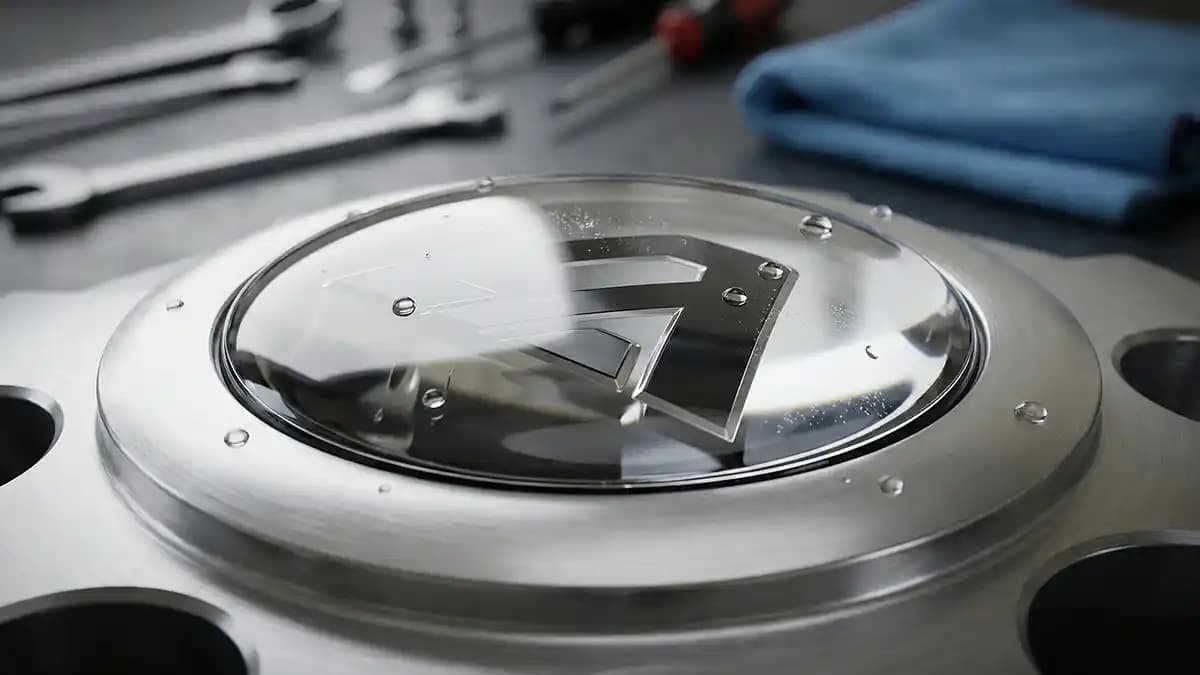
Polyurethane dome is the clear protection layer that turns a plain sticker into a badge that looks deep, glossy, and hard to kill outside. Last week a guy rolled up with fresh wheels and a sad face, because his old center badges looked like they had been cooked in the sun and then sanded with gravel. He blamed the ink, but the ink was fine, the top layer was the problem, it had yellowed and gone brittle. I sliced one old badge with a razor and the cross section told the whole story in two seconds. If you care about domed sticker durability, you care about the clear layer first.
What the dome really is
Most people think a dome is just clear goo poured on top, like syrup on pancakes. The good ones are engineered coatings, usually a two part polyurethane resin that cures into a thick cap over the print. In industrial doming, the liquid flows outward and stops at the edge because of surface tension, then it cures in place. That behavior is why a dome can look perfectly rounded without running off the sides when everything is cut and clean. Once you know that, you stop blaming luck and start checking edges and resin quality.
I cut domes open all the time because it settles arguments fast. You can see every layer, and you can see which one failed. The clear layer sits on top like a roof, but the roof only works if the base and ink under it are stable. When you hold a badge, remember you are looking at a stack, not a single material. Here is the basic stack I see when I cut a dome open.
Base film, the foundation that gives the part its shape.
Printed ink, the logo and color.
Adhesive, the bond to the wheel cap surface.
Clear polyurethane dome, the protection layer and the lens.
What the clear protection layer actually does
The clear layer does three jobs at once, and that is why it matters. It takes scratches and chips before the ink takes them, which buys you years. It seals the surface so water, salt, and grime have a harder time creeping in from the edge. And it works like a lens, bending light so the graphic looks deeper and sharper. Doming guides call this a magnifying glass effect, and you can see it the second you tilt a badge in the sun.
A flat sticker feels like tape and it screams aftermarket. A cured dome feels like a smooth pebble, slick and rounded, and your finger notices it right away. Some polyurethane domes are described as self healing for minor scuffs, because the material has elastic memory once cured. In plain terms, light marks can soften and fade instead of staying as white scars. It will not survive a wire brush, but it handles normal life better.
Why some domes go yellow
Yellowing is not a mystery, it is chemistry doing chemistry. UV light and heat drive oxidation reactions that change the polymer structure, creating new light absorbing groups that tint the clear layer. Research on resin yellowing describes radical oxidation forming chromophores like carbonyl groups and conjugated structures, which is the science way of saying sun makes the clear turn color. Once it starts, your whites look dirty and your silvers look beige. You cannot polish your way out of that.
Here is where polyurethane type matters. In polyurethane chemistry, aromatic isocyanates have lower UV stability, while aliphatic systems are used when you want clarity outdoors. An ACS chapter points out that aromatic isocyanates have low stability in UV light, which is why coating suppliers warn about yellowing. So when you see “non yellowing,” the serious version usually means an aliphatic polyurethane system. That is the difference between a badge that stays water clear and one that ages like a foggy headlight.
Epoxy style resins can be clear at first, but many are more prone to ambering in sunlight, and common material comparisons note epoxy can yellow while polyurethane holds color better under UV. Epoxy is great for some indoor stuff and rigid coatings, but for outdoor clarity, polyurethane usually wins when the formula is right. This is not hype, it is what the chemistry and field results line up on. If you have ever seen a clear part turn tea colored, you already know the feeling. Pick the clear layer like you pick sunglasses, the cheap ones lie.
How durability gets tested without waiting years
You do not need to leave a sticker outside for three summers to learn if it hates the sun. Labs use accelerated weathering tests that combine light, heat, and moisture in a controlled chamber, then measure what changes. ASTM G154 covers fluorescent UV exposure practices for nonmetallic materials, and ASTM G155 covers xenon arc exposure practices that aim to simulate full spectrum sunlight. ASTM updated G155 on September 26, 2025, so it is a living standard. Labs and equipment makers explain xenon arc exposure as a way to simulate sunlight, moisture, and heat damage on materials.
When a brand says “UV resistant,” I want to know what they mean. If they can point to test practices like these, I take them more seriously. If it is just a claim on a product page with no context, I assume it is wishful thinking. You do not need to be a lab tech to respect standards, you just need to know they exist. That alone weeds out a lot of junk.
The edge is where domes live or die
Most failures start at the edge, not the center. The edge is where water creeps, grit grinds, and a pressure washer attacks like a tiny fire hose. Doming relies on surface tension and clean cut lines to form a stable cap, and manufacturers describe the resin flowing to the edge and stopping when the label is prepared right. So when you see a jagged cut, overflow, or a flat cliff edge, you are staring at a future peel. Once the seal breaks at the edge, the rest follows.
I judge an edge in five seconds because the perimeter tells the truth. If the edge is clean, the rest is usually clean too. If the edge is messy, nothing else matters. Use this quick check before you fall in love with the logo. It takes less time than picking a Spotify song.
The dome perimeter looks smooth and rounded, not sharp.
The dome sits cleanly inside the cut, with no spill over.
There are no pinholes or bubbles near the edge line.
The edge does not look dry, chalky, or cracked out of the box.
The lens effect changes design choices
A dome is optics, not only protection. The curved surface bends light and makes the print look deeper, and that magnifying effect is part of doming descriptions for a reason. Once you notice it, you start making smarter design calls. Thin lines look thicker under a dome, tiny text can blur from glare, and low contrast details can vanish in reflections. The dome is a lens, so you design for the lens, not for flat paper.
If you want a badge to read from a few steps away, keep it simple. Wheels are always dirty, always moving, and always catching light. A dome helps, but it cannot save a fussy design. These rules keep the graphic crisp. They also keep you from squinting at your own car in a parking lot.
Use bold shapes that read from a few steps away.
Keep important details away from the very edge.
Avoid tiny text unless the badge is large.
Use strong contrast, because glare is real on glossy domes.
How to spot a quality clear layer fast
Even if you cannot touch the badge yet, you can spot quality. The dome should look water clear, not slightly amber, even before it sees sun. The surface should look smooth and glossy, but not razor hard, because brittle domes chip at the edge. The dome should be free of dust specks and bubbles, because anything trapped under a clear cap will bother you forever. If photos look hazy or grainy, assume the dome is doing a bad job as a lens.
I use a simple checklist because it stops impulse buys. You do not need a microscope, you need a few non negotiables. A good dome shows consistent height, clean highlights, and a tidy edge line. A bad dome shows haze, bubbles, and sharp cut marks that lift later. Run through this list before you click buy.
Look for crystal clarity in photos, with clean highlights and no haze.
Look for a consistent dome height with a smooth edge line.
Avoid domes that look overly hard and sharp, those chip.
Prefer claims tied to real standards like ASTM G154 or ASTM G155, not vague slogans.
Some suppliers describe polyurethane dome labels as resistant to UV, scratches, impacts, and many chemical agents, and that matches what I see when a real dome stays glossy after years. The clear layer is the sacrificial shield, it takes the wear so the print does not. Claims are cheap though, so I like when brands connect durability to real test practices, not just buzz. If they mention standards like ASTM G154 or ASTM G155, they are speaking the same language as labs. That kind of signal usually shows up in better products.
Treat it like a tiny clear coat
Once the badge is on the car, your job is not to ruin it with bad habits. Wash it with mild car soap, use a soft microfiber, and do not grind dirt into the surface. If you use a pressure washer, keep distance and do not aim at the edge like you are trying to peel it off. The dome is tough, but it is still a polymer surface, and polymers hate abrasion plus harsh chemicals. Treat it like a little bubble of clear coat sitting on your wheel and it will stay pretty.
The takeaway I want you to keep
The clear protection layer is not decoration, it is the part that makes a domed emblem worth owning. It is the roof, the seal, and the lens in one piece. If the clear stays clear, your badge stays classy. If the clear turns amber or cracks at the edge, the whole thing looks cheap no matter how good the logo is. Judge the dome first and you will stop buying twice.
Quick Q and A
Q: What is the clear protection layer on a domed sticker made of?
A: Durable domed labels typically use a clear polyurethane resin that cures into a raised cap over the print and creates a lens effect. That cap is the part you touch and the part that takes the abuse.
Q: Why do some clear domes turn yellow?
A: UV light and heat drive oxidation reactions that create light absorbing groups in the resin, which shifts the clear layer toward amber over time. Once it turns amber, it stays that way.
Q: Why do people talk about aliphatic polyurethane for “non yellowing” domes?
A: Aromatic structures have lower UV stability, while aliphatic systems are widely used for UV stable, color clear polyurethane coatings and elastomers. If your goal is outdoor clarity, aliphatic is the safer bet.
Q: How do manufacturers test UV durability faster than outdoor exposure?
A: They use accelerated weathering practices like ASTM G154 for fluorescent UV and ASTM G155 for xenon arc exposure, combining light, heat, and moisture. It is a fast way to compare materials without waiting years.
Q: What is the most common failure point on domed emblems?
A: The edge, because it is where water, grit, and pressure washing attack first, and that is where the seal breaks. A clean edge is the best insurance you can buy.