
Aero Wheel Caps: How to Customize Your EV Hubcaps Without Losing Range
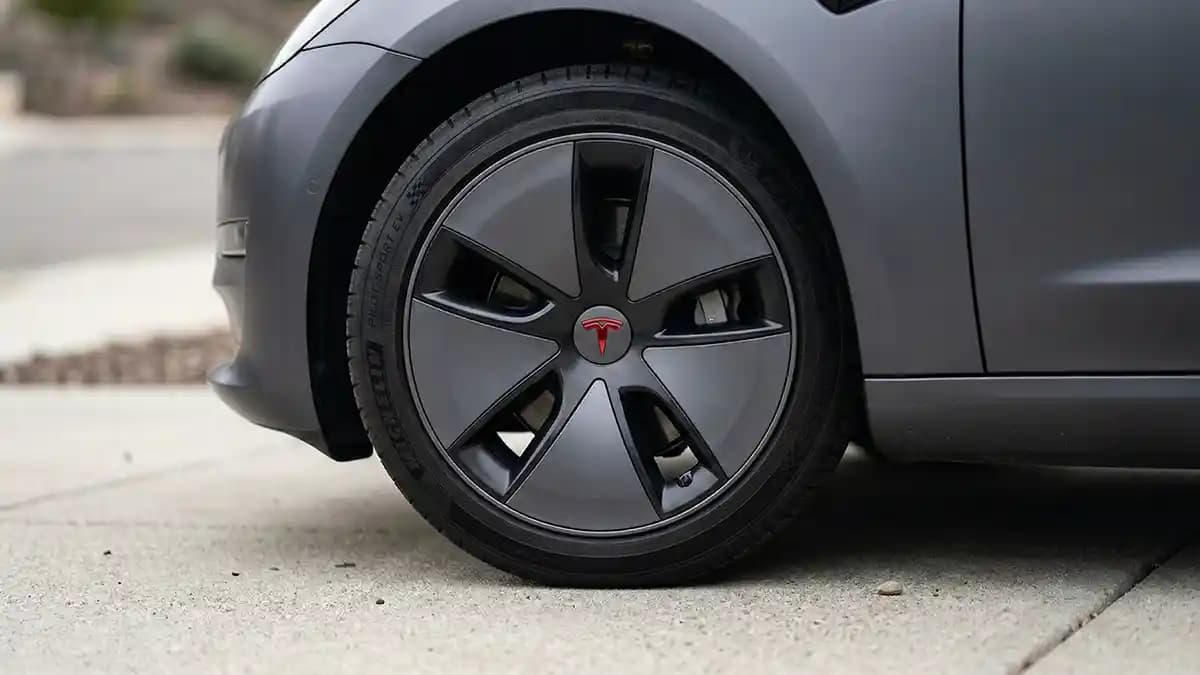
Aero wheel caps can be customized without losing range if you keep the wheel face smooth and keep add ons low profile. That is the real answer to the title, and I learned it in my driveway. I had an aero cover in one hand, a “cool” idea in my head, and way too much confidence. Twenty minutes later I was watching my efficiency number creep the wrong way and thinking, ok, lesson learned.
Why aero wheel caps exist in the first place
Wheels are terrible for airflow, stop. The tire is spinning, spokes are chopping air, and the wheel well turns into a messy swirl that adds drag. EVs feel that drag more at highway speed because air resistance becomes a bigger slice of the energy you use. That is why makers keep pushing smooth wheel faces, even when people say they look like dinner plates.
Car and Driver tested a Tesla Model 3 with and without the aero covers and measured an average 3.4 percent efficiency gain at 50, 70, and 90 mph. That is track data, not a guess. On an EV that is enough to matter on a long highway day. Pull the covers off and the car still works, but you usually give away a few percent.
The rule that keeps you out of trouble
I do not fight the aero shape, I decorate inside it. Think of the cover like a helmet, you can change the color, you can change the finish, you can add one small badge, but you do not bolt a fin to it. Anything that sticks out becomes a tiny brake at speed. Do that four times, one wheel at a time, and you will feel it.
GM Authority explained the point in plain language, aero hubcaps smooth the wheel face so air flows cleaner along the side of the vehicle. That is the entire goal, less turbulence, less drag, more miles. So the safest custom is always the one that keeps the face closed and smooth. If you can slide your palm across the cover and it feels like one surface, you are doing it right.
What actually hurts EV range on wheels
Most people worry about the wrong detail. They stress about a tiny center emblem while they run wide tires and open spoke wheels that throw air like a fan. Range loss from wheels usually comes from bigger changes that mess with airflow and rolling resistance together. You might not notice it on a short city loop, but highway cruising exposes everything. Here are the common range killers I see when someone “customizes” an aero wheel.
Removing the aero cover and leaving open spokes exposed, because the look feels sportier.
Adding thick stick on logos or raised trims that stand proud of the wheel face.
Using heavy parts that add rotating mass, because weight at the wheel is the worst kind.
Leaving gaps, loose clips, or warped covers that let air leak behind the cover.
Running low tire pressure, which makes energy use climb fast.
If you want the quickest gut check, look at the wheel from the side. If your mod looks like it could catch air like a scoop, it probably will. If it looks smooth like a disk, you are in the safe zone. At that point you can chase style without stressing about range.
The safest customization, a low profile center emblem
This is the move I recommend most, keep the aero cover on, then change only the center. On a lot of EV aero wheels the center zone is flat, which is perfect for a thin domed emblem or a flat decal. The key word is thin, because you want the look of a badge without the thickness of hardware. Your eye goes to the center first, so you get a big style win with a tiny physical change.
If you are shopping for that kind of upgrade, start with the Wheel Emblems collection so you stay in the right lane. These are made for wheel centers, not random crafts. The How It’s Made page shows the process step by step, print, cut, dome, cure, and final check. It is the quickest way to see why a dome feels like a badge instead of a flat sticker.
Keep the badge from becoming the bump
People hear “domed” and picture a big bubble sitting on the wheel. That is not what you want on an aero cover, you want controlled height and clean edges. The edge is where dirt collects, and it is where installs fail if the surface was oily. So I focus on low profile and a perimeter that stays sealed. Here is my simple selection rule for an aero wheel cap badge.
Match the trim, matte black, smoked clear, or soft gloss usually looks factory on EVs.
Keep the diameter inside the flat center circle so the wheel face still reads as one disk.
Avoid raised letters or stacked layers, one clean layer beats a tall mess.
Choose a dome material that stays clear and flexible outside, because wheels see heat and grit.
If you cannot tell what the clear layer is, do not buy it.
Wheels punish cheap materials fast, so I am picky on purpose. If you want the short version of why some domes yellow and crack, read Epoxy vs Polyurethane before you spend money twice. It explains the failure patterns in plain words, and you can spot them in photos. Once you see it, you stop buying the cheap shiny stuff.
My garage install method for aero covers
I have done enough installs to know what fails, and it is usually prep. Wheels get brake dust, road film, and tire shine overspray, all of that is glue poison. If you stick anything to that, you are basically sticking to dirt. It might look fine for a week, then the edge starts to lift. This is the install flow I use when I want it to last.
Wash the wheel and cover with normal car soap, then rinse well.
Dry it, then wipe the exact spot with isopropyl alcohol and a clean microfiber.
Test place the emblem without removing the backing, and pick a reference point for centering.
Peel the backing, lay it down gently, then press firmly from the center outward.
Hold pressure for about 30 seconds, then leave it alone.
If your garage is cold, warm the cover and emblem with your hands first. You are not trying to cook anything, you just want a normal surface temperature. Give it a full day before you aim strong water at the edge. Boring installs last, rushed installs fail.
Wrapping and painting, the second safest path
If you want a bigger visual change, you can wrap or paint the aero cover, but you have to respect the shape. Smooth paint or smooth wrap is fine because it does not change the aero profile much when it stays flat. Problems start when people add texture, thick edges, or raised patterns that create ridges. Those ridges act like little airflow trip points and they collect dirt fast. When I wrap an aero cover, I keep it boring on purpose.
One color, one finish, no thick graphics stacked on top of each other.
Edges tucked cleanly so nothing flaps at speed.
No raised decals near the outer face where air is moving fastest.
No rubber lip trims that stick out past the rim line.
If you want style ideas that keep the factory feel on EVs, the 2026 EV minimalist aesthetic guide is a shortcut. It is the same rule I use, keep surfaces calm, then add one detail that looks intentional. It also explains why matte and smoked finishes fit EV design so well. Read it before you buy shiny junk you will remove next week.
Swapping covers, do it, but stay aerodynamic
Some people hate the stock cover look, and I get it, it can feel like your car is wearing Crocs. If you buy aftermarket aero covers, focus on two things, a closed face and solid attachment. A cover that rattles or sits crooked is not just annoying, it can create weird airflow and it can scratch the wheel. I also avoid covers with big vent holes, because you are paying money to throw away the whole point. Here is what I look for before I buy an aftermarket cover.
Closed face design with minimal openings.
Smooth outer profile with no protruding tabs.
Secure retention, it should not pop off in a car wash.
A finish that hides brake dust and water spots.
A center area flat enough for a small emblem if you want one.
Active aero patents keep popping up, which tells you wheel efficiency is still a big deal in EV design. But for daily driving, the basic rule stays the same, smoother wheel faces usually mean less drag. So if a “new” cover has deep shapes and big openings, it is probably style first. Buy it knowing you might pay for that look in miles.
Range math without the drama
People ask me how much range they will lose if they change hubcaps, and the honest answer is, it depends on speed and weather. Aerodynamic gains matter more as speed climbs because air drag grows quickly with velocity. That is why tests often show a few percent change rather than a massive swing, and why you feel it most on long highway runs. On a Model 3, the 3.4 percent efficiency difference measured with covers on versus off can add up over a full charge. If you want to test your own car like a normal person, do a simple A B comparison.
Pick a route you can repeat, same direction, same speed, same time of day if you can.
Run it with covers on, then run it with covers off, and record average energy use.
Keep tire pressure the same and do not change climate settings between runs.
Do it more than once, because one windy run can lie to you.
Look for a pattern, not a single hero number.
You do not need a wind tunnel, you need consistency. If you do not want to spend time testing, accept the rule, aero covers tend to help. Then customize in a way that keeps the face smooth and the center clean. That is how you keep your miles.
The mistakes that make people think “stickers do not work”
Most DIY wheel mods fail for boring reasons. Somebody wipes the wheel with a dirty rag, slaps a decal on, then blasts it with a wash wand the next morning. Then they act shocked when an edge lifts. The wheel is not cursed, the install was rushed. Here are the top mistakes, in the order I see them.
Installing on a surface that still has wax, oil, or tire shine on it.
Centering by eye with no reference, then living with a crooked logo forever.
Touching the adhesive with fingers, then contaminating it.
Washing too soon, especially aiming high pressure water at the edge.
Choosing a thick badge that looks cool in your hand but looks clunky on the wheel.
Fix those five and you beat most of the internet. You also save yourself the rage of peeling off goo and starting over. Clean and patient always wins here. Even when you want to be done fast.
The simple upgrade path I recommend
If you want your EV to look clean and still drive like an EV, do not overthink it. Keep the aero cover, change the center, and keep the finish calm. The wheel is already a design object on most EVs, so one small detail is enough. When you stack too much, you get the opposite effect, it starts to look like a toy. My go to order of operations looks like this.
Clean the covers and decide if you want matte, gloss, or smoked.
Pick a low profile center emblem size that fits the flat circle, and do not exceed it.
Install with proper prep, then leave it alone for a day.
Recheck after your first drive and press the edge again for peace of mind.
Wash gently for the first week, then go back to normal.
That is it. You get the look you want and the covers stay on. The range stays where it should. Simple wins.
Quick Q and A
Q: Do aero wheel caps really help range, or is it hype?
A: They help, usually by a few percent at speed, and Car and Driver measured about a 3.4 percent efficiency gain with covers on in their Model 3 test.
Q: Will a small center emblem hurt aerodynamics?
A: A low profile emblem in the center is tiny compared to the wheel itself. The bigger risk is thick parts and lifted edges that catch air.
Q: Is it better to remove the covers and add center caps instead?
A: If you care about highway range, leaving covers on is the safer bet because open spokes tend to create more turbulence. If you remove them, accept you may give up some efficiency.
Q: Why do stickers lift at the edge on wheel covers?
A: Most of the time the surface still had oil or tire shine on it, or the decal got washed too soon. Clean with alcohol, press firmly, and give it time.
Q: Can I wrap an aero cover and keep range?
A: Yes, as long as the wrap stays smooth and thin and the edges are tucked clean. Avoid thick layered graphics and raised textures.
Q: What finish looks most factory on an EV?
A: Matte black and smoked clear are easy wins because they match modern trim and hide dust. Gloss can look great too, but it shows water spots faster.