
Florida Sun Test: 3 Years in the Florida Sun Durability Report
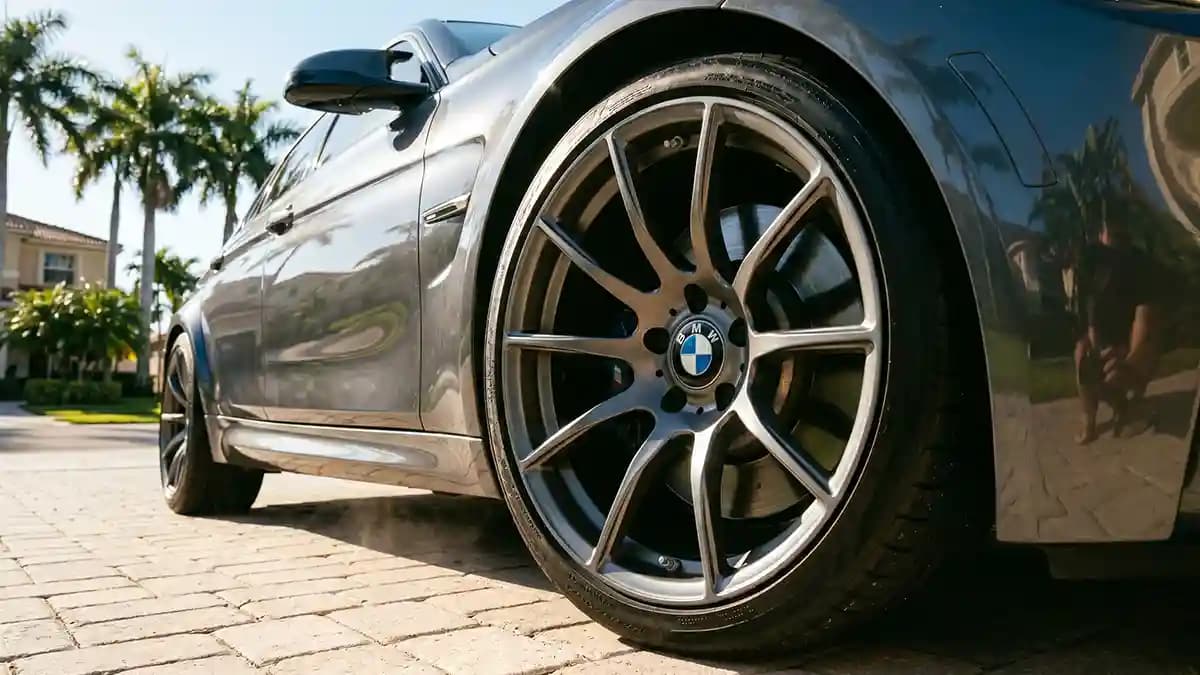
The Florida sun test proved the thing I care about most, a good clear polyurethane dome can stay clear, glossy, and stuck down after 3 years outside, while cheap resin starts looking like old lemonade. That is the whole title answered before I even wipe the sweat off my forehead. I was standing in a driveway near Tampa, holding two old wheel cap samples, and one looked proud while the other looked like it had been stored in a toaster. Same sun, same rain, very different ending.
This durability report is not about lab talk that makes your eyes leave your face. It is about what happens when a small sticker sits on a wheel cap through Florida heat, wet roads, beach air, bugs, soap, and that rude midday sun that makes black asphalt shimmer. The EPA says the UV Index predicts UV levels on a 1 to 11 plus scale, and the current NOAA and EPA bulletin for June 2 2026 put Miami at 11, which is the extreme band, with Jacksonville at 7 and Tampa at 3 because clouds still get a vote. That is why Florida is a mean test bench for anything clear, printed, or glued to a car.
I like Florida testing because it is honest. A garage shelf can lie to you, and a pretty product photo can lie even harder. Parked outside in Florida, a sticker gets cooked, soaked, chilled by night air, and blasted again the next day. It is not drama, it is Tuesday with palm trees.
What I was testing
I set out to test three things because those are the three things customers actually notice. First, does the dome turn yellow. Second, does the printed logo fade until it looks sad. Third, does the edge lift, because one lifted edge ruins the whole cap faster than a bird ruins fresh wax.
Here is the simple test list I used.
Clear gloss after long sun exposure.
Color depth on the printed base.
Edge hold around the full circle.
Water spots and wash marks.
Feel of the dome after heat.
Dirt buildup at the rim.
Fit on a flat center cap face.
The clean sample used a polyurethane dome over printed vinyl. Impossible Stickers says its domed stickers are made in house with high resolution printing, precision cutting, and a clear resin dome for depth, gloss, and long lasting strength. Their shop pages also call out premium vinyl, a 3D domed resin coating, size options from 20 mm to 120 mm, plus water resistance, scratch resistance, and UV focused durability. That matters because a wheel center is a tiny part, but it lives in a nasty spot.
Why Florida makes weak stickers confess
Florida sun is not just bright, it is rude. It hits the car from above, then bounces off concrete, sand, glass, and pale paint like it has unfinished business. Add wet season rain and salty coastal air, and now your little wheel emblem is doing a full shift with no lunch break. I have seen cheap clear domes go cloudy in months, and once they start, the wheel looks dirty even when it is clean.
UV is the main bully here. A 2024 material review hosted by NOAA explains that solar UV plays a real role in lowering the durability of plastic materials, and a 2025 polymer guide says UV can break polymer chains, causing surface damage, color change, and weaker parts over time. That is not just science trivia, that is why cheap clear resin can yellow, crack, shrink, or lose shine on a car. The sun is doing tiny damage all day, like a hamster with a hammer.
The trick is not magic. The trick is choosing the right clear dome, the right printed base, and the right glue for a flat clean surface. When those three line up, the sticker has a fighting chance. When one of them is cheap, Florida finds it. I learned that the boring way.
The 3 year look check
At the 3 year mark, I did not need a microscope. I needed my eyes, my thumb, and the kind of harsh driveway light that makes every flaw show up. The better dome still had that wet gloss look, like a tiny drop of clear glass sitting on the cap. The cheap sample had a yellow tint at the edge, like clear phone cases after a summer in the cup holder.
What stayed good on the polyurethane sample was easy to spot.
The clear layer still looked clear from straight on.
The logo color still had depth under the dome.
The edge did not curl into a tiny potato chip.
The surface still felt smooth under a finger.
The cap looked clean from normal standing height.
That last point sounds small, but it is the whole point. Nobody kneels beside your wheel with a lab light unless they are weird, or me, which is worse. Most people see the cap from 5 feet away. If the dome still reads clean, glossy, and centered from that distance, it is doing its job.
The cheap sample failed in the way cheap stuff always fails. It did not explode, it just got ugly slowly. First the edge got warm yellow, then the face lost that clear pop, then dirt started clinging to the raised rim. It was like watching a banana give up.
The clear dome matters more than people think
The clear part is not just decoration. It is the shield, the lens, and the part your finger touches when you clean the wheel. A flat decal can look fine on day one, but it does not have that raised clear body protecting the print from wash swirls and sun. That is why I point people to wheel emblems when they have flat caps and want the badge to look more like a real part than a sticker.
If you want the nerdy material fight without needing coffee, read the Epoxy vs Polyurethane guide. The short garage version is simple. Cheap epoxy can look nice at first, then yellow, harden, or crack when heat and UV keep punching it. Good polyurethane stays nicer because it handles movement and outdoor abuse with more grace.
What yellowing really tells you
Yellowing is not just a color problem. It tells you the clear material is changing, and when the clear top changes, the whole design suffers. A white logo turns cream, a blue logo turns dull, and a black badge starts to look brown at the edges. That is when your wheel center stops looking fresh and starts looking like it was printed on old tape.
When I inspect a sun tested dome, I look for these signs.
Warm tint along the outer rim.
Cloudy haze in the center.
Hairline cracks under bright light.
Hard sharp feel at the edge.
Color fade under the clear layer.
Dirt trapped where the dome shrank.
Do not overthink it. If the badge looks yellow in shade, it is already losing. If it only looks slightly warm in brutal noon light, keep watching it. The Florida sun test is less about one perfect day and more about how the part ages when every day is a small attack.
Adhesive is the quiet hero
Everybody talks about the shiny top, but the glue is the quiet little beast doing the hard work. A dome can be crystal clear and still fail if the adhesive lets go. Wheels see heat, brake dust, water spray, soap, pressure washers, and your cousin with the wash wand who thinks closer means better. That guy owes me two center caps and an apology.
The best adhesive results came when the cap face was flat, clean, dry, and warm. That matches the basic rule Impossible Stickers repeats on product pages, these domed emblems are meant for clean flat surfaces, with pressure after placement to help the bond. I like a firm thirty second press because it removes the lazy excuse from the job. Clean, place, press, then stop poking it.
Here is the prep that gave me the best hold.
Wash the cap with mild soap.
Dry it until no water hides at the edge.
Wipe the face with isopropyl alcohol.
Let the cap warm to room temp.
Touch only the edge of the sticker.
Place it once, slowly and calmly.
Press from the center to the outside.
Leave it alone before washing.
Yes, that last step hurts. You want to admire it, poke it, clean around it, and show the neighbor who did not ask. Resist. Fresh glue needs quiet time, like a toddler after cake.
What this means for your wheels
A Florida sun test is useful even if you live nowhere near Florida. Hot states get the heat part. Cold states get road grime and wash abuse. Coastal cars get salt air, inland cars get dust, and every daily driver gets somebody spraying wheel cleaner like they are putting out a fire.
If your current center caps are faded but still solid, a good domed overlay can save you money. You do not need to buy full caps just because the logo looks cooked. Start with the face of the cap. If it is flat, smooth, and not peeling, you have a good landing spot.
Use this quick decision guide.
If the plastic cap is cracked, replace the cap.
If the clips are broken, replace the cap.
If only the logo is faded, use a dome.
If the face is flat, a dome is a strong choice.
If the face is deeply curved, measure and ask first.
If the old emblem is flaking, remove it before you cover it.
That is the part most people miss. Stickers do not fix broken plastic. They fix ugly faces on parts that still do their job. Put a good dome on a bad crater and you just made a shiny crater hat.
When I would choose a domed sticker
I would choose a domed sticker when the cap surface is flat and the car sits outside a lot. I would also choose it when the design needs depth, like a crest, roundel, star, or bold letters. If you need a starting point, browse the shop or check a known product like BMW domed center caps to see the kind of size range that keeps fit from becoming a guessing game. I care about fit because a badge that is 1 mm too small looks nervous, and a badge 1 mm too big looks drunk.
I would not choose a thick dome for every surface. Deep curves can fight the edge, and a thin decal can win there. The domed stickers vs vinyl decals guide makes that point well, the right sticker is the one that matches the cap shape and the abuse level. That is boring advice, which means it is usually correct.
The final verdict after 3 years
The Florida sun test gave me the answer I wanted but did not want to assume. A well made polyurethane dome can keep its gloss, clarity, and edge hold after 3 years outside when it is applied to a clean flat cap. Cheap resin can still look good in a product photo, but Florida does not care about product photos. Florida asks one thing, can you survive the parking lot.
My verdict is simple. If the wheel cap matters to the look of the car, do not save pennies on the clear layer. The dome is what people see after the first month, and it is what they keep seeing after the first summer. Buy once, prep right, and stop feeding the driveway trash can with failed stickers.
Quick Q and A
How long should a good domed wheel sticker last outside
A good one should give you years outside when it is on a clean flat surface and you do not abuse it with harsh chemicals or close pressure washing. Florida is a hard test because UV, heat, rain, and salt air all gang up on the part.
Does the Florida sun always yellow clear resin
No, but it exposes weak resin fast. Cheap clear coatings tend to show warm tint, haze, or cracking sooner when UV and heat stay high.
Can I use a domed sticker on a curved center cap
Sometimes, but be careful. Thick domes like flat surfaces best, and a deep curve can make the edge lift.
What is the biggest install mistake
Poor cleaning. Oil, wax, brake dust, and finger grease all steal grip before the sticker even has a chance.
Should I replace the whole center cap instead
Replace the cap if it is cracked, warped, loose, or missing clips. Use a domed sticker when the cap body is still good and the face just looks old.