
Military Grade Stickers for Government Gear: Why Polyurethane Meets Ruggedized Specs
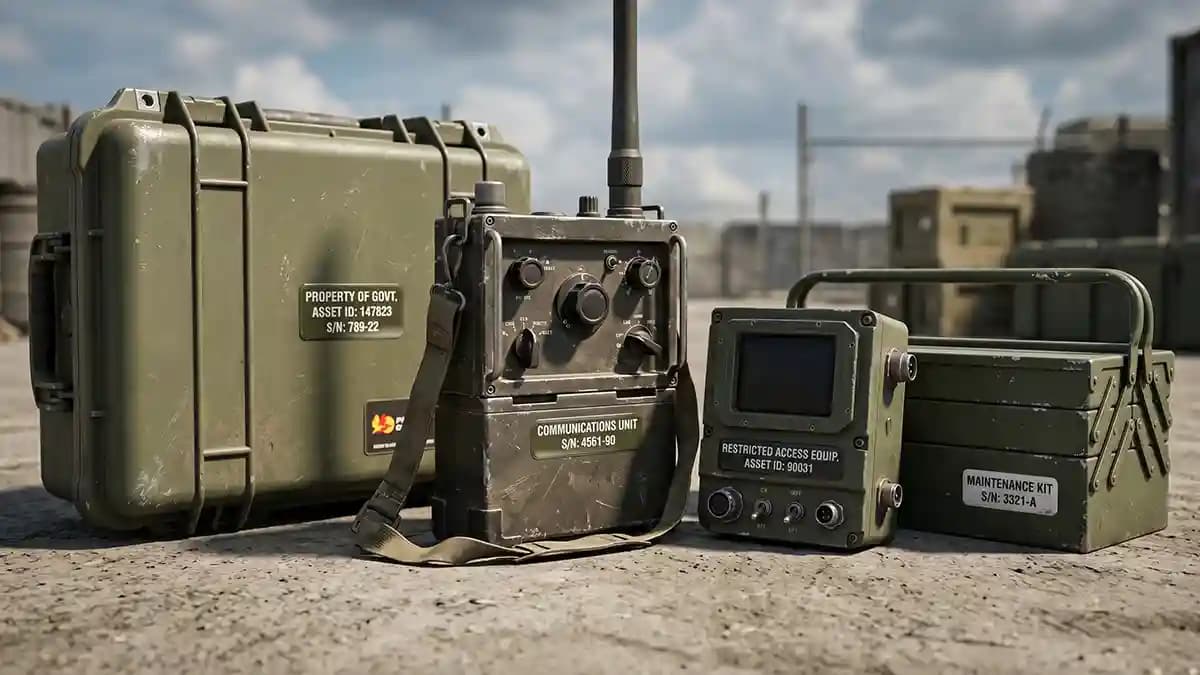
Military grade stickers need to stay readable, stuck down, and clean under abuse, or they are just tiny pieces of trash with a fancy name. I learned that while helping sort gear cases that looked like they had been dragged through gravel, rain, dust, and one angry storage room. The equipment was still fine, but half the old labels looked like wet chewing gum. That is why polyurethane matters for government gear, because the sticker is not decoration, it is a small part of the system people depend on.
I am not saying every raised sticker magically becomes approved for military use. That would be nonsense with boots on. Real government and defense work asks for proof, use case, surface data, and clear rules. But when you need field equipment labels, asset marks, warning labels, or branded gear tags that can survive rough handling, a good polyurethane dome gives the label a fighting chance.
Military Grade Stickers Need Proof, Not Chest Beating
The phrase military grade gets thrown around like a wrench in a bad mood. Some sellers use it to mean black, thick, and angry looking. That is not enough. A sticker can look tough in a product photo and still peel like a banana the first time it sees sun, oil, cold, or a gloved hand.
For real equipment work, I ask dull questions, because dull is where truth lives. What does the label need to survive? Where does it sit? Who touches it? What happens when the label fails?
A proper field label should handle rain, heat, grit, oils, cleaners, fuel splash, gloved hands, scanning, rubbing, stacking, and daily use. That is why I get twitchy when someone sends me a thin flat sticker and says, “It should be fine.” Should be fine is how you end up kneeling on concrete trying to read a half gone serial code. Been there.
What Ruggedized Specs Really Ask From Field Equipment Labels
Ruggedized specs are not one big monster test. They are a list of stresses that match how the gear will live. The U.S. Defense Logistics Agency lists MIL STD 810 as a standard for environmental engineering and lab tests, and its scope says it deals with environmental stress through a product life, while also saying it does not impose design or test specs by itself. That last part matters, because the test plan must fit the actual item and use case.
For labels, that means nobody should slap one sticker on a clean desk and call it done. A field case is not a desk. A helmet is not a flat control panel. A drone battery pack is not a toolbox.
When I review a rugged label request, I sort it into simple buckets, identification, asset tracking, warnings, branding, and panel guides. The more vital the mark, the more serious the material choice becomes. A logo can fade and you still go home. A warning or asset code fading can cost time, money, or safety. That is why a compliant decal is never just a sticker.
Why Polyurethane Makes Sense Here
Polyurethane doming is useful because it puts a clear raised shield over the printed part of the label. On a good build, the print is not sitting naked on top where every thumb, cloth, and grit speck can attack it. The dome takes the hit first. Think of it like clear armor, but small enough to fit on a radio case.
Impossible Stickers describes its own process as high resolution print, precision cutting, a clear resin dome, curing, and final quality checks. The same process page says the dome adds depth, gloss, protection, and an easier surface to wipe clean, while curing keeps the dome stable and even. That is the boring stuff that makes the final part look simple. Simple is good, after the hard work is done.
Polyurethane is also a good fit because a dome changes how the label feels. You can find it by touch. You can wipe it clean faster. You can make a small logo or code look deeper and sharper. And yes, it makes the label look more expensive, but the real win is protection.
A flat sticker can still be the right choice when the surface is curved, the budget is tight, or the label must bend around a shape. I like flat labels for the right job. But for flat field equipment zones, tool cases, panels, hard boxes, and metal tags, a dome can be the tougher choice. Like putting a small helmet on the print.
The Compliance Trap Nobody Likes Talking About
Here is the part where people groan. Material alone does not make a label compliant. You can use nice vinyl, strong adhesive, and a clean polyurethane dome, but if the label is on the wrong surface, in the wrong place, with the wrong ink, you still have a problem.
UL explains this well for marking and labeling systems. Its guidance says UL 969 covers adhesive labels used as permanent nameplates or markers and evaluates labels as complete systems, including the stock, ink, overlamination, surface material, indoor or outdoor use, and possible exposures like oils, detergents, or gasoline. That is the grown up way to think about stickers, not as one piece, but as a stack of choices.
This is where cheap labels fall apart. They pass the “looks good in my hand” test and fail the “works on this exact surface” test. The hand test is useless. My hand is not a painted aluminum panel on a hot vehicle.
MIL STD 130 And Why Identification Marks Matter
For U.S. military property, identification is its own serious lane. The DLA page for MIL STD 130 says the standard gives item marking criteria for military property produced, stocked, stored, and issued by or for the Department of Defense. It also covers free text and machine readable information for identification marking. That means labels are often tied to tracking, records, control, and accountability, not just looks.
This is why I treat serial numbers and machine readable codes like tiny VIPs. If a QR code or barcode fails, the whole tag becomes a guessing game. Then someone opens a spreadsheet, matches a photo, calls a supervisor, or starts the ancient ritual of “Does anyone know what this is?” Caveman level.
A good government asset label needs high contrast print, quiet space around codes, a flat landing zone, adhesive matched to the surface, and a top layer that does not blur the scan. It also needs a clean record system behind the code. That last one hurts because it is not about stickers. If the record says the case is in Room B and the case is under a truck in the rain, the sticker did not fail. The system did.
How UL Style Thinking Helps Compliant Decals
Even when a project is not a UL job, UL style thinking helps. It forces you to ask better questions before you order. UL notes that label testing can include exposure to water, high and low temperatures, chemical immersion, and UV weathering before checking for curling, wrinkling, shrinkage, edge lift, adhesion, legibility, and resistance to defacement. That is basically a checklist of ways weak labels embarrass you later.
I like to run a rough version of that thinking before making any serious batch. Nothing fancy. Just honest. If the label will sit outside, ask about sun. If it sits near fuel, ask about splash.
Before production, I want the surface type, surface shape, exact size in millimeters, use setting, exposure risks, and print needs. Add a photo with a ruler if possible. If you cannot answer those, pause. Guessing here is how you buy twice.
Where Polyurethane Domed Labels Work Best
Polyurethane domed labels like flat, clean, solid surfaces. That rule is boring, and it saves money. Impossible Stickers says its wheel stickers and domed stickers are intended for flat surfaces, and the same quality page points to outdoor grade vinyl, a clear resin top layer, regular wash resistance, UV focused print choices, and basic care rules like clean dry placement and sensible pressure washing. The lesson travels well beyond wheel caps. Flat and clean wins.
For government or contractor gear, the best targets are usually hard zones that do not flex much. Think cases, panels, tool drawers, device housings, helmet boxes, vehicle interior plates, equipment racks, and control areas. The worst targets are rubber grips, fabric, deep curves, oily plastic, dusty texture, and edges where people grab the part. A dome needs support under its whole face.
Good use cases include field case asset tags, equipment service labels, contractor ID marks, tool room labels, department gear labels, QR codes, and barcode tracking tags. Bad use cases include soft fabric, rubberized handles, tight compound curves, very rough plastic, greasy surfaces, and labels that replace regulated plates without approval. That last one is important. A clean new label should solve a problem, not create paperwork with teeth.
Ordering Military Grade Stickers Without Making A Mess
When someone asks for military grade stickers, I translate that into a real order brief. I do not ask for vibes. I ask for facts. The more facts at the start, the less drama at the end.
Start with the part, not the design. Send photos of the surface. Show the flat zone. Add the size in millimeters. Then send the artwork, colors, code data, and quantity. This is also where domed stickers make sense when the job needs a raised, wipeable, premium looking label for hard flat areas.
If the job involves more than a few pieces, use a batch plan.
Approve one physical sample before full production
Test it on the real surface, not a random desk
Wipe it with the normal cleaner used on that gear
Scan the code in bad light and bright light
Confirm the data matches your asset system
For larger orders, a repeatable workflow matters more than a dramatic first sample. The How It’s Made page is useful because it shows the print, cut, dome, cure, and final check logic behind a clean result. The Wholesale and Bulk Orders page is also the right place when the order involves fleets, service vehicles, tool programs, clubs, contractors, or repeat batches.
I would also read the Quality Promise before ordering for rough use. Not because it is magic. Because it states the real limits, like flat surfaces, clean install, and care around strong chemicals and pressure washer edges. Good limits are not a weakness. They are the map.
For tracking heavy jobs, the related guide on asset tags helps connect the sticker to the record system behind it. For wipe heavy equipment settings, the post on medical grade labels also makes a useful point, smooth protected labels are easier to keep readable under routine cleaning. Different setting, same label logic.
Quick Q and A
Q: Are military grade stickers officially certified just because they use polyurethane?
No. Polyurethane can be a strong material choice, but compliance depends on the full label system, surface, exposure, testing, and approval path. The material helps, but it does not replace proof.
Q: What are field equipment labels used for?
They identify, track, warn, guide, and brand gear used in rough settings. Common uses include asset tags, QR codes, serial plates, tool labels, case marks, and control panel labels.
Q: Can polyurethane domed labels handle outdoor use?
Yes, when the label is built for outdoor use and applied to a clean flat surface. The clear dome helps protect the print, but edge seal, adhesive match, surface prep, and care still matter.
Q: Do QR codes scan under a domed surface?
They can scan well when the code is sized right, printed with strong contrast, placed on a flat surface, and tested before full production. Tiny codes under a high gloss dome need real scanning tests in real light.
Q: What is the biggest mistake with compliant decals?
The biggest mistake is treating the sticker alone as the compliance solution. A compliant decal needs the right construction, approved data, correct placement, matched surface, readable print, and a process for testing and records.
Military grade stickers are not about looking tough. They are about staying useful after the gear has been touched, moved, cleaned, scanned, dropped, stored, and used again. Polyurethane doming helps because it protects the print, gives the surface a wipeable shield, and makes small labels feel like proper parts instead of afterthoughts. Get the surface right, test the sample, keep the data clean, and the label stops being a weak spot. That is the whole win.