
Sticker Removal Techniques for Glass, Paint, and Alloy
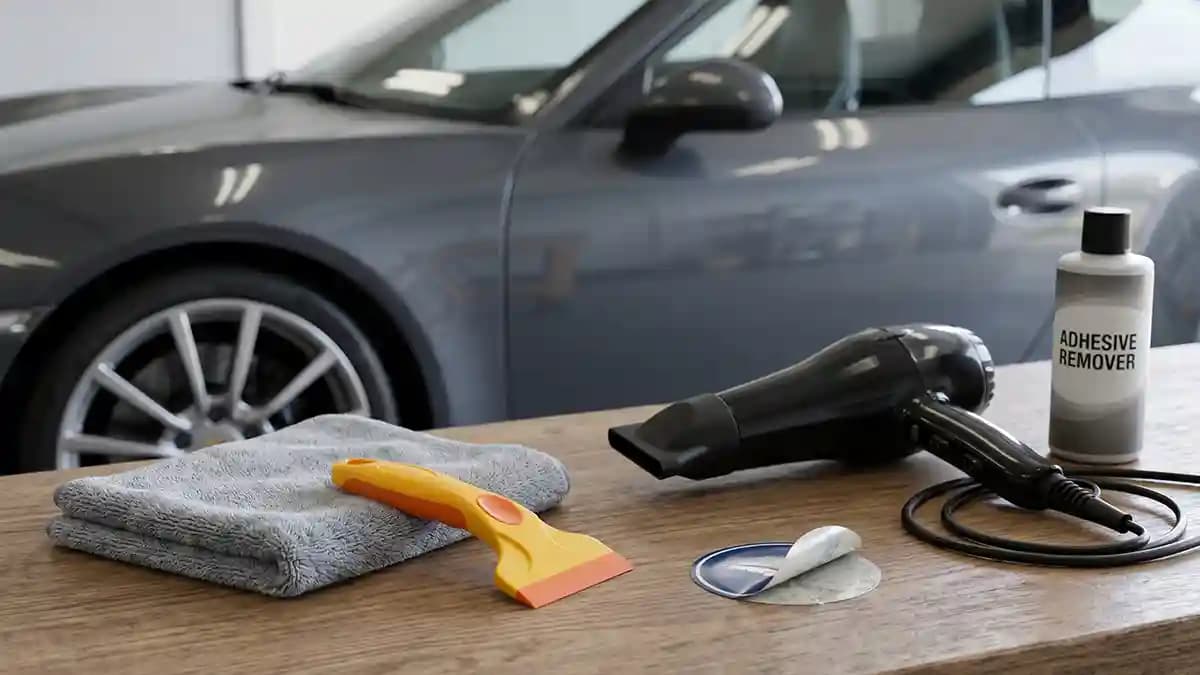
Sticker removal techniques change by surface: glass can take firmer work, paint needs a soft hand, and alloy wheels need deep cleaning before anything sharp gets near them. That is the answer before we get lost in glue drama. I learned it while testing three old domed badges in the garage, one on glass, one on a painted panel, and one on an alloy center cap that looked like it had survived twelve winters and one angry pressure washer. Same dome style, same sticky attitude, three very different removals.
I used to treat every stuck badge the same way. Warm it, pry it, wipe it, done. Then I lifted a tiny bit of clear coat on a test panel and just stood there, holding the scraper like it had betrayed me. It had not. The surface under the sticker is the boss.
Why Domed Stickers Do Not Peel Like Paper Labels
A domed sticker is not a cheap label from a jam jar. It has a raised clear top, a printed layer, and adhesive made to hang on through rain, sun, road dust, and car washes. That is great when the badge is new and sitting proud on the wheel. It is less great when you want it gone and it clings like a toddler in a toy aisle.
The dome also changes how the sticker bends. A flat decal can fold back on itself, but a thick dome fights that bend. If you pull it straight up, the adhesive often stays behind. If you pull it low and slow, the glue has a better chance to release with the badge.
Before I start, I check these things.
What surface is under the dome
Whether the surface is painted, coated, bare, tinted, or plastic
Whether one edge is already loose
How much dirt is sitting around the badge
Whether heat is safe for that part
Whether a plastic tool can lift the edge first
Whether I need to protect nearby trim with tape
That little check saves real money. Most damage happens before the sticker even moves. Dirt scratches. Heat burns. Metal tools dig. Strong cleaners stain. None of those care that you were only trying to do a quick five minute job.
The Small Tool Kit That Actually Works
You do not need a wild tool box for this job. You need the right few things and enough patience to not turn into a cave man. I keep my removal kit boring on purpose. Boring tools do not scratch wheels for sport.
Here is what I use most.
Hair dryer
Heat gun used carefully
Plastic razor blades
Plastic trim tool
Old gift card
Microfiber towels
Mild car soap
Isopropyl alcohol
Automotive safe adhesive remover
Nitrile gloves
The hair dryer is my favorite for most jobs. It warms the adhesive without trying to cook the part. A heat gun works, but it needs more control. Keep it moving and do not cook one spot like garage toast.
I almost always start with plastic. Metal feels faster, I know. It also makes scratches faster. On glass, a clean razor can be useful when held flat. On paint, plastic, and coated alloy, metal blades can turn one old sticker into a tiny repair bill with a bad attitude.
Sticker Removal Techniques for Glass
Glass is the easiest surface because it is hard and smooth. That does not mean you can act wild. Plain glass gives you more room to work, but tint, printed edges, and rear defroster lines need care. Those thin lines on a rear window are not decoration. Hurt them and your winter mornings get annoying.
I start glass with gentle heat. Warm the dome until it feels a little more willing, not hot enough to make you flinch. Then lift one edge with a plastic blade or fingernail. Peel low, almost flat to the glass, while adding heat if the adhesive gets stiff.
Use this process.
Wash the glass with mild soap and water.
Dry it with a clean towel.
Warm the dome for about 30 to 60 seconds.
Lift one edge with plastic first.
Use a flat razor only on plain glass if needed.
Peel slowly at a low angle.
Put adhesive remover on leftover glue.
Scrape residue lightly while the surface is slick.
Clean the glass again when done.
The razor angle is the whole trick. Hold it flat, not steep. A steep blade acts like it wants to dig. A flat blade slides. If there is dirt under it, stop and clean again, because dry grit on glass is just sandpaper wearing a tiny hat.
Sticker Removal Techniques for Paint
Paint is where I slow down. A dome can come off paint cleanly, but you cannot bully it. Automotive paint has clear coat, and that clear coat can be old, thin, sun tired, or soft from a past repair. You do not always know until it complains.
Here is my paint routine.
Wash the area first.
Dry it fully.
Tape close trim or sharp panel edges.
Warm the dome with a hair dryer.
Lift one corner with a fingernail or plastic blade.
Peel low and slow.
Rewarm when the glue gets stiff.
Put adhesive remover on a towel, not straight onto the panel.
Wipe gently and repeat.
Wash the area again.
Do not use a metal blade on paint. I know someone will say they did it once and it was fine. Good for them. I once carried four coffees without spilling them, but I do not call that a method. Paint rewards calm hands and punishes ego.
Also watch the solvent. Use an automotive safe adhesive remover and test a hidden spot first. Let the cleaner soften the residue instead of scrubbing like you are mad at it. Hard rubbing can dull clear coat. Then you removed the sticker and added a cloudy patch, which is not the kind of upgrade anyone asked for.
Sticker Removal Techniques for Alloy Wheels
Alloy wheels are sneaky because they look tough. Sometimes they are. Sometimes the center cap is painted plastic, clear coated metal, or a coated alloy face that scratches if you look at it wrong. Add brake dust, road salt, tar, and old wax, and now the job is not just sticker removal. It is surface rescue.
I clean wheels before I even touch the badge. Brake dust under a scraper can cut a bright little line right into the finish. That scratch will find sunlight later and wave at you. Very rude. Wash the cap face, rinse it well, and dry it fully before heat.
Here is the wheel routine I trust.
Remove the center cap if it pops out safely.
Wash the face with mild soap.
Dry it fully.
Warm the dome with a hair dryer.
Lift an edge with a plastic blade.
Peel low while keeping the dome warm.
Roll soft glue with your thumb if it balls up.
Use adhesive remover on stubborn residue.
Wipe with alcohol after oily film is gone.
Let the cap dry before any new badge goes on.
Alloy removal gets easier if you plan the replacement first. Measure the old badge or the flat landing area before you destroy the evidence. If you need a fresh badge, look for the right size in 3D domed wheel center cap emblems before you guess and order something that sits like a fried egg on a teacup.
Glass, Paint, and Alloy Compared
This is the fast version I wish someone gave me years ago. I would have saved a test panel and a very long sigh. The surface decides the method.
Keep this comparison in your head.
Glass can take the most tool pressure.
Paint needs the least pressure.
Alloy needs the most cleaning first.
Plastic center caps should be treated like paint.
Metal blades belong only on plain glass.
Hair dryer heat is safer than heat gun heat.
Adhesive remover works better when you give it time.
Pulling low is better than pulling straight up.
Old brittle domes need more patience.
New badges need a clean dry landing spot.
Most failed removals are not one huge mistake. They are tiny lazy moves stacked together. You skip the wash, overheat the part, grab metal, yank upward, then blame the sticker. I have been that guy. That guy is not invited back.
Picking the Right Cleaner
People always want the one magic liquid. I wish it existed. Adhesive residue changes with age, heat, surface, and dirt. The cleaner that works great on glass can be too risky for old paint.
Here is how I choose.
Light residue gets isopropyl alcohol.
Thick gummy residue gets adhesive remover.
Dry crusty glue gets heat first.
Glass can handle firmer scraping.
Paint gets soft wiping and repeat passes.
Alloy gets cleaned before solvent touches it.
Unknown finishes get a hidden test spot.
Do not pour cleaner into seams or around clips. Liquid loves to travel where it was not invited. Put the cleaner on a towel, press it on the residue, and let it work. Then wipe. Repeat if needed. You are not losing because it took three passes. You are winning because the surface still looks good.
Professional adhesive removers are made for this kind of job, but the label still matters. Some products are safe for many painted automotive surfaces and glass, but you still test first. That test spot is cheap insurance.
Getting Ready for the New Dome
Removal is not done when the old sticker is gone. It is done when the surface is ready for the next badge. Old glue, wax, oil, polish dust, and fingerprints can all weaken the new bond. Your fingers are tiny grease stamps. Annoying but true.
Use this prep before installing a new dome.
Remove every bit of old adhesive.
Wash the surface with mild soap.
Dry it fully.
Wipe the landing area with alcohol.
Let it dry.
Do not touch the clean spot.
Test fit the new badge.
Press from the center outward.
Press the full edge.
Avoid washing for at least a day.
That last step is hard for people. They install the badge, admire it for ten seconds, then want to blast it at the wash bay. Do not do that. Let the adhesive settle first. Boring keeps the badge on.
For a deeper removal guide, I would pair this with how to remove old wheel stickers without damaging your center caps. If you are installing on a tough surface after removal, read heat activated adhesive tips before you press the new dome down. Clean removal and smart heat make a nice team.
Mistakes That Make the Job Worse
I have made enough dumb removal mistakes to fill a small wall of shame. The title would be Scrapers I Regret.
Avoid these moves.
Using metal on paint.
Holding a heat gun in one spot.
Pulling the dome straight up.
Scraping through dirt.
Using strong solvent without testing.
Soaking seams and clips.
Installing over oily residue.
Guessing size after destroying the old badge.
Pressure washing right after install.
Pretending damaged clear coat is fine.
The worst one is yanking. It feels like progress because something moves. But it can leave glue, tear the dome, or lift weak finish. Slow peeling feels boring, and I hate how often boring is the right answer. But here we are.
When the Cap Is Too Far Gone
Sometimes the dome is not the real problem. The part under it is cracked, chalky, warped, or corroded. You can remove the sticker perfectly and still uncover a surface that looks like it lost a fight with a curb.
Think about replacing or refinishing the cap when you see this.
Clear coat flaking under the badge.
Deep corrosion near the edge.
Plastic that crumbles when scraped.
Broken center cap clips.
Paint lifting with mild heat.
Cracks across the face.
A warped landing area.
Old glue sunk into rough plastic.
There is no shame in calling a bad cap done. I like saving parts, but I do not like lying to myself. A fresh dome on a ruined cap is like wearing clean shoes with wet socks. Fix the base first and the badge will look better.
FAQ
Can I use a razor blade to remove a domed sticker?
Use a razor only on plain glass and keep it flat. Do not use it on paint, plastic, or coated wheel caps. A plastic blade is slower, but it is much safer.
Will heat damage car paint?
Too much heat can damage paint, trim, or plastic. Use a hair dryer first and keep the heat moving. If the paint is old or freshly repaired, go extra slow.
What removes sticky residue from alloy wheels?
Start with washing, drying, and gentle heat. Then use an automotive safe adhesive remover on a towel. Finish with alcohol after the oily film is gone.
Can I install a new dome where the old one was?
Yes, if the surface is clean, dry, smooth, and free from old glue. Do not install over wax, oil, loose clear coat, or rough corrosion.
Is glass always safe for scraping?
No. Plain glass is tough, but tint, defroster lines, printed edges, and coatings need care. Use less pressure near those areas and test first.
Final Take
Sticker removal techniques are not about strength. They are about matching the method to the surface. Glass lets you work firmer, paint makes you slow down, and alloy wheels make you clean first. Once you see that, the job feels simple instead of risky.
I still get annoyed when old glue hangs on. Everybody does. But glue is not the enemy. Panic is. Warm it, lift it, peel low, clean what is left, and prep the surface like you care. Do that and the next dome sits clean instead of looking like it was installed during a small earthquake.