
Aftermarket Wheel Customization: Branding for Enkei, BBS, and Vossen
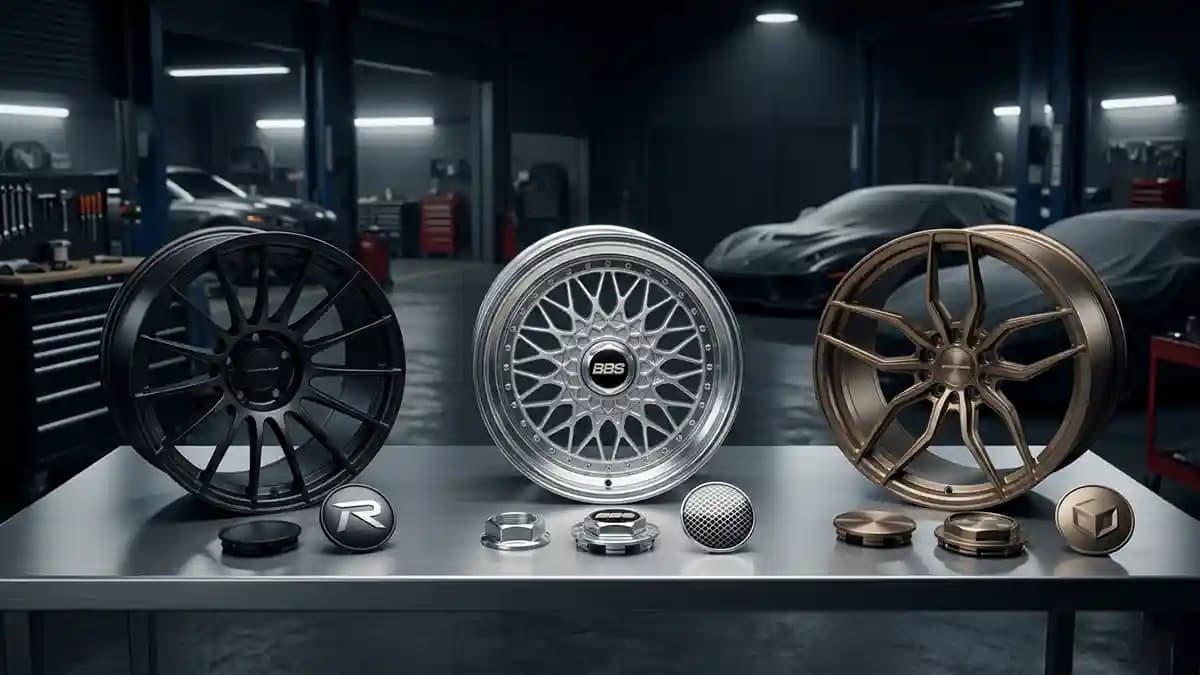
Aftermarket wheel customization looks best when you brand Enkei, BBS, and Vossen wheels for the wheel you actually own, not the car name stuck in your head, because the right center cap size and finish can make expensive wheels look finished instead of borrowed. I was crouched next to a fresh set of wheels last week with a coffee going cold on the floor and one ugly blank cap staring back at me like it wanted to start a fight. The wheels were great, the stance was right, the paint was clean, and the middle still looked unfinished. That is the part people keep missing, the center of the wheel is where your eye goes first.
I have seen this over and over. Somebody spends real money on aftermarket rims, gets the fit right, then throws random caps or wrong size stickers in the middle and calls it done. It is like showing up in a sharp suit with ketchup on your shirt.
Why branding matters more on aftermarket wheels
Factory wheels usually come with a neat answer built in. Aftermarket wheels do not. Some take OEM caps, some use brand specific cap bodies, and some give you a blank center with almost no help at all. That is why good aftermarket wheel customization is never just about the logo. It is about size, surface, finish, and whether the badge actually belongs on that wheel face.
The other thing is brand language. Enkei, BBS, and Vossen do not say the same thing when you look at them. Enkei usually reads light, sharp, and motorsport minded. BBS reads heritage, race history, and detail obsessed fitment. Vossen reads big presence, high finish quality, and modern show car pressure. When you put the wrong badge style in the middle, the wheel starts talking in two different voices, and that never looks right.
Here is the fast rule I use before I touch anything.
Pick the wheel mood first.
Pick the correct size second.
Pick the logo finish third.
Stick nothing down until you test the center by eye.
That order saves money. It also saves you from the classic mistake of buying a logo because it looked good on your phone at midnight.
Enkei wheel branding should feel light and honest
Enkei has never felt like a fake luxury brand to me. It feels like a company that wants you to think about driving first. Their current site still splits the lineup into Racing, Racing Revolution, Tuning, Performance, Classic, and Truck lines, and they are still pushing current motorsport identity hard enough that the March 2026 McLaren supplier news sits right on the home page. That tells you the logo belongs on builds that lean purposeful, light, and a little hungry, not on something trying too hard to look expensive.
That shows up in the wheels too. The PF01 still gets described by Enkei as a light, racer friendly wheel made with MAT technology, with sizes from 15 to 18 inches and room for large brake calipers. So when I brand Enkei wheels, I keep the center clean. Simple silver on dark gray works. White on graphite works. A neat red accent can work if the car already has some heat in it. I do not try to turn an Enkei center into jewelry.
When Enkei branding goes wrong, it usually goes wrong in three ways.
The emblem is too glossy for the wheel.
The logo is too big and starts touching the bevel.
The finish is too fancy for a wheel that is supposed to feel functional.
On an RPF1, PF01, GTC02, or another Enkei setup with a motorsport feel, I would rather use a modest domed badge than a loud mirrored one. Think clean pit lane, not casino lobby.
BBS wheel branding is where fitment gets serious
BBS is the brand that makes people relax too early. They see the mesh, they think they know the answer, and then they order the wrong cap. Bad move. Current BBS programs are spread across forged lines, performance flow formed lines, design lines, and the newer Unlimited system, and the current catalog still puts names like CI R, CC R, CH R, and CH R II right next to cast lines such as SR, SX, XR, and TL A. On top of that, BBS Unlimited says it is available for all 5 hole bolt patterns with hub adapters and huge style variation, which is cool, but it also tells you one thing very clearly, fitment is not simple here.
Then you add the old school side of BBS and things get even more fun. The LM is still presented by BBS Japan as a long seller inspired by Le Mans and still tied to a design that has been around since 1994. The RI D still gets framed as the first extra super duralumin wheel and still leans hard into ultra light performance. So now you have one brand with deep heritage, current performance lines, and wheel faces that can look classic, technical, or both at the same time. That is why sloppy branding on BBS wheels looks extra bad. The wheel is already doing a lot of talking.
This is also the brand where size mistakes show up fast. The current BBS sizing guide on Impossible Stickers points out that a lot of modern BBS setups use 56 mm or 70.6 mm caps, while many classic RS style caps live around 70 mm with different hardware at the back. That tiny difference is where people light cash on fire. It does not look fine from far away.
My BBS rules are simple.
Measure first, because BBS is not one cap family.
Match the badge mood to the wheel family.
Use crisp graphics, because muddy details look cheap on BBS.
Do not overdo color unless the car already has heritage cues.
If the wheel is a bright silver or classic gold mesh setup, a clean classic style center works great. If the wheel is darker and more modern, a blackout badge can look killer. But the badge still has to sit like it belongs there. On BBS, one millimeter of slop is enough to ruin your afternoon.
Vossen wheel branding needs control, not noise
Vossen lives in a different lane. The current Vossen wheels page still pushes the Hybrid Forged range with flow forming, wide width options, standard finishes, and custom finishes, and their fresh 2026 HFX content shows the HFX 4 expanding into modern 5 lug and 6 lug applications. They also sell actual cap sets and emblem accessories through the Vossen store, which tells you something important, they know the center of the wheel matters to the final look. A Vossen build is rarely shy. But that does not mean the center should scream.
This is where people get baited by the size and shape of the wheel. Vossen wheels often have a lot going on already, deep faces, sharp spokes, strong concavity, polished edges, tinted finishes. So the smartest thing you can do in the middle is usually calm the whole design down. If the wheel finish is brushed, satin, or gloss black, I like a badge that mirrors that mood. Clean logo. Strong edge. Good dome.
Here is what the current Vossen stuff tells me.
The brand still leans hard into modern platform fitment.
Finish choice is a major part of the identity.
The cap and emblem are part of the wheel system, not an afterthought.
You need a badge that looks premium up close, not just flashy from ten feet.
That last part matters a lot. Vossen wheels get photographed and parked at angles all day. If your center emblem has rough edges, bad gloss, or awkward spacing, it gets exposed instantly.
How I measure an aftermarket wheel center without wasting money
This is the part that saves the whole job. The current measuring guide on Impossible Stickers says the digital caliper is the best tool, full stop, and their fitment pages keep repeating the same logic, measure the visible flat circle in millimeters, not the whole cap, not the outer lip, not the shape your brain wishes was the right answer. Their How We Work page says the same thing in plain language and adds the part people love to ignore, flat smooth surfaces only, because deep bowls, heavy curves, and rough texture are where edges start lifting.
That is the whole trick. A lot of aftermarket wheels fool people because the cap body looks larger than the area where the emblem can actually land. You do not buy for the drama around the edge. You buy for the flat floor in the middle. If the cap is slightly recessed and still has a flat landing zone, great. If it curves away right where the emblem edge needs to sit, you are about to start an argument with physics, and physics never loses.
This is my install routine every single time.
Pop the cap out if you can, or turn the wheel so you can see the face straight on.
Clean the center with mild soap, then wipe the bonding area with isopropyl alcohol.
Measure the visible flat circle with a digital caliper.
If the face is between sizes, lean exact or 1 mm smaller, never bigger.
Test center the badge before you peel the backing.
Press from the middle out and give the edges real attention.
Leave it alone and do not go blast it at a wash right away.
Boring process. Great results.
The mistakes that make expensive wheels look cheap
Most ugly wheel centers come from impatience, not bad taste. People rush because the logo feels small and harmless. It is not harmless. If the center looks off, the whole face looks weird.
These are the mistakes I see most.
Buying for the car brand instead of the actual wheel face.
Measuring the outer lip instead of the flat center.
Sticking onto a curved cap and hoping for the best.
Choosing a badge finish that fights the wheel finish.
Using a loud emblem on an already loud wheel.
Ignoring the back story of the brand and mixing signals.
That last one is sneaky. A simple badge can look amazing on a dramatic wheel if it calms the design. But random combinations look random, and random is expensive in the bad way.
My favorite branding moves for each of these wheel brands
I like simple rules because wheels already give you enough variables to ruin your day. So here is the short version of what usually looks right.
For Enkei, keep the badge clean, light, and a little motorsport. Silver, white, red, and graphite usually play well. Do not make it too shiny unless the whole build is already polished and bright. Enkei works best when the badge feels quick.
For BBS, let the wheel family tell you what to do. Heritage wheels can carry richer classic tones. Modern BBS wheels can take a darker or cleaner look. Crisp print matters a lot here because BBS has a detail heavy reputation, and a sloppy badge looks like a fake watch on a tailored wrist.
For Vossen, think premium restraint. Satin black, brushed silver, or gloss black centers usually feel right. The wheel face is already doing the flexing for you. The emblem just has to finish the sentence.
And here is the truth nobody mentions enough. A blank or generic center is often worse than a small, correct badge, but a wrong badge is worse than both. If you are stuck between forcing the wrong logo and waiting until you have the right size, wait. Wheels punish rushed choices.
A good place to start inside the shop is the BBS collection, then compare sizes in the wider shop. For sizing help, read How to Measure Your Wheel Center Cap for a Perfect Sticker Fit, Photo Guide before you buy anything, and keep OEM vs Aftermarket Wheel Emblems: What's the Real Difference? open in another tab when you start second guessing yourself.
The payoff is simple. When the badge is the right size, the right finish, and the right fit for the wheel, the whole car feels more complete. Not louder, just tighter. That is what good aftermarket wheel customization is supposed to do.
Quick Q and A
Q: Can I use the same center emblem size across Enkei, BBS, and Vossen wheels?
No. Even inside one brand, cap faces can change a lot. Measure the visible flat center on your exact wheel and buy for that number.
Q: What finish is safest if I am not sure what matches my wheel?
Go simple. Satin black, gloss black, silver, or a clean factory style color usually gives you the best odds of a good result. Loud finishes only work when the whole build supports them.
Q: Are domed badges better than flat stickers for aftermarket wheels?
Most of the time, yes. A good dome adds depth, looks more finished, and usually feels closer to a proper badge when the fit is right and the surface is flat.
Q: Why do BBS center caps confuse people more than other brands?
Because BBS has a lot of wheel families, a lot of cap styles, and size differences that are tiny on paper but obvious on the wheel. That brand punishes guessing.
Q: Should I match the badge to the car or the wheel?
Match the wheel first, then check that it still fits the car. On aftermarket setups, the wheel is the thing the badge has to physically and visually finish.
Freshness wise, I grounded the brand specifics in current Enkei, BBS, Vossen, and Impossible Stickers pages rather than older background material.