
Chevy Cobalt Center Cap Replacement Guide When the Bowtie Falls Off
A Chevy Cobalt center cap is easy to replace once you know one thing first, measure the cap face before you buy anything. I know, that sounds too simple, but this tiny round badge is where people waste money. One Cobalt owner sends me a photo of a missing bowtie and asks if he needs a full cap or just the sticker. The answer depends on what is still on the wheel, not just what fell off.
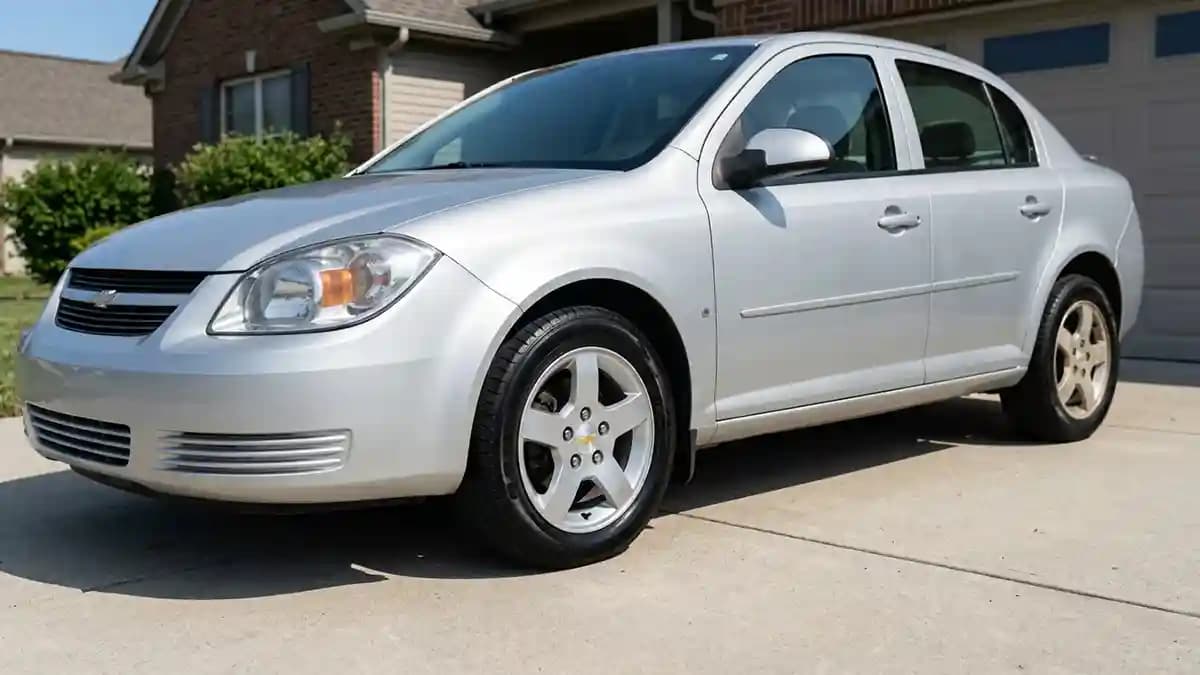
I was standing by a silver Cobalt last week and one wheel looked like it had lost a tooth. Three center caps had the Chevy bowtie sitting proud in the middle, and one had a sad blank spot collecting dust. The car was clean, the tires were dressed, and that one empty center made the whole wheel look tired. Tiny part, big insult.
Common replacement listings still show Cobalt center caps for the 2005 to 2010 range, with part numbers like 9595095, 9598714, and 05216, but they also tell buyers to check photos and measurements before ordering. That last part matters more than the logo. A correct badge looks factory. A wrong badge looks like a coin dropped into a cereal bowl.
First check what actually fell off
Here is where most people get tricked. They look at the empty circle and think the center cap fell off, but sometimes only the bowtie face came loose. Other times the full plastic cap is gone, clips and all, and a sticker alone will not save you. That is like putting a bandage on a missing shoe.
Check the wheel before you shop. Do not start with the part name. Start with your fingers, your eyes, and one clean photo. That little check saves you from buying the wrong thing twice.
See if the plastic cap body is still clipped in place.
Press the cap edge and feel if it moves or rattles.
Look for a flat round face where a new bowtie badge can sit.
Check the other three wheels for loose caps.
Take one straight photo of the good cap and one close photo of the bad cap.
If the cap body is missing, you need a full center cap or a blank cap first. If the cap body is still there and only the face looks ugly, faded, cracked, or gone, a domed badge can be the smart fix. That is where wheel emblems make sense, because you are fixing the part people see. You are not paying for plastic clips when your old clips still hold tight.
Chevy Cobalt center cap size is not a guess
The phrase Chevy Cobalt center cap sounds like one size, but wheels love making simple things dumb. Some listings call out a 2 inch cap, others show 2.125 inch diameter, and other generic Chevy fitment listings mention sizes near 53.5 mm or 58 mm. That does not mean everyone is wrong. It means the car, wheel, trim, and cap style change the answer.
This is why I trust a ruler more than a product title. A product title is written by a person trying to fit many search terms into one line. A ruler does not care about SEO. It just sits there and tells the truth, the little boring hero.
Use this quick measuring routine:
Clean the cap face with a dry cloth.
Measure only the visible flat circle where the badge will sit.
Measure edge to edge across the widest part.
Use millimeters, because wheel badge fit is a millimeter game.
If you are between two sizes, choose the smaller size by about 1 mm.
Send a photo with the measurement if you are not sure.
Do not measure the outer wheel bore and call it the sticker size. Do not measure the curved lip or the old glue stain. You want the flat landing zone. That is the spot where the new bowtie will actually touch. This is the part where people start to relax. Once you measure the flat face, the job stops feeling like a mystery. You are not hunting through random listings at midnight. You are ordering one round badge that matches the real surface in front of you.
Replace the bowtie badge when the cap body is good
A missing Chevy hubcap badge looks worse than it costs to fix. That is the good news. If the cap body still clips into the wheel and the only problem is the worn bowtie, you can replace the visible badge without buying four full caps. That saves money, and it keeps the original fit of your wheel.
I like this route for daily cars because it is honest. You are not pretending the car needs rare factory parts if the problem is just the face. A good domed sticker gives the center cap depth, shine, and a clean finished look. If you want to compare thin vinyl with a raised dome before you decide, the guide on domed stickers vs vinyl decals for wheel caps explains the trade in plain terms.
A Cobalt can wear several wheel styles, so the look also matters. Some owners want the classic gold bowtie. Some want black and silver because the car has darker wheels. Some just want all four wheels to match again.
Your choices usually come down to this:
Factory style bowtie for the clean stock look.
Black bowtie for a sharper look on dark or silver wheels.
Chrome look badge if the cap has shiny trim.
Custom color if you are matching brake calipers, stripes, or other small details.
Blank or simple center badge if the car is on aftermarket wheels.
The Chevrolet epoxy sticker shows how a Chevy themed domed face can sit under a clear raised finish. For another bowtie based design, see Chevrolet S Series wheel center caps. The exact Cobalt choice still comes back to size, shape, and the flat surface on your cap. Pretty design comes second.
When you need a full cap instead
Real talk for a second. A sticker cannot replace clips. If the center cap body is gone, cracked, or loose enough to pop out with one finger, start with the cap body. Put a beautiful new badge on a broken cap and it will still leave the wheel like it has somewhere better to be.
The owner manual also points to the difference between wheel covers and aluminum wheel center caps. It says plastic wheel covers are pried at the edge with the flat end of the wheel wrench, while aluminum wheel center caps can be removed first with a finger or the wheel wrench. That is useful because not every Cobalt wheel setup comes apart the same way.
Buy a full cap when you see these signs:
The center hole is empty and you can see the hub area behind it.
The plastic clips on the back are cracked or missing.
The cap spins by hand after you press it in.
The cap sits crooked and will not snap flush.
The face is curved so much that a flat badge cannot bond around the edge.
The cap is from an aftermarket wheel and uses a different cap system.
When you buy a full cap, match the part number, photo, clip layout, wheel finish, and size. Do not trust only the words Chevy Cobalt. Many Cobalt cars now wear swapped or aftermarket rims. One wrong cap can look right in the picture and still fit like soup on a fork.
How to prep the old cap face
Prep is boring until it saves the job. Then suddenly prep is your best friend with a tiny towel. I have seen great badges fail because somebody stuck them over wax, tire shine, or old glue that felt smooth but was secretly greasy. The sticker did not fail, the surface lied.
Here is the prep routine I would use on a Cobalt cap:
Remove the cap if it comes out safely.
Wash the face with mild soap and water.
Dry it fully, including the small edge groove.
Remove old glue with a safe cleaner made for trim or painted plastic.
Wipe the final flat area with isopropyl alcohol.
Test place the badge before peeling the backing.
The final alcohol wipe is the step people skip because they are excited. Do not skip it. Finger oil is invisible, but it loves ruining adhesive. Tire shine is worse, like trying to stick a label onto a buttered plate.
How to install the new Chevy bowtie badge
Once the cap is clean and dry, the install is not hard. The hardest part is not rushing like a raccoon with a credit card. Take ten extra seconds to line it up. Those ten seconds are cheaper than peeling it back off while saying words your neighbor learns by accident.
Use this simple install:
Place the badge over the cap without peeling the backing.
Check the size from all sides.
Use a small piece of masking tape as an alignment guide if needed.
Peel the backing without touching the adhesive.
Lower one edge first, then roll it down slowly.
Press from the center out toward the edge.
Hold firm pressure for at least 30 seconds.
Leave it alone so the adhesive can build strength.
If you want to see why manufacturing quality matters before this step, the How It’s Made page shows the print, cut, doming, curing, and final quality check steps used for wheel emblems. The short version is simple. Clean edges and the right size make installation easier. A crooked or badly cut circle makes you look drunk even when you did the job sober.
Temperature matters too. Install in a mild garage, not on a freezing cap or a sun baked wheel. A cold sticker feels stiff and rude. A hot cap can make adhesive grab too fast.
Keep it on the wheel after the repair
The install is not over the second you press the badge down. Adhesive needs time. Treat the new center cap face like it is fresh paint for the first couple of days. No blasting the edges with a pressure washer while feeling proud of yourself.
Here is the simple care plan:
Wait before washing the car.
Avoid direct pressure at the badge edge.
Use mild car soap.
Rinse brake dust before scrubbing.
Check the edges after the first wash.
A raised dome makes the emblem look finished and gives the print a clear protective face. It is not magic armor from a space movie. Treat it like a good car part and it will act like one. Treat it like a door mat and it will complain.
OEM or aftermarket for a Chevy Cobalt center cap
OEM parts make sense when you want the exact original part and the price does not annoy you. Aftermarket parts make sense when the old cap body is fine or the original parts are hard to find in clean shape. For a Cobalt, that decision is extra real because many cars are used daily, repaired on a budget, and kept alive by owners who are smart with money. I respect that.
The OEM vs aftermarket wheel emblems guide covers the big choice in more depth. My quick take is simple. Use OEM when the full cap is missing or when originality matters. Use a well made domed replacement when the cap face is the ugly part.
Here is my buying rule:
If the cap is missing, buy the cap.
If the badge is missing, measure and replace the badge.
If the cap is cracked, replace the cap first.
If the cap is faded but solid, a domed badge is usually the best value.
If you cannot tell, send photos before buying.
That last step saves headaches. A front photo, a side photo, and the measured flat circle answer more than ten messages saying it is a Chevy Cobalt. Wheels get swapped. Previous owners do weird things.
Final take
A Chevy Cobalt center cap replacement is simple when you diagnose the wheel before you shop. If the cap body is gone, buy the full cap. If the cap body is solid and the bowtie badge is missing or faded, measure the flat face and order the right domed emblem. That is the clean, sane path.
The key is not the logo first. The key is the surface. Measure it, clean it, line it up slowly, and give the adhesive time to settle. Do that and your Cobalt wheels stop looking unfinished.
Quick Q and A
Q: What size is a Chevy Cobalt center cap?
Different listings show different sizes, so measure your own cap face in millimeters before ordering. Some common Cobalt listings show around 2 inches, while other Chevy fit listings show nearby sizes.
Q: Can I replace only the Chevy bowtie badge?
Yes, if the center cap body is still clipped in tight and the face is flat. If the whole cap is missing, you need a full cap first.
Q: What is the best way to measure a missing Chevy hubcap badge?
Measure a good cap from the other side of the car. Measure the flat badge face, not the outer wheel hole or curved lip.
Q: Will a domed badge stay on Cobalt wheels?
Yes, when the surface is flat, clean, dry, and the size is right. The main failures come from dirt, wax, tire shine, cold installs, or pressure washing too soon.
Q: Should I buy OEM or aftermarket for Cobalt wheels?
Buy OEM or a full replacement cap when the cap body is missing or broken. Buy a domed replacement badge when the cap is still good and only the visible bowtie needs help.