
Finding Emblems for Discontinued Rims: A Solution for Older Cars
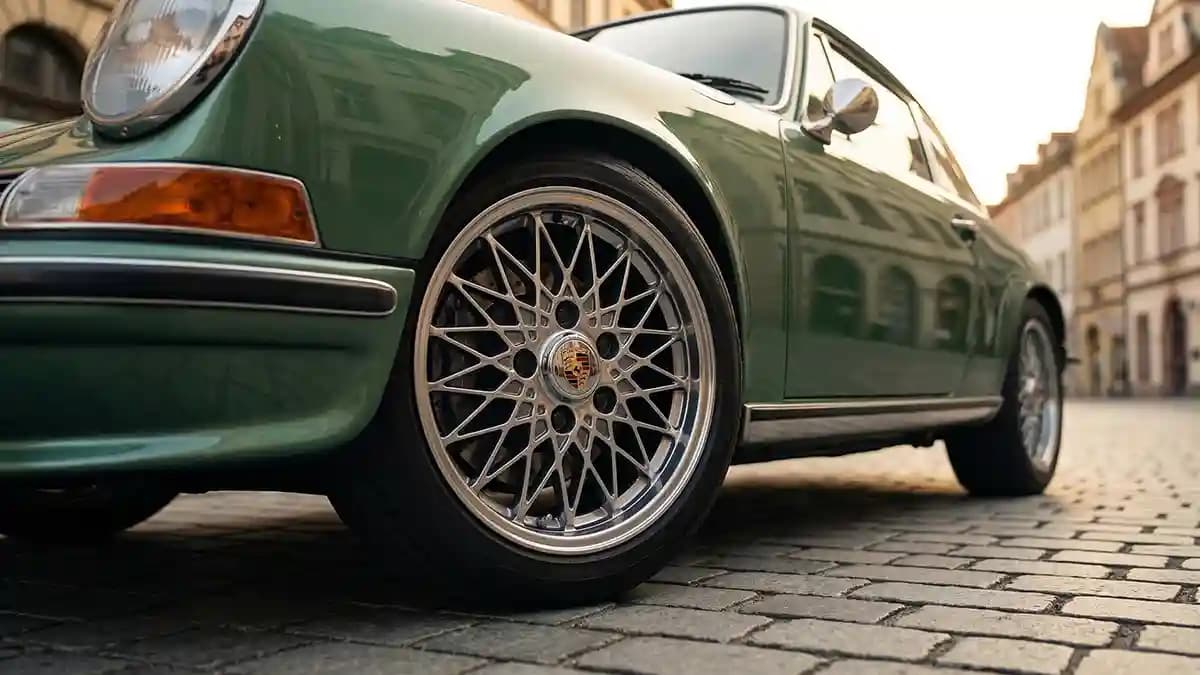
Finding emblems for discontinued rims is absolutely possible, and the fix for older cars usually comes down to part numbers, exact millimeter sizing, and a custom domed overlay when OEM stock is gone. I was standing next to an old silver sedan last week with one faded wheel center in my hand and the owner already looked defeated. The paint was still nice, the wheels had good shape, and then right in the middle sat a badge that looked tired, yellow, and half retired. That tiny circle was ruining the whole car.
A bad wheel emblem does that. You can ignore a rock chip for months, but one ugly center badge pulls your eye like a loose tooth. Older cars feel this even more because the wheel design is usually simple and honest, so the middle matters. When the center looks wrong, the whole wheel looks wrong, even when the rest of the car is solid.
This problem is not getting smaller either. S and P Global Mobility said the average age of cars and light trucks in the United States reached 12.6 years in 2024, and more than 110 million vehicles are now in the six to fourteen year range where aftermarket service becomes a big deal. More owners are keeping good cars longer, which means more owners are hunting for little parts the factory stopped caring about years ago.
Why discontinued rim emblems get annoying so fast
The headache is usually not the wheel. It is the pile of little variables around the wheel. Same car, different trim. Same year, different wheel package. Same cap size, different silver. That is why people buy what looks right online, then open the package and realize it belongs to some cousin of their wheel, not their wheel.
Here are the five things that usually cause the mess.
The wheel maker stopped producing that exact cap.
The car had more than one factory wheel option in the same model year.
The finish changed even when the diameter stayed close.
Used caps show up one at a time instead of as a full set.
Sellers list by vehicle name only and skip the details that actually matter.
That confusion is normal even on cap specific sites. Finding the proper replacement can be difficult because many caps look similar, and we recommend using the part number on the back of the cap to find the exact match. Our brand pages repeat the same rule, the part number is critical, more than one cap may exist for one model year, and the finish still has to match.
I learned that the hard way on an old German wagon. I found a cap that looked perfect in the listing photo, installed it, stepped back, and realized the silver tone was warmer than the other three. Same logo. Same size. Wrong face. The wheel looked like it borrowed jewelry from another car.
OEM support is real, but it does not solve everything
Some brands still help classic owners. BMW Group Classic says it reproduces and reissues original parts for classic BMWs, Porsche Classic runs a genuine parts catalog through its classic network, and GM says its licensing program includes restoration parts. That is good news, but it is not magic.
Support for classic parts does not mean every old rim emblem is sitting on a shelf waiting for you. It means some models get help, some parts come back, and some owners get lucky. The gap between “the brand supports classics” and “I can buy my exact wheel center today” is still where most people lose hours.
When somebody sends me wheel photos, I do not start shopping. I start sorting the problem, because the fix depends on what is still alive.
Is the whole cap missing, or only the emblem face?
Do you still have one good cap to inspect?
Is the cap face flat enough for an overlay?
Are the clips still strong?
Do you want factory correct, or just factory clean?
That last question matters more than people expect. Factory correct means exact part, exact finish, exact profile. Factory clean means the wheel looks right, the emblem sits clean, and the car stops looking unfinished. Both goals are valid. They just send you in different directions.
If I still have one surviving cap, I already feel better. One good cap gives me the part number, face size, finish, shape, and logo scale. One cap is evidence. One cap tells the truth.
What to inspect on the surviving cap
This is the inspection list that saves the most money.
Photograph the front and the back.
Write down every number molded or stamped into the rear.
Measure the visible emblem face in millimeters.
Measure the full cap outer diameter if you might replace the whole cap.
Note the finish, bright silver, satin silver, chrome, black, brushed look, or body color.
Check whether the face is flat, slightly curved, or deeply concave.
Most people stop at the logo size. That is how they buy something that fits the art but not the surface. The face matters more than the picture. A dome that lands partly on a curve is basically asking to lift at the edge later.
That is why I always start with measurement. The wheel emblems section is a good place to browse once you know your target size, and the full shop helps when you want to compare more options across styles and brands. And if you want the material side explained in plain words, read Epoxy vs polyurethane, because a clean logo is useless if the clear top turns yellow later.
When a custom domed emblem is the smarter move
This is where the problem gets easier. If the cap body is still there and the visible face is the only ugly part, a custom domed emblem can save the look without forcing you into a long hunt for a perfect OEM cap. You keep the original shell. You refresh the part people actually see. You stop gambling on one dusty used listing with no returns.
That kind of thinking fits the bigger restoration scene now too. Hagerty said in 2024 that three dimensional printing has become a critical solution for restoration and modification. To me, that same mindset applies here, owners are far more open to smart, precise fixes instead of endless suffering for one impossible part.
A custom domed emblem makes the most sense in these cases.
The original cap still clips in properly.
The old print is faded, scratched, or peeling.
The wheel brand is discontinued and full replacement caps are rare.
You have three good caps and one ugly one.
You care more about the wheel looking right than winning a concours argument.
[AI Image Prompt: Realistic close up photo of an older alloy wheel on a clean vintage sedan, one hand holding a removed faded center cap and the other hand aligning a fresh custom domed emblem over the flat face, light brake dust in the wheel corners, soft afternoon garage lighting, shallow depth of field, premium automotive product photography, crisp detail on the resin dome and the worn original cap surface.]
That is the sweet spot. Not a fake miracle, just a smart save. The original cap keeps the fit. The fresh emblem restores the face. The wheel looks like itself again.
When the custom route will not save you
Not every cap deserves rescue. Some are too far gone and pretending otherwise just burns time.
Broken retaining clips mean the cap itself is bad.
Deep concave faces can fight a normal dome.
Cracks through the logo area will show through the repair.
Swollen corrosion under the face can ruin the surface.
Caps that sit proud and get hit often may need full replacement first.
This is where shape matters. If the face has a slight curve, flexibility matters more than size alone. That is why the shore hardness guide is useful when the cap is not perfectly flat. A sticker can be the right diameter and still be the wrong fit.
My garage version of this rule is simple. Flat is easy. Shallow curve is picky. Deep bowl is drama. I try not to invite drama.
The decision tree I use on older cars
You do not need a spreadsheet. You need one honest minute with the wheel in front of you.
If an exact OEM cap exists at a sane price, buy it.
If the OEM cap exists but looks tired, restore the face.
If the shell survives, overlay the shell.
If nothing survives, find a usable shell or blank cap first, then fix the front.
If the wheel is rare, start with photos and measurements instead of blind shopping.
This is why I trust real parts more than listing photos. A real cap tells the truth about size, finish, and shape. Photos lie for fun. They hide warmth in the silver, hide scratches, and make every clip look healthy until it snaps in your hand.
Do not ignore blank cap bodies either. On a lot of discontinued aftermarket rims, finding the exact printed face is harder than finding a shell with the right outer size. Once the shell fits correctly, the front can usually be brought back in a way that looks clean and intentional.
The details that make the repair look expensive
Bad restoration is easy to spot. The logo is too small. The ring is too fat. The blue is wrong. The dome is too tall and looks like candy. All the little stuff people think is me being obsessive is exactly what makes the final result look right.
These are the details I care about most.
The logo scale has to match the original face.
The outer ring width has to suit the wheel design.
The silver tone has to match the rest of the trim.
The dome height should look clean, not cartoonish.
The edge line should stay smooth under light.
The centering has to be dead on.
That last one is brutal. The car might be parked, but the eye still catches crooked. One off center emblem can undo all the work in about two seconds.
Prep decides whether the fix lasts
People love talking about resin and almost nobody loves talking about prep. Prep is still the boss.
Wash the cap with normal car soap and dry it well.
Wipe the face with isopropyl alcohol on a clean microfiber.
Test the position before peeling the backing.
Apply at a mild temperature, not on a freezing cap.
Press from the center out with firm pressure.
Leave it alone before aggressive washing.
That routine is boring, which is exactly why it works. Most failures are not dramatic material failures. They are simple install failures caused by dirt, oil, cold plastic, or somebody rushing the job because they wanted the after photo too fast.
If you want a look at the process side, the How It’s Made page is useful because it shows the print, cut, doming, and quality check sequence. On older cars, process matters because simple wheel designs expose every shortcut.
Why this fix feels so satisfying on an older car
Older cars do not hide mistakes well. That is part of their charm. The lines are cleaner, the wheels are simpler, and the details matter more. When you fix the center properly, the whole wheel snaps back into place and the car suddenly looks cared for again.
That payoff is why I like this job so much. It is small money compared with most restoration work, but the visual return is huge. You wash the car, step back, and the wheels stop apologizing for themselves. That is a very good garage moment.
And there is a bigger reason this matters now. SEMA has said people are holding onto vehicles longer, and Hagerty has pointed to newer restoration tools becoming more important. So no, you are not wasting time by saving the little parts. You are doing what a lot of owners are doing now, keeping good cars alive and getting smarter about the pieces the factory forgot.
Quick Q and A
Q: How do I find the right emblem for discontinued rims?
Start with one surviving cap if you have it. Read the part number on the back, measure the face in millimeters, and match the finish before buying anything.
Q: What if the whole cap is gone?
Then the shell becomes the first problem, not the emblem. Find a cap body with the correct size and clip style, then restore the visible face.
Q: Are custom domed emblems only for modified cars?
No. They work really well on factory style older cars when the original cap body is still usable.
Q: Can I use a domed emblem on a curved cap?
Sometimes, yes. Flat faces are easiest, shallow curves are possible, and deep curves need the right material or a different plan.
Q: Is OEM always better?
Not always. Exact OEM is great when you can get it, but a clean restoration on the original cap can look better than a tired used part with the wrong finish.
Q: What is the biggest mistake people make?
They shop by car model alone. Wheel package, part number, finish, and face shape matter much more than most people think.