
Curved Surface Stickers: Applying Domes to Curved Surfaces Without Edge Lift
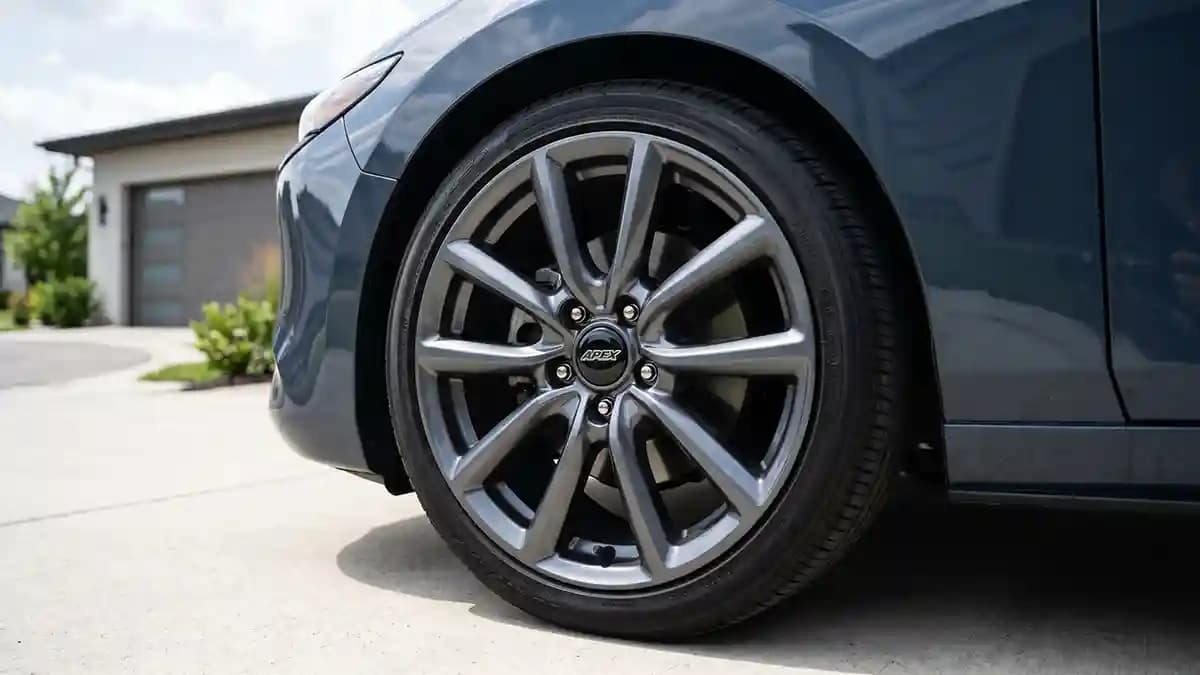
Curved surface stickers work on mild curves, but applying domes to curved surfaces is a masterclass in tension because the edge always tells the truth first. If the cap is almost flat, you can win with clean prep, slow pressure, and the right size. If the cap is a deep bowl, the sticker will fight like a cat in a sink. I learned this while standing over a set of wheel caps that looked easy until one edge lifted and waved at me like it owned the place.
That lifted edge is not just ugly, it is the start of dirt, water, brake dust, and wash pressure sneaking under the adhesive. Once that happens, the sticker is no longer bonded as one clean face, it is hanging on by hope and pride. Hope is not an install method, even if half the internet acts like it is. The fix is not stronger fingers, it is less tension before the sticker ever touches the cap.
Why curved caps fight back
A flat wheel cap is simple because the adhesive touches the full face and the dome sits relaxed. A curved cap is different because the dome wants to stay in its original shape while the cap asks it to bend. That pull creates tension, and tension loves to show up at the edge. This is why the middle often looks perfect while the outside ring starts acting weird.
I always check the cap before I talk about artwork, color, or logo style. A cool design on the wrong surface still fails, and then people blame the product instead of the shape. Real talk, most bad curved installs were doomed before anyone peeled the backing. The surface shape decides if the job is smart or if you are decorating a future problem.
Use this quick garage test before ordering.
Put the cap on a table under good light.
Look across the face from the side, not just from above.
Find the flat landing zone where the sticker will touch.
Press a paper circle over the area and watch the edge.
If the paper edge floats, the dome edge will float too.
If the face drops into a deep bowl, do not force it.
That paper test looks silly, yes. So does talking to a hubcap like it owes you rent. But it tells you the truth fast. If thin paper does not sit clean, a thicker domed emblem has no reason to behave better.
The curve is not always the problem
People hear curved surface stickers and think the curve itself is the enemy. Not always. A soft curve can work if the dome is sized right and the material is not being pulled past its comfort zone. The real enemy is uneven tension, because one side ends up carrying more load than the other.
This is why I often go smaller on slightly convex wheel caps. Not tiny, not weird, just honest. A 1 mm smaller emblem can stay on the flat part instead of climbing the rounded shoulder. Bigger is not stronger here, bigger gives the edge more ways to lift.
Use this sizing rule when the cap is not perfectly flat.
Measure the visible flat area only.
Ignore any rolled outer lip.
Stop before the edge starts curving away.
Choose exact size only when the landing zone is truly flat.
Choose 1 mm smaller when the outer edge rounds down.
Walk away from deep bowls unless the dome was made for that shape.
This is why I like shopping by real millimeter size instead of car model guesses. A model name does not tell you the curve, the cap in your hand does. Start with the actual face, then choose from clean options like wheel emblems that let size do the talking. The badge should look like it grew there, not like you trapped it there.
The flat surface rule nobody wants to hear
Here is the part that saves money and also annoys people. Most domed wheel emblems are built for flat, smooth surfaces. That does not mean a barely rounded cap is impossible, it means you need to respect the landing zone. Deep bowls, sharp shoulders, and rough plastic are where the adhesive starts losing the arm wrestle.
I see this mistake with old aftermarket caps a lot. The owner measures the full circle, orders a pretty dome, and then tries to make it sit across the whole dish. The middle sticks, the edge lifts, and then the sticker gets blamed. That is like blaming a chair because you put it on stairs.
Do not order your way out of a surface problem. The sticker edge must land on a flat area, the surface must be smooth, and the cap should feel clean under your finger. A premium dome still needs a fair place to sit. Even the best adhesive cannot bite air.
Prep is boring, which is why it works
Cleaning talk makes people sleepy, I know. But prep is where curved surface stickers either earn their keep or start plotting their escape. On a flat cap, you can sometimes survive lazy prep. On a curved cap, the sticker is already under more stress, so dirt, wax, and oil become paid assassins.
Wash first with mild soap and water, then dry the cap fully. Wipe the landing zone with isopropyl alcohol on a clean microfiber cloth, not the towel you used to clean your dog last Thursday. Let the surface flash dry before you peel the backing. If the surface feels slick like a bowling lane, clean it again.
Keep the prep kit simple. Mild car soap, clean water, fresh microfiber, isopropyl alcohol, masking tape, a hair dryer, and a soft cloth are enough. No greasy polish. No mystery cleaner from the back of the shelf.
How I apply a dome on a mild curve
This is the part where slow wins. Fast hands make crooked stickers and sad faces. I test fit the emblem first with the backing still on, because once adhesive touches a curved surface, pulling it back can stretch the part. You do not want the sticker acting like pizza cheese.
Mark the top with a tiny piece of masking tape. Check the logo angle while the cap is on the wheel if orientation matters. A perfect fit can still look wrong if the logo points at the moon. Ask me how I know, actually do not, I am still annoyed.
Here is the install method I trust.
Warm the cap slightly if the garage is cool.
Warm the sticker gently, not hot, just more flexible.
Set the center first.
Press from the center outward in slow circles.
Work toward the nearest edge, not across the whole face at once.
Hold firm pressure around the edge for several seconds.
Come back after a few minutes and press the edge again.
Notice I said gentle warmth. Do not cook the dome. You are trying to make the material relax a bit, not turn your badge into a grilled cheese. If your fingers say ouch, you already went too far.
The edge is the whole job
On curved hubcap decals, the edge is where the fight happens. The center almost always sticks because it has the most contact and the least stress. The edge has the least forgiveness, so that small ring decides if the install looks factory clean or driveway tragic. I press the center first, but I judge the job by the edge.
Use a clean soft cloth and small circular pressure around the outside. Stop touching it for a few minutes so the adhesive can start to grab. Then press again, because the first pass only starts the work. This second press is not extra, it is the difference between neat and annoying.
Look from the side after the first press. You want no bright shadow line, no visible gap, no spring back, and no clicking feel when you tap the edge with a fingernail. Firm is good. Panic pressure is bad.
Heat helps, until it does not
Heat helps when the material needs a little more flex and the adhesive needs a fair bonding temperature. It hurts when people use too much, too close, for too long. I have seen domes warped by heat guns held like flamethrowers. The installer looked proud right until the badge started looking like a melted jelly bean.
For most garage installs, a hair dryer is safer than a heat gun. Move it around and keep your hand near the cap, because your skin is a decent warning system. Warm the cap and the emblem just enough so they feel mild and relaxed. Heat is a helper, not a lawyer, it cannot argue physics out of the room.
Use heat when the garage is cool, the cap feels cold, the dome feels stiff, or the curve is mild but needs help. Do not use heat when the cap is already hot from sun, the plastic is thin, the surface still has solvent on it, or you are trying to force a bad fit. Warm gently, press firmly, and stop before you get brave. Brave with heat usually means expensive and bent.
Concave caps and old emblems
Concave caps are trickier than convex caps because the sticker wants to bridge the hollow. The middle may touch first while the edge sits high, or the edge may touch while the center floats. Either way, you are fighting air and tension at the same time. Very fun, in the same way stepping on a plug is fun.
A shallow concave floor can work if the landing area is still flat. The key is whether the sticker sits on the floor, not on the rising wall. If the emblem edge climbs the wall, it will lift later. It may look fine for a photo, but car washes do not care about your photo.
Putting a dome over an old emblem makes this even less forgiving. If the old emblem has raised letters, a crest, a clear coat bubble, or a chipped edge, your new dome is landing on a tiny obstacle course. If you are tempted to layer, read when stickers over existing emblems work before you peel anything. Flat over flat can work, raised over curved is usually asking for trouble.
Use this quick no list.
Deep bowl with no flat floor, no.
Textured plastic bowl, no.
Old glue ridge under the edge, no.
Raised old emblem, no.
Shallow flat floor with edge clearance, yes with care.
Mild convex cap with smaller dome, yes with care.
People hate the word no when they want a cool badge. I get it. But no is cheaper than buying twice. A bad surface turns every sticker into a short term rental.
Material choice and aftercare
Thicker domes look more premium, but they bend less. Thinner flat decals bend more, but they do not give the same raised badge feel. For flat caps, domed emblems are the easy winner for depth and gloss. For stronger curves, flexibility starts to matter more than shine.
That does not mean you should avoid domes. It means pick the right job for the right product. A flat or barely curved wheel cap is perfect for a raised emblem, like these BBS wheel emblems or a custom size from the shop. A strong curve needs a different plan, smaller size, flatter material, or a replacement cap.
For a deeper comparison, read domed stickers vs vinyl decals for wheel caps. That choice is not just about looks. It is about how much shape the sticker has to fight after install. The best looking option is the one that still looks good next month.
After install, leave the badge alone. Humans love touching fresh stuff, but do not act like a raccoon with a shiny object. Let the adhesive settle before washing, rubbing, or testing the edge with a pressure washer. The first few days matter more than people think.
Use this aftercare plan.
Keep the caps dry for at least a full day.
Avoid aggressive washing for several days.
Clean gently with mild soap the first time.
Keep pressure washer tips away from the edge.
Inspect the edge after the first drive and press again if needed.
That last press is not cheating. It is smart care during the bond window. On curved caps, that small second press often makes the difference between clean and annoying.
Common mistakes that cause edge lift
Most edge lift comes from simple mistakes. Wheel caps are dramatic like that. None of these are rare or hard to avoid. People just rush.
The usual suspects are easy to spot.
Ordering too large.
Applying over a curved shoulder.
Skipping alcohol prep.
Installing in a cold garage.
Using heat like a weapon.
Washing too soon.
Layering over a raised old emblem.
Ignoring the surface test.
Fix those and your odds go way up. The sticker stops fighting. The edge stays down. The wheel looks finished instead of almost finished.
Quick Q and A
Q: Can curved surface stickers work on wheel center caps?
Yes, if the curve is mild and the sticker edge lands on a flat smooth area. Strong curves and deep bowls usually lead to edge lift.
Q: Should I order the exact size for a curved cap?
Order the exact size only when the whole landing zone is flat. If the outer edge rolls away, go 1 mm smaller so the dome does not sit on the curved shoulder.
Q: Can I use a heat gun on domed emblems?
Use gentle warmth only, and a hair dryer is safer for most people. Too much heat can warp the dome or soften the cap.
Q: Why do sticker edges lift first?
The edge has the least contact area and the most stress on curved surfaces. Poor cleaning, cold installs, and oversized stickers make it worse.
Q: Can I apply a dome over an old emblem?
Only when the old emblem is flat, smooth, clean, and fully stuck down. Raised letters, chips, bubbles, and old lifted edges will create new problems.
Q: How long should I wait before washing the car?
Give it at least a full day before gentle cleaning, and avoid aggressive washing for several days. Keep pressure washer tips away from the edge.