
Can You Put Wheel Stickers Over Existing Emblems? When It Works and When It Doesn't
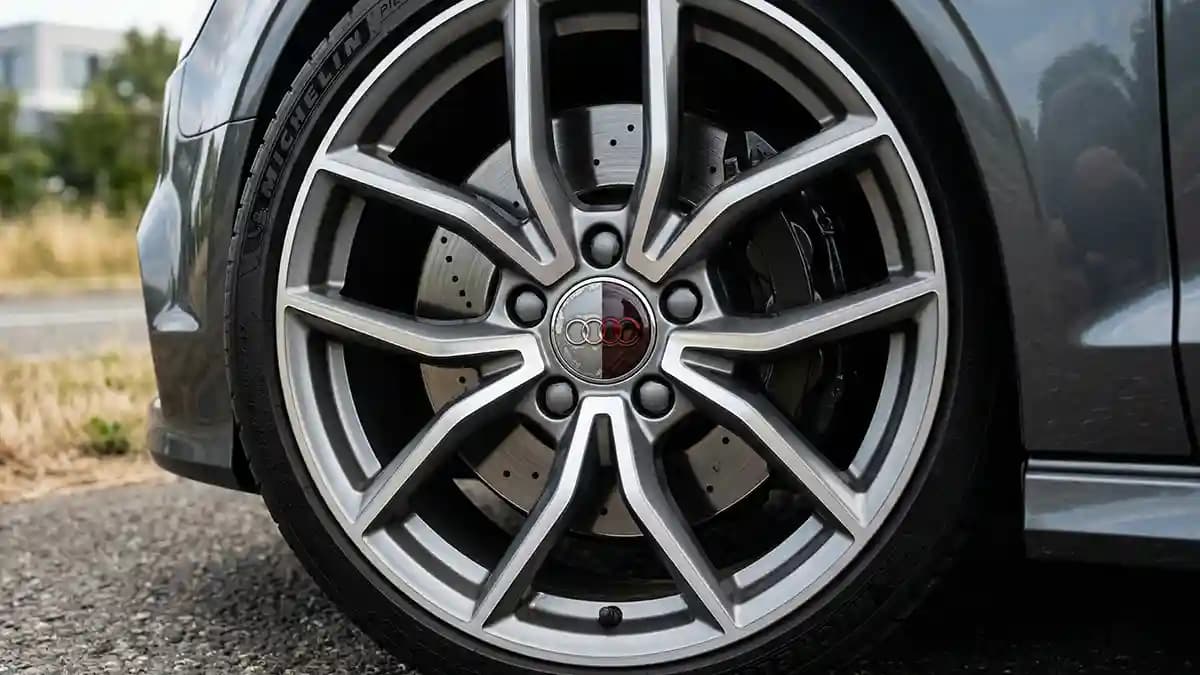
Sticker over existing wheel emblem can work, but only when the old badge is flat, tight, clean, and boring. That is the answer nobody wants because boring answers do not feel fun, but boring answers save money. Last week I was crouched next to a set of wheels that looked good from ten feet away and terrible from one foot away, and the owner asked the exact thing you are asking now. He wanted the fast fix, not the full surgery, and sometimes the fast fix is perfect, but sometimes it is like putting a nice tablecloth over a folding chair with one broken leg.
Here is the rule I use before I even peel the backing. If the old emblem gives the new sticker a smooth, solid landing zone, I will layer it. If the old emblem is raised, domed, cracked, loose, peeling, pitted, or has a chrome ridge that leaves the new sticker hanging in the air at the edge, I stop right there. Current adhesive guidance from Avery Dennison and ORAFOL keeps hammering the same boring point, films want a surface that is clean, smooth, dry, and free of wax, grease, and contamination, which is why a messy or uneven badge underneath is such a bad base in the first place.
And that same flat face rule shows up in current 2026 Impossible Stickers content too. Recent fitment posts keep telling buyers to measure the visible flat circle, not the outer lip, and one of the EV center cap guides says the dome should land on a flat circle so the edge seals. Product pages also spell it out in plain English, these emblems are intended for flat surfaces only.
Apply sticker on top of emblem, when layering works
I have had great results layering a fresh wheel sticker over an old emblem in a few very specific cases. The old face has to behave more like a blank cap than like a fancy badge. If it passes that test, you can save time, skip a messy removal job, and get a clean factory looking result.
The old emblem is flat across the visible face.
If I run a fingertip across it and do not feel a dome, a lip, or a deep recess, that is a good sign. A flat printed badge under a new domed overlay usually behaves well.The old emblem is bonded down hard.
No bubbles. No corners lifting. No soft spots when you press on it. If the layer underneath is failing, the new sticker only inherits the same problem, which is not a repair, it is just delayed disappointment.The top surface is smooth, not textured.
Matte texture, chipped paint, pitted clear coat, and embossed logos are all trouble. Adhesive loves contact, and texture steals contact.The size of the new sticker stays inside the flat landing zone.
This is huge. A sticker that just barely touches a raised outer ring is already halfway to edge lift.You are covering an ugly face, not trying to bridge a shape.
Covering faded print is one thing. Trying to span over a raised chrome logo is another thing entirely, and that second job usually turns into a little science experiment you did not ask for.
The big idea is simple. Layering works when the old emblem acts like stable plastic. Layering fails when the old emblem acts like a tiny obstacle course.
I learned this the hard way on a cap that looked flat until I held it sideways under garage light. From straight on, it seemed perfect. From the side, it had a shallow crown and a thin outer ridge, and that ridge was enough to keep the new sticker edge from sealing down fully. It looked fine that day, still fine the next morning, then a week later one edge started lifting like it was trying to wave at me.
The checks I do before I trust a cap overlay
You do not need fancy tools for the first round of inspection. Your eyes, a fingertip, and decent light will catch most of the stuff that matters. I do this before I clean anything because dirt can hide shape, and shape is the whole game here.
Look across the cap from the side.
This shows domes and crowns fast. Straight on, lots of bad caps lie to you.Press around the old emblem edge.
If anything clicks, flexes, or sounds crispy, I do not layer over it. Crispy plastic has a weird talent for ruining good ideas.Feel for a step up or step down.
Even a small step matters if your new sticker lands across it. One millimeter is plenty to make a nice wheel look cheap.Check for clear coat failure or flaking print.
A fresh adhesive hates a flaky top layer. It wants a stable surface, not old skin peeling off.Dry fit the new sticker without peeling it.
Set it in place and see where the edge lands. If the outer edge lands on a lip, stop and rethink the job.Ask the rude question.
Am I layering because it is the right fix, or because I do not feel like removing the old junk? That question saves me from a lot of lazy mistakes.
If the cap passes all six, layering is still on the table. If it fails even one in an obvious way, I remove the old emblem and start clean.
When it does not work, and why it goes wrong fast
Most bad overlay jobs fail for the same dumb reasons. Not dumb because you are dumb, dumb because the problem looks tiny and then turns out to matter a lot. Adhesive films need real contact, and too much texture or shape means the adhesive only touches the high spots instead of the full face. Avery Dennison says the same thing in its wall graphics guidance, too much surface texture leaves adhesive contact only on the high points, which is not enough for proper adhesion, and while that example is a wall, the bonding logic is the same on a wheel badge.
That is why these caps are bad candidates for layering.
Domed factory badges
A new sticker laid over a dome has to stretch over a hump and then somehow seal at the edge. That is like trying to wrap a coin with a flat cracker.Raised chrome logos
The center floats, the edges bridge, and air finds a home. Then water joins the party.Peeling or bubbling emblems
If the old layer is already losing the fight, the new layer does not fix the fight. It just hides it for a minute.Caps with a deep outer ring
The new sticker looks right at first, but the edge sits half on the flat face and half on the ring. That edge becomes the weak point every single time.Rough, chalky, or pitted caps
Contamination and texture kill contact. Adhesive wants a clean handshake, not a gravel road.Curved or concave faces not made for that sticker
Even high quality films are sensitive to shape and tension. Avery and ORAFOL both warn that temperature, curves, edges, and stretched areas need extra care because adhesion drops when the install conditions are wrong.
Wheel emblem size and the flat landing zone
This part gets skipped because it sounds boring, and then people wonder why the result looks off. Current fitment guidance on Impossible Stickers keeps coming back to the same thing, measure the visible flat circle where the sticker actually sits, not the outer cap diameter, and not the rear clip measurement unless you are replacing the whole snap in cap. The shop and product pages also show that these overlays are sold by visible diameter in millimeters across a wide size range, so you really do have room to buy for the face you have, not the part name you guessed.
I see this mistake all the time. Someone measures the shiny outer ring because that is the part that looks important. Then the new sticker arrives, it lands too wide, the edge rides the lip, and suddenly the cap looks like it is wearing a hat that does not fit. A wheel is not forgiving with this stuff. The center is tiny, but your eye goes there first.
If you want the deeper measuring routine, read Millimeters Matter: How to Use Digital Calipers for a Perfect Fit. And if you are not even sure whether you are dealing with a center cap, a dust cap, or a full wheel cover, The Hubcap Terminology Guide: Center Caps vs. Dust Caps vs. Hubcaps clears that up fast.
My install routine when I do layer a wheel sticker
Once I decide layering is safe, I stop trying to be clever. I follow the same routine every time. Simple beats flashy here.
Wash the cap face first.
Knock off brake dust, road film, and the weird gray grime wheels collect. Dry it fully before the next step.Remove wax, oil, and leftover dressing.
Avery Dennison says films should go onto a surface that is clean, smooth, and dry, and it explicitly warns against ammonia based cleaners like Windex because they affect adhesive stability. ORAFOL says the same basic thing, clean, smooth, weatherproof, and free of grease, wax, and silicone.Wipe with IPA the right way.
Use a clean cloth, wipe, then dry wipe before the solvent flashes off. Do not smear dirt around like you are buttering toast.Dry fit the sticker.
Place it on the cap without peeling the liner. Check the edge line and logo orientation while you still have zero risk.Press from the center out.
I place the center first, then work outward with steady pressure. Current Impossible Stickers install guides describe the same center outward press routine because the goal is a sealed edge, not just a centered logo.Recheck the edge after a short wait.
Avery guidance for graphic edges says functional bond builds with time and re pressing edges helps prevent premature lift. I do that on small wheel overlays too because the edge is where failure loves to start.
This is not hard. It just punishes rushing. Half the jobs people call “bad adhesive” are really bad prep, bad fit, or bad patience.
Temperature matters more than people think
Cold installs are sneaky. The sticker feels stuck, looks stuck, and then acts weird later. Avery Dennison says application temperature is one of the most critical factors for pressure sensitive films, with lower temperatures reducing adhesion. Its current guidance puts the minimum around 10°C and says around 16°C is better for easier, safer bonding.
So no, I do not love doing these in a freezing driveway with numb fingers. I have done it, I looked like a raccoon trying to open a snack bag, and the result was not my best work. Warm cap, warm sticker, calm hands, clean air. That combo wins.
The other part people skip is cure time. Avery says give graphics about 24 hours to fully set before service, and ORAFOL says optimum adhesion is typically reached after three days, with no car wash before then. That is not marketing fluff, that is the adhesive settling into the surface and building strength.
Car washes, pressure washers, and the stuff that ruins lazy installs
Freshly layered wheel emblems do not want a fight on day one. ORAFOL says no car wash before the three day bond period is up, and it also warns against high pressure cleaning, aggressive chemicals, brushes, and hot wax programs for film covered surfaces. That advice comes from vehicle graphics, but it maps perfectly onto wheel stickers because wheel centers get hammered by water, grit, and cleaners.
So here is my simple rule. If you just layered a sticker over an old emblem, baby it for the first few days. No pressure washer point blank at the edge. No aggressive wheel acid. No “let me check if it is stuck” fingernail test every two hours like an anxious squirrel.
And here is the brutal truth. A perfect install on a bad foundation still loses. If the old emblem underneath is sketchy, washing only speeds up the failure you already baked into the job.
What I do instead when the old emblem is bad
When the original emblem is rough, I remove it. I know, I know, that is not the shortcut answer. But it is the answer that keeps you from doing the same job twice.
Remove the old emblem and adhesive cleanly.
Do not leave a crusty ring or a soft glue patch in the middle.Inspect the cap itself, not just the logo area.
If the cap face is damaged, fix that first or replace the cap.Measure the true flat landing zone.
That is the size that counts for an overlay.Buy the sticker for the cap you have, not the wheel name you hope matches.
Model names lie. Millimeters do not.Install on a clean blank face.
That is where a good domed badge really shines.
This is also where it helps to browse the main wheel emblems collection and the How It’s Made page. The shop gives you the size and style options, and the process page shows why a clean print, precise cut, and good dome make such a visible difference on something as small as a center badge.
So, can you put a wheel sticker over an existing emblem? Yes, when the old emblem is flat, fully bonded, smooth, and sized right for the new overlay. No, when you are trying to cover shape, damage, lift, or bad texture. The closer the old emblem feels to a clean blank cap, the better the result. The more it feels like an old badge with attitude, the more you should remove it first.
Quick Q and A
Q: Can I apply a sticker on top of a domed factory wheel badge?
I would not. A flat sticker or domed overlay over a domed badge usually bridges at the edges, and that is where lifting starts.
Q: Is a cap overlay a permanent fix?
It is a strong fix when the base is solid and the install is done right. It is a weak fix when the old emblem underneath is loose, cracked, or textured.
Q: Should I use alcohol before sticking the new emblem down?
Yes, after the basic wash step. Current Avery guidance supports cleaning away oil, wax, and contamination, and doing a clean dry wipe before application.
Q: How long should I wait before washing the wheels?
Give it at least 24 hours of calm time, and three days is the safer play before a wash or harsh exposure. That lines up with current Avery and ORAFOL application guidance.
Q: What is the biggest mistake people make with layered wheel stickers?
Buying the wrong size and letting the edge land on a raised lip. The second biggest mistake is layering over a failing emblem because it feels faster.