
Millimeters Matter: How to Use Digital Calipers for a Perfect Fit
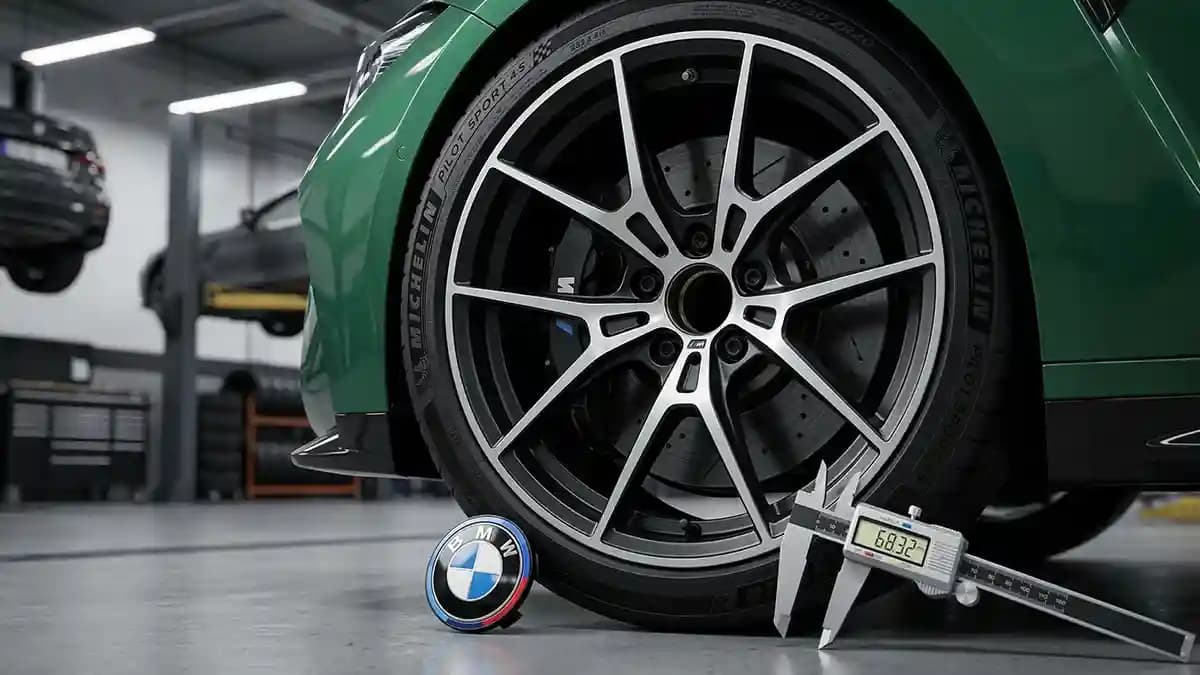
Millimeters matter because digital calipers are the fastest way to get a wheel badge or center cap size right the first time. I learned that crouched next to a dirty wheel with a cheap ruler in one hand and a wrong size emblem in the other, feeling like an idiot because I was off by what looked like nothing. That tiny nothing was enough to make the badge sit on the lip instead of the flat face. And once you see that gap, you cannot unsee it.
Most fitment mistakes are boring, not dramatic. The badge is not way too big. It is 1 mm too big. The cap is not totally different. The inner opening is 0.5 mm tighter than you guessed. That is why digital calipers matter so much for measuring center caps, wheel badges, and flat emblem landings. A modern caliper can usually show readings in 0.01 mm steps, but the bigger point is not chasing lab numbers, it is stopping the guesswork before you waste money.
I use digital calipers because they do four jobs in one tool. A standard caliper can measure outside dimensions, inside dimensions, steps, and depth, which is exactly what you need when a wheel center has a lip, a recess, or a weird snap in opening that lies to your eyes.
Here is the simple version before we get deep into it. If you are buying a domed emblem or overlay sticker, you usually care most about the flat visible landing zone, the part the adhesive will actually touch. If you are buying a full snap in cap, you care about the outside diameter, the inner clip area, and sometimes the depth too. People mix those up every day, then blame the part. The part is innocent, your measuring method was drunk.
The three measurements that actually matter
I break wheel center measurements into three buckets so I do not confuse myself.
Flat face diameter
This is the visible flat circle where a sticker or domed emblem will sit. This is the number most people need, especially when they are replacing only the logo and not the whole cap. On Impossible Stickers product pages and recent wheel cap guides, the useful size language stays in millimeters and commonly spans a huge range because the landing zone is what decides fit.Outer diameter, or O.D.
This is the full width across the outside of the cap. If you are dealing with a snap in cap or checking whether an existing cap matches a wheel bore opening, this number matters. Measure edge to edge across the widest point, not the printed logo area.Inner diameter, or I.D.
This is the smaller opening or clip area inside the cap system. On some setups this is the clip ring, on others it is the inner seat or retaining area. If your cap needs to lock into place, the I.D. can be the sneaky number that ruins your day.
The reason people order the wrong size is simple. They measure the shiny outer lip because it looks important, but the adhesive or clip does not live there. Recent fitment guides on Impossible Stickers keep repeating the same advice, measure the flat circle, not the outer lip, and if the face is recessed, measure the flat floor where the emblem will actually touch. That one rule saves a shocking amount of swearing.
What each part of the caliper is doing
The tool looks more serious than it is. Once you know the parts, it gets easy fast.
Outside jaws
Use these for the full outside width of a center cap, a blank badge, or the flat top of an emblem landing. These are the big lower jaws most people notice first. This is where your O.D. work happens.Inside jaws
Use these for the opening inside a cap, a recess, or a clip seat. These are the smaller top jaws. If you need inner diameter, this is your move.Depth rod
That little rod sliding out of the end matters more than people think. It tells you how deep a recess is, which helps when you are checking whether a domed badge will sit proud, sit flush, or rub on something silly.Zero button
Use it. Always. Good digital calipers are only useful if the display starts at zero when the jaws are fully closed. Mitutoyo’s own guidance also points back to calibration and accuracy standards, which is a nice nerdy way of saying your number is only as good as your setup.
The first time I used a caliper on a wheel cap, I felt like I was doing surgery on a cookie. Then it clicked. Open the jaws, touch both sides gently, lock your hand, read the number. That is it. No magic. No complicated math. Just do not squeeze the plastic like you are trying to punish it.
My exact measuring routine for wheel badges and center caps
This is the routine I trust when I want a perfect fit and not a close enough fit.
Clean the part first
Brake dust, old glue, and wax can fake your numbers. Wipe the cap before you measure, especially around edges and recesses.Close the caliper and zero it
If it does not read 0.00 with closed jaws, stop and fix that first. Starting wrong means every number after that is garbage.Measure the flat landing zone
Place the outside jaws lightly across the exact circle where the sticker will sit. Not the decorative lip. Not the raised ring. The flat landing zone.Take the number in at least three spots
Measure top to bottom, left to right, then one diagonal. If one reading is different, the cap may not be perfectly round, or you are catching a lip on one side.Write the number down in millimeters
Do not trust your memory. You will remember it wrong in ten minutes, then order 60 instead of 56 and act surprised when life punches back.If it is a snap in cap, measure the I.D. too
Use the inside jaws on the opening or retaining area. This is where many aftermarket wheel setups go weird.Measure the recess depth if the face sits low
A depth reading helps you choose the right dome height and avoid a badge that looks buried or awkward.
That is the moment where the whole thing becomes obvious. Once you measure the real landing zone in three places, bad fitment starts looking less like bad luck and more like lazy prep. The caliper is not only giving you a number. It is showing you which ring matters. And that is why a wheel that looked simple at first suddenly makes sense.
The most common mistake, measuring the wrong ring
This is where most people blow it. They measure the visible edge because it feels like the outer boundary of the badge. But if that edge is curved, raised, or beveled, it is the wrong place. Adhesive wants the flat floor. A good looking install wants a sealed edge that is not hanging over dead space.
Impossible Stickers says the same thing in recent center cap content, measure the visible flat circle, not the outer lip, and if you want a cleaner look, go the same size or 1 mm smaller. I like that advice because it is practical, not theoretical. A badge that ends a hair inside the edge usually looks intentional. A badge that rides the lip looks like you let your cousin eyeball it.
Another trap is curved faces. A cap can look flat until you lay a straight edge across it and realize the center drops away. That is where the depth rod and a little common sense save you. If the surface is curved enough, a flat sticker may still fit in diameter but fail at the edge later.
Why 56 mm, 60 mm, 63.5 mm, 65 mm, and 68 mm keep coming up
These numbers show up a lot because center cap landings tend to cluster around common badge sizes. Impossible Stickers recently called out 56 mm, 60 mm, 63.5 mm, 65 mm, and 68 mm as examples people keep running into on EV wheel centers. The key point is not memorizing a magic chart. The key point is confirming your exact cap, trim, and wheel setup before you buy.
That matters even more now because a single model can have multiple wheel designs, mid cycle updates, and aftermarket swaps mixed in. Same badge family, different landing zone. Same car, different wheel center. The internet loves to flatten that into one number, but wheels do not care what a forum post said three years ago. They care what your caliper says today.
How I choose the final order size
Once I have the measurement, I use a boring rule that works.
For a sticker or domed overlay on a flat face
I usually order the exact flat face size if the edge is crisp and the part is truly flat. If the edge is rounded or I want a little breathing room, I go 1 mm smaller.For a cap with a tiny bevel near the edge
I lean smaller. A slightly smaller badge looks cleaner than one trying to climb the edge.For a snap in cap
I do not guess. I want O.D., I.D., and depth if possible. Snap in hardware is much less forgiving than a surface overlay.For a weird aftermarket wheel
I measure twice on different days if I have to. Pride is cheap. Wrong parts are not.
This is also where internal references help. If you want a quick browse of size options already sold in millimeters, the Wheel Emblems collection and the wider Shop All Products make it easy to sanity check what exists before you order. And if you want to see how a finished dome should look once it lands right, the Porsche domed sticker page gives a clean example of the flat surface, domed top, and simple install logic.
A fast fit check before you stick anything down
Before I peel backing paper, I do one dry fit. Always.
Put the badge in place without removing the backing.
Step back and look straight on.
Rotate the wheel a little and look again.
Check that the edge sits inside the flat zone all the way around.
If the gap looks uneven, measure again before you commit.
This tiny pause saves you from the dumbest outcome of all, having the right part but placing it wrong. I have done it. It feels bad. You will pretend it is fine for two days, then peel it off and start over.
Two internal reads worth opening after this
If this post is the measuring part of the puzzle, these are the next two pieces.
First, read How To Replace EV Center Caps on Model 3/Y Aero Wheels if you want a good example of measuring the real flat landing zone instead of the lip, plus a practical install sequence once you have the size. Second, open Self Healing Graphics: How 3D Domes Rebound from Scratches if you want to understand why the material and the dome shape still matter after the fit is right. Fit gets you clean edges. Material keeps the clean look alive.
At the end of the day, a digital caliper is not a fancy toy for machinists. It is a cheap lie detector for wheel fitment. It tells you whether you are measuring the part that matters or the part that only looks important. Once you start using one, rulers feel like cave tools. And a few correct millimeters can make the whole wheel look way more expensive.
Quick Q and A
Q: Do I need digital calipers, or is a ruler enough?
A ruler is fine for a rough guess, but a ruler is exactly how people end up a millimeter off. If you want a center badge to look clean and centered, use digital calipers.
Q: What is the difference between O.D. and I.D. on a center cap?
O.D. is the full outside width across the cap. I.D. is the inside opening or retaining area that matters for clip fitment.
Q: Should I order the exact measured size or go smaller?
For flat overlay badges, exact size usually works, and 1 mm smaller often looks even cleaner on rounded edges. For snap in caps, use the exact hardware dimensions and do not guess.
Q: Why do I need to measure in more than one spot?
Because some caps are not perfectly round, and some lips trick the jaws. Three readings tell you whether the number is real or you just caught the wrong edge.
Q: What if my cap face is curved?
Then diameter alone is not enough. Check the shape and the recess depth too, because a flat badge on a curved face can lift at the edge later.
Q: Are common sizes like 56 mm and 68 mm safe to assume?
No. They are common, not universal. Use them as clues, then confirm your exact wheel with calipers before you buy.
Q: What is the first thing to do before measuring?
Clean the part, then zero the caliper. Dirt and a bad zero are the two dumb reasons good measurements go bad.
Q: What is the biggest fitment mistake people make?
Measuring the outer lip instead of the flat landing zone. It looks close enough until the badge arrives and sits wrong.