
The Hubcap Terminology Guide: Center Caps vs. Dust Caps vs. Hubcaps
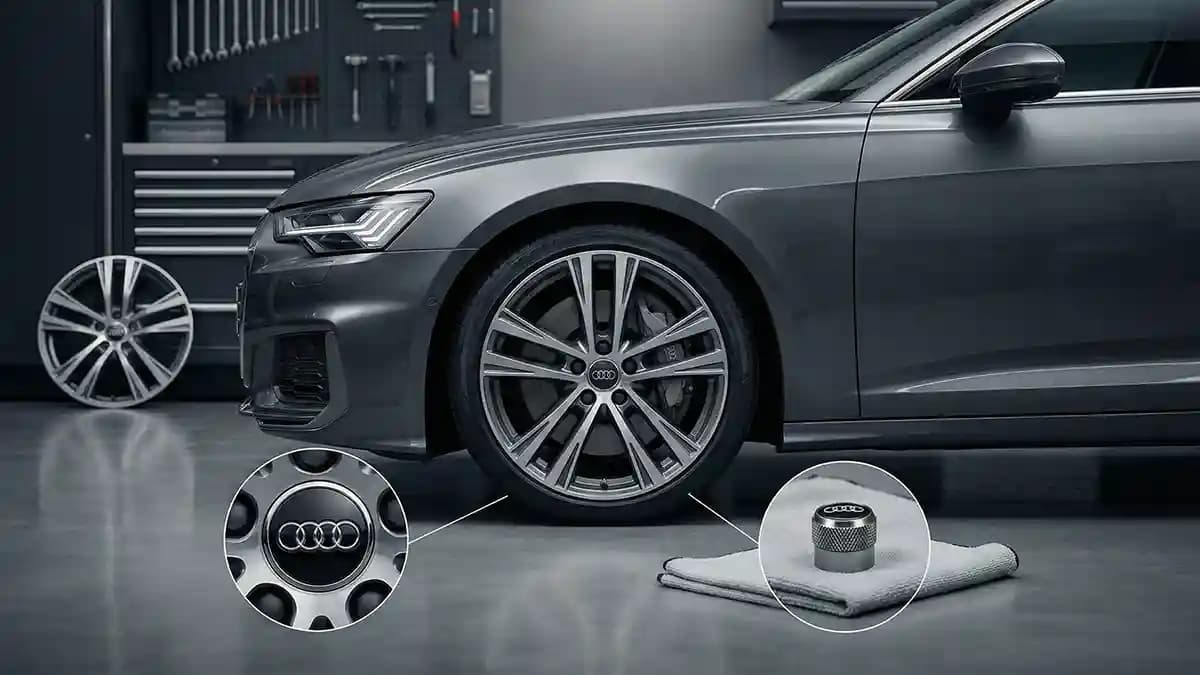
The hubcap terminology guide answer is simple, a center cap covers the middle of the wheel, a dust cap protects the bearing area, and a hubcap usually means either a small hub cover or, in everyday talk, a full wheel cover. I learned this the annoying way, standing in my driveway with a tape measure in one hand and the wrong part in the other. I had ordered what I called a “hubcap,” and what showed up had nothing to do with the small round piece I actually needed. That tiny language mess is why so many people lose money on wheel parts that do not fit.
Last week a friend sent me a photo of his wheel and asked, “Do I need a hubcap or one of those logo things in the middle?” That is the whole problem right there. In normal conversation, people call almost every wheel cover piece a hubcap, same way people call every tissue a Kleenex and every weird engine noise “probably nothing.” But parts sellers, wheel brands, and fitment guides split these pieces into very different jobs, and the job tells you what you need. Here is the plain English version I wish someone had handed me years ago.
A center cap is the piece in the middle of the wheel, usually round, often branded, and usually there to finish the look and cover the center bore area.
A dust cap is a functional cap over a hub or wheel bearing area on certain setups. It is a service part, not a style part.
A hubcap, in strict old school use, covers the hub area. In modern casual speech, people also use it for a full wheel cover.
A wheel cover usually covers most or all of the face of a steel wheel, and that is why people mix it up with “hubcap” all day long.
Why does this matter so much. Because current wheel listings still separate OE cap compatibility, snap in center caps, and full wheel covers like they are totally different animals, because they are. Tire Rack still gives wheel cover install instructions built around a metal retention ring and valve stem alignment on steel wheels, while current aftermarket wheel listings talk about keeping your original center caps or using a snap in center cap instead. So when you tell a seller “I need a hubcap,” you are giving them a foggy sketch, not a useful part description.
A center cap sits in the center of the wheel and finishes the opening around the hub. On many alloy wheels, this is the piece with the logo, the nice clean circle your eye goes to first, and the part that makes a wheel look complete instead of half dressed. Current wheel listings still call out OE cap compatibility or include a snap in center cap as a separate feature, which tells you the market still treats this part as its own thing in 2026, not some dusty old term from your uncle’s garage. If your goal is to refresh the logo area or apply a domed badge, this is usually the part you care about.
A dust cap is not there to look pretty. It is there to cover and protect the bearing or hub area on certain wheel and axle setups, especially older serviceable bearings, trailers, and some heavy duty applications. Auto parts listings still describe wheel bearing dust caps as direct replacement functional parts meant to match the original fit and function, and some product notes still talk about keeping out dirt, road grime, and water. In other words, if you are staring at a bare metal cup over the bearing area, that is not the place where you shop for a pretty little wheel emblem and hope for the best.
Now for hubcaps, the word that causes all the drama. In strict use, a hubcap covers the hub area, while a full wheel cover covers most or all of the wheel face, often on steel wheels. In real life, people blur those words together so hard that sellers do it too, which is why one search for “hubcap” can show full plastic wheel covers, little center pieces, and random trim rings all in the same pile. Has pointed out that wheel covers are common on lower trim cars, and modern install guides still show full wheel covers clipping to steel wheels with retention hardware, not tiny snap in logo caps.
This is also where style meets function and starts a fistfight. If your car has alloy wheels, there is a very good chance the visible center piece you care about is a center cap. If your car has basic steel wheels with a big plastic face over most of the wheel, you are probably looking at a full wheel cover that lots of people will casually call a hubcap. If you are dealing with an older hub and bearing setup and see a small metal cup on the spindle side, that is dust cap territory, and the vibe is grease and fitment, not branding and looks.
This matters even more if you want to apply a custom badge or logo overlay. At Impossible Stickers, the useful landing zone is the flat face on the center cap, not the curved lip, not the empty wheel opening, and definitely not some random metal dust cap. Their current How We Work page says flat, smooth surfaces win and curved bowls lose, and the current How It’s Made page makes the same point from the production side, sharp print, clean edges, a smooth dome, and a size in millimeters that actually matches the part. That sounds obvious until you are outside with a ruler doing your best impression of a confused raccoon.
Here is why beginners get trapped, and honestly, I do not blame them.
Sellers and drivers use “hubcap” as a catch all word.
Some wheel covers have a fake center detail that makes them look like separate caps.
Some aftermarket wheels include center caps, some accept original caps, and some need brand specific replacements.
A dust cap can look like a simple round cap from a bad angle, especially when everything is dirty.
Once brake dust joins the party, every round thing on the wheel starts looking like it came from the same family reunion.
I messed this up once on an old set of aftermarket wheels. I measured the shiny outer lip because it looked important, ordered a badge that matched that number, and then watched the sticker sit on the wrong ring like a hat three sizes too big. The recent Millimeters Matter: How to Use Digital Calipers for a Perfect Fit guide says the same thing I learned the embarrassing way, measure the flat circle where the emblem actually lands, not the outer lip that only looks important. One millimeter sounds tiny until it is wrong in the center of a wheel and your eye locks on it forever.
Once you see the part names clearly, the whole wheel suddenly makes sense. Here is my fast way to identify the part in under thirty seconds.
Look at how much of the wheel it covers. Small middle circle usually means center cap. Big face covering most of the wheel usually means wheel cover or hubcap in everyday speech.
Check the material and mood. Decorative plastic or painted branded piece points to center cap or wheel cover. Bare metal utility part points to dust cap.
Look at the wheel itself. Styled alloy wheels often use center caps. Plain steel wheels often wear full covers.
Look for brand language in current listings. “OE cap compatible” and “snap in center cap” mean you are in center cap land. Retention ring and valve stem alignment usually mean full wheel cover land.
Ask yourself the real goal. Do you want to protect bearings, complete the wheel look, or replace the whole visible face. The answer usually gives the part name away.
There are a few weird cases worth knowing. Some old trucks, vans, and classic cars use center pieces that are larger or more exposed than what you see on modern passenger cars. Some off road and aftermarket wheels also blur the line because the cap shape is doing a fitment job as much as a style job. That is when photos, measurements, and part numbers become your best friends, because one fuzzy word is not enough.
And here is the fun part, this terminology is not old junk nobody uses anymore. Current 2026 wheel listings still advertise OE cap compatibility for factory center caps, and other wheels still promote included snap in center caps as a feature buyers care about right now. So if you know the difference, you search better, you order better, and you sound like a person who actually knows what they are doing, which is always nice.
Before you buy anything, ask the seller these things.
Does this replace the center cap, the wheel cover, or the bearing dust cap.
What exact diameter should I measure, the outer face, the flat inner face, or the bore.
Does the wheel accept original caps, aftermarket caps, or only the cap included with the wheel.
Is the surface flat enough for an emblem, or is it curved.
Can I send a photo with a ruler or caliper in the frame before I order.
That last one saves people all the time. If you are trying to restore an older set of rims, the path usually comes down to part numbers, exact millimeter sizing, or a custom overlay for the visible face when original stock is gone, which is exactly why the recent Finding Emblems for Discontinued Rims: A Solution for Older Cars post feels so useful. And if you already know you need a decorative overlay for the center face, the Wheel Emblems section is the right part of the site to browse, not some random search for “hubcaps” that sends you into the weeds.
The biggest mistake I see is people buying by the word first and the wheel second. They search “hubcap logo,” get excited by a photo, ignore the actual part style, and then end up with something that fits nothing. It is the wheel version of buying pants because the color looked good online. Start with what the part does, then how it mounts, then what size the flat face measures, and only then worry about logos and finish.
So here is the clean answer one more time. If it is the branded center piece in the middle of an alloy wheel, call it a center cap. If it is the plain functional cover over a bearing or hub area, call it a dust cap. If it covers most of the steel wheel face, call it a wheel cover, and know lots of people will still call it a hubcap anyway. Once you sort those names out, ordering the right part gets a whole lot less stupid.
Quick Q and A
Q: Is a center cap the same thing as a hubcap?
Not always. A center cap is the small piece in the middle of the wheel, while “hubcap” can mean that in old school talk or mean a full wheel cover in everyday speech. That fuzzy overlap is exactly why people order the wrong part.
Q: What does a dust cap do on a wheel?
It protects the bearing or hub area on certain setups. It is a functional service part, not a decorative logo piece, so shop for it like a mechanical part, not a styling part.
Q: How do I know if my car has wheel covers or center caps?
Look at how much of the wheel is hidden. If most of the face is covered, you are probably looking at a wheel cover. If only the small middle circle is covered, you are probably looking at a center cap.
Q: Can I put a domed emblem on any round piece in the middle of the wheel?
No, and this is where people get burned. You want a flat, smooth landing zone on the visible face, usually the center cap, not a curved lip or a functional dust cap.
Q: What should I measure before ordering a wheel emblem?
Measure the flat face where the emblem will sit. Do not measure the raised outer lip just because it looks important, because that is how you end up swearing at a tiny circle for half an hour.