
Best Domed Center Caps for BMW M3 & M4 Aftermarket Wheels
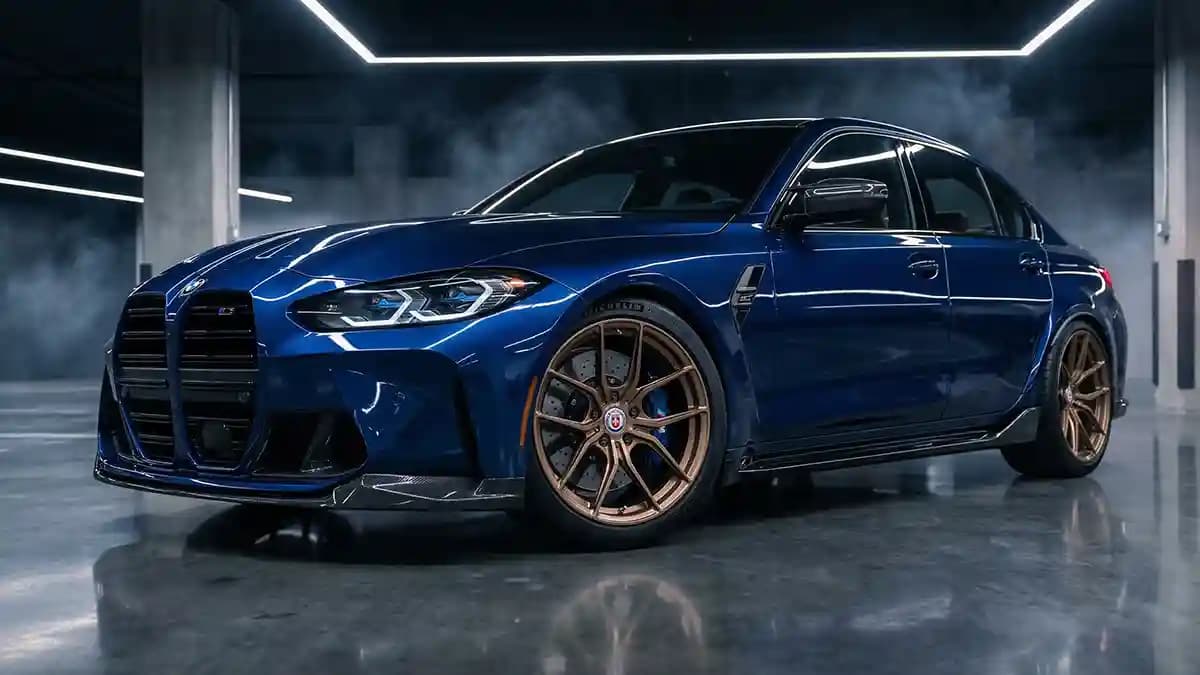
Best domed center caps for BMW M3 and M4 aftermarket wheels are the ones sized for the wheel you actually bought, made with a clear polyurethane dome, and matched to the finish language of the car from the start. I learned that standing next to an M4 on fresh forged wheels that looked amazing from ten feet away, then weird up close because the caps were too small and sat in the middle like lost shirt buttons. On current BMW M3 and M4 models, you are dealing with serious hardware, with M3 and M4 variants running from 473 horsepower up to 523 horsepower in Competition xDrive form, so the wheel area gets attention fast.
The trap is simple. Most people think “BMW cap” first and “aftermarket wheel” second. That order is backwards. BMW’s current G chassis M3 and M4 platform uses a 5x112 pattern, and BMW M says the factory summer wheel options for these cars are forged aluminum, including 19 and 20 inch 963M wheels and 20 and 21 inch 1000M M Performance wheels.
Last week I was staring at a G80 with bronze wheels and a perfect ride height, and the only thing my eye kept finding was the center. Not the fender gap. Not the brake caliper. Just the cap. That tiny circle can make a whole wheel look factory clean, race ready, or totally half done, and it does it without asking your permission.
That is why this post matters. If you just dropped real money on BBS, Apex, Vossen, or another aftermarket setup, the cap is not an afterthought. It is the handshake. Get it wrong and your wheels look borrowed. Get it right and the whole car clicks.
Why BMW M3 and M4 owners keep getting this part wrong
The mistake usually starts with old BMW habits. A lot of older E and F chassis BMW owners are used to thinking in 5x120 and 72.56 center bore terms, but newer G chassis cars moved to 5x112 and 66.6mm center bore, and they use M14x1.25 hardware. So right away, the wheel conversation changed, even before you get into aftermarket cap diameters and custom bores.
Then the aftermarket makes it messier. Some wheel makers support BMW roundels or OEM style caps, some use their own cap system, and some do both depending on the model. Apex openly sells BMW OEM wheel roundels and says certain wheels are compatible with OEM center caps, while BBS lists center cap options in both 56mm and 70.6mm sizes. That one detail tells you everything, because “BMW cap size” stops being one clean answer the second you leave the stock wheel.
I have seen people measure the wheel, order the wrong sticker, and then blame the dome. The dome was fine. The math was trash. Aftermarket wheels love doing this to people because the outer face can look like a normal BMW cap size while the usable flat area is smaller, deeper, or shaped around a lip that steals a millimeter you thought you had.
Here is the plain truth I wish more people heard earlier.
The best domed center cap is not the fanciest one, it is the one that fits the flat face cleanly.
A close visual match beats a loud logo every time.
Millimeters decide whether the result looks premium or homemade.
Thick clear polyurethane beats cheap hard resin for a wheel that sees heat, brake dust, and washing.
What “best” actually means on aftermarket BMW wheels
When I say best, I do not mean the one with the most carbon pattern, the most fake chrome, or the biggest M colors screaming at strangers in parking lots. I mean the cap that survives real wheel life and still looks right three months later. That means the dome has to stay clear, the edges have to stay down, and the size has to respect the wheel’s flat landing zone.
BMW M itself makes a big deal about wheel engineering because wheels change driving feel, brake packaging, and overall balance, not only appearance. BMW M says the summer wheels on the current M3 and M4 are forged aluminum, and the lighter 963M package cuts weight compared with the 826M setup. In other words, the wheel on these cars is already a performance part, so the center cap needs to look like it belongs there, not like a gas station sticker slapped on at midnight.
This is the filter I use before I call any domed cap “good.”
Exact measured diameter, not a guess based on the old wheel.
A dome profile that looks proportional, not too puffy and not dead flat.
Strong adhesive for metal or plastic cap faces.
Print clarity that still reads well under a clear dome.
A finish that matches the rest of the wheel build.
If a cap misses even one of those, I keep scrolling. Harsh, yes. Cheaper than reordering, also yes.
The fit test that saves you money
The best thing you can do before ordering is stop looking at the logo and start looking at the surface. Measure the flat area on the cap face, not the full cap from edge to edge. On aftermarket wheels, those are often two different numbers, and that difference is where people light money on fire.
I do it like this every time.
Remove the cap or get the wheel on a clean level angle.
Measure the visible flat circle where the dome will sit.
Measure twice, then subtract a tiny safety margin so the edge does not ride up on a bevel.
Check whether the cap face is flat, mildly curved, or annoyingly concave.
That last point matters more than people think. A flat dome on a curved cap can look fine for one day, then start lifting at the edge once heat and wash cycles show up. If your aftermarket cap is curved, you want a dome material with some forgiveness, not something stiff that fights the surface.
The styles that actually look right on M3 and M4 builds
This is where people get too excited and ruin a good wheel. A BMW M3 or M4 already has a strong face, especially on aggressive aftermarket wheels with thin spokes, deep concavity, or a motorsport finish. The cap should complete the wheel, not start a second argument in the middle of it.
I use a simple match rule.
Match the trim mood of the car first.
Match the wheel finish second.
Match the logo energy last.
So if the car is blacked out and mean, gloss black or smoked designs usually work better than bright silver. If the build is heritage and motorsport leaning, classic roundel style or tasteful M color detailing can work. If the wheels are bronze, brushed, or satin, I try to keep the center cap finish in that same family so the wheel reads as one piece.
This is also why the BMW collection and the wider wheel emblems section are useful to browse together. One shows you the design language, the other helps you think in actual wheel use instead of random logo collecting.
My favorite cap directions for common BMW M builds
I keep coming back to four lanes because they almost always work.
OEM plus roundel look
This is for the owner who wants the aftermarket wheel to feel like BMW could have signed off on it. Clean roundel styling, correct size, no weird effects, just a sharper version of stock.M colors, but restrained
I like this when the car already leans motorsport. A small M accent works. A cap that looks like a cereal box does not.Gloss black stealth
This is perfect for black, gray, frozen gray, and darker blue cars with shadowline trim. It looks expensive when the gloss level matches the rest of the build.Carbon look for aggressive forged wheels
Only when the wheel design is already modern and sharp. On classic mesh wheels it can feel forced fast.
And yes, I know somebody will try a gold cap on a red car with silver wheels and say it is “different.” Correct. Food poisoning is also different.
Material matters more than the Instagram photo
A lot of bad caps sell from one thing, the photo was taken on day one. Day thirty is where truth shows up. Wheels see brake heat, wash chemicals, road grit, and that lovely fine dust that turns every glossy surface into sandpaper if you wipe it dry like a maniac.
That is why I trust domed polyurethane over the cheap brittle stuff. A good clear dome adds depth, helps the print pop, and deals with light abuse better than a flat print alone. If you want the longer version on why the clear layer matters, read the self healing guide and the bio urethane guide, because both explain why a soft clear shield usually ages better than the bargain bin alternatives.
I also watch edge shape very closely. Rounded edges usually behave better than sharp cut lines because they are less eager to catch water, brushes, and bad luck. If the cap face has even a slight bowl shape, edge behavior is everything. A dome that looks boring on the bench can be the hero once the car has done three washes and a week of highway miles.
The aftermarket wheel brands that change the cap conversation
Not every wheel brand plays the same game. Some want full OEM plus compatibility. Some want their own logo front and center. Some let you swap later. That is why the same BMW M3 owner can move from one wheel brand to another and suddenly need a whole new plan for the middle of the wheel.
Apex talks openly about OEM center cap compatibility on some of its wheels, and it also sells BMW OEM wheel roundels for buyers who want that factory style crossover. BBS, on the other hand, lists multiple center cap sizes including 56mm and 70.6mm, which is a nice reminder that aftermarket wheel centers are their own little country with their own rules.
That is why I do not trust “fits BMW M3” as a buying line by itself. Fits which wheel. Fits what flat area. Fits with what lip. Fits on a flat face or a recess. A sentence like that can hide five problems in eight words.
A clean buying checklist for BMW M3 and M4 owners
Use this before you order and your odds get way better.
Confirm whether your wheel accepts OEM caps, aftermarket caps, or only brand specific caps.
Measure the flat visible face in millimeters.
Check if the face is flat or curved.
Pick a finish that matches the wheel and trim, not just the badge in your head.
Choose a polyurethane domed cap or emblem, not the cheapest flat print you can find.
Let the install cure before you wash the wheels.
One more thing, do not ignore brake package. Apex notes that G80 M3 cars with carbon ceramic brakes need 19 inch wheels or larger, which is another reminder that these cars already run in a tight packaging space. If the wheel fitment itself is that sensitive, the center area deserves the same respect.
The real answer
If you want the best domed center caps for BMW M3 and M4 aftermarket wheels, buy for the wheel first, the logo second, and the dome material third, in that exact order. Measure the flat face, pick a restrained design, and use a clear dome that adds depth without screaming for attention. That is the combo that makes aftermarket wheels feel finished instead of “still waiting on parts.”
I love flashy builds as much as the next idiot with a microfiber in his pocket. But when I walk up to a strong M3 or M4, the cars that stop me are usually the ones where nothing looks forced. The center cap sits dead right, the finish matches, and the whole wheel feels complete. Tiny part. Huge difference. Every single time.
Quick Q and A
Q: Do BMW M3 and M4 aftermarket wheels always use the same cap size as stock?
No, and that is where people get burned. Some aftermarket wheels accept OEM style caps, but others use their own cap sizes or their own center hardware.
Q: What is the safest way to measure for a domed center cap?
Measure the flat visible landing area, not the full cap edge to edge. Then leave a tiny margin so the dome does not climb onto a bevel or lip.
Q: Is gloss black or carbon better for a modern M3 build?
Gloss black is the safer bet for most street cars because it matches shadowline trim and hides visual clutter. Carbon looks good on sharper, more aggressive wheel designs, but it can feel busy fast.
Q: Are domed caps better than flat stickers on wheel centers?
Usually, yes. A good dome gives you more depth, a more premium look, and better everyday durability when the wheels see dust, heat, and regular washing.
Q: What is the biggest mistake people make with aftermarket wheel caps?
They order by car model instead of by wheel and cap face measurement. That is how you end up with a nice design sitting in the middle of the wheel like a coin in a soup bowl.