
OEM Part Numbers: The Shortcut to Finding Your Emblem Size
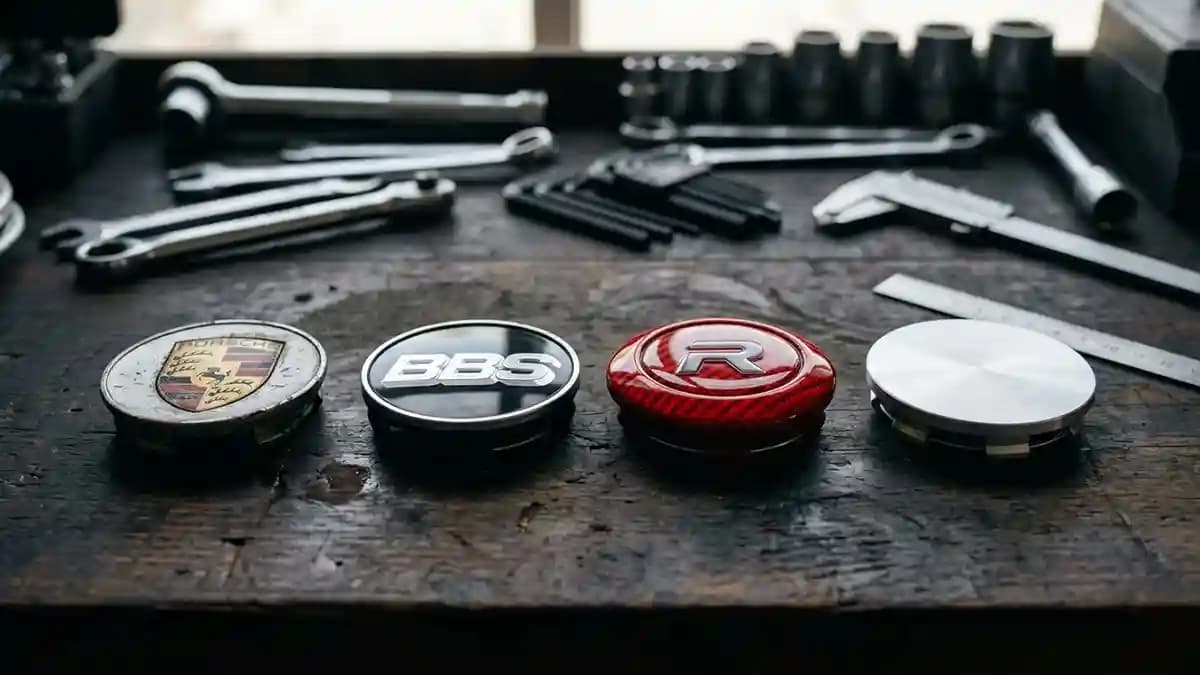
OEM part numbers are the fastest shortcut to finding your emblem size, because the code on the back of the cap usually gets you closer to the truth than your eyeballs ever will. I am giving you the answer right up front, yes, if your cap still exists and you can read the code, that code can save you from ordering the wrong emblem. I learned this the hard way next to a silver sedan with one missing badge, one faded badge, and one owner who swore all four wheels were “the normal size.” They were not, and that stupid little guess cost more time than the whole install should have.
Last week I had one of those jobs that looks easy until it laughs at you. The wheel looked clean, the cap looked round, and the owner kept saying it had to be sixty something millimeters because that felt right in his soul. Then I popped the cap out, flipped it over, and there it was, the number that would have saved the whole guessing game if we had checked first. That is the thing with wheel emblems, they look simple from the front, but the back is where the truth usually lives.
Why OEM part numbers save so much pain
They cut through guessing fast. A real OEM code points you toward the cap family, the fitment notes, and the cars or wheels it was meant to work with.
They help when two caps look the same from ten feet away. Plenty of center caps have nearly identical faces but different back clips, depths, or date ranges.
They expose old versus new versions. Current Audi and Volkswagen parts listings still show supersession fields on wheel cap pages, which is a fancy way of saying one number can replace an older one without changing the whole story.
They keep you from buying a full cap when you only need the front emblem. That mistake happens all the time, and it is like buying a new fridge because you lost a magnet.
Here is where people trip. They think the part number gives them the exact sticker face size every single time, and that is not always true. The number usually gets you to the right cap or cap family first, then you still check whether you need a full replacement cap body or just the front emblem overlay. That difference matters a lot, because a sticker bonds to the visible flat face, while a full cap has to match the back clips, retaining shape, and depth too. The current Impossible Stickers fitment guides keep pushing that same rule, measure the visible flat circle, not the outer lip, because the landing zone is what the emblem actually sticks to.
Where to find the number without losing your mind
Pop one cap out if the wheel design allows it safely. I use a plastic trim tool or I push from behind when the wheel is off, because metal tools and painted wheels are a dumb combo.
Look on the back side first. Most OEM caps hide the useful stuff there, part number, supplier mark, size code, brand stamp, or a mix of all four.
Clean the dirt off before you read anything. Brake dust loves filling tiny molded numbers, and one dirty digit can send you into a parts catalog swamp.
Type the full code exactly as shown. Keep the letters, spaces, and suffixes together, because one extra character can mean a color change, a revision, or a different generation.
Check what the listing is really selling. Some pages are for the full cap, some are for a decorative cover, and some are for a sticker or badge only.
I like OEM numbers because they are honest in a way people are not. A seller might say “fits most Audi wheels,” which is the kind of sentence that should make your wallet hide under the couch. But an official listing will often tell you more, things like wheel size ranges, date cutoffs, model years, or replacement chains. Audi’s current wheel cap listings for part 81A601170 still show fitment notes and supersession info, and Volkswagen’s current pages for 5H0601171FOD do the same, which is your clue that the number matters more than whatever random forum post said five years ago.
That is also why I tell people not to panic when they see more than one number. You might find a main part number, a supplier code, a plastic material code, and a size mark all staring back at you like a tiny robot passport. The one you want is usually the full OEM style part number, not the recycling symbol and not the supplier logo. If the parts page shows “replaces” or “supersession,” that is good news, not bad news, because it means the catalog is connecting old and new numbers for you.
A few real examples that show why this works
Volkswagen gives a very clean example with part number 1J0601171XRW. The official listing ties it to replacement center caps for wheels with 52 mm hub bores, which is way more useful than somebody online saying “my old Golf used these.”
Volkswagen also lists 5H0601171FOD across current vehicles, and the official pages show multiple supersession formats. That tells you the code family matters, and it tells you to copy the number exactly when you search.
Audi part 81A601170 is another good lesson. Official listings show fitment notes and date markers around January 27, 2025, so the number can carry history with it, not just size.
BMW is the brand that really reminds people not to freestyle this. BMW’s own accessory flow still says the best way to ensure fit is the VIN, because even when the cap looks familiar, the safe answer is still tied to the exact wheel and vehicle setup.
Now for the part nobody likes hearing. An OEM part number is a shortcut, not a magic trick. It can get you to the correct full cap or the correct family, but if you are ordering a peel and stick emblem for the front face, you still want to measure the flat visible area. That is why I always pair the part number check with a quick ruler or caliper check, and if you want the full measuring walkthrough, read How to Measure Your Wheel Center Cap for a Perfect Sticker Fit before you buy.
What to do when the number and the face size seem to disagree
Trust the part number for the cap family first. It usually tells you what the wheel cap body is supposed to be.
Trust the front face measurement for the emblem overlay. That is the size your sticker or domed badge has to cover cleanly.
If the cap is damaged, loose, or cracked, solve the cap body first. A perfect sticker on a bad cap is lipstick on a shopping cart.
If the cap is solid and only the face looks rough, a front emblem is usually the cheaper fix. That is where clean wheel emblems or brand pages like BMW wheel emblems and Audi wheel emblems start making a lot of sense.
There is another sneaky problem here, aftermarket wheels. Once you get into BBS, Rotiform, Vossen, or random no name caps that came with the wheel, OEM logic starts to lose its grip. Sometimes the car is BMW, the cap is aftermarket, and the sticker face has nothing to do with the original factory cap size anymore. In that case, the part number on the back of the old cap may help a little, but the real king is still the flat front measurement, and that is where The Complete Wheel Center Cap Size Database can save you from doing driveway math with dirty fingers.
I have also seen people use only the car model when searching. That is how you end up with four fresh badges that are all one millimeter too big, which does not sound tragic until you try to lay them down and the edges ride the lip like a bad hat. The current Impossible Stickers shop and product pages make the practical part pretty clear, these emblems are offered in a wide 20 mm to 120 mm size span, they are meant for flat surfaces, and they are built around a premium vinyl face with a clear domed resin top. That is useful because once you know the face size, you are not boxed into one factory number anymore.
My fast decision rule when someone sends me one blurry wheel photo
If the cap is still on the car and readable from the back, I start with the OEM number.
If the number is gone but the cap is intact, I measure the visible flat circle in millimeters.
If the cap is missing, I identify the wheel first, not just the car. Factory wheel, accessory wheel, and aftermarket wheel can all lead to different answers.
If the face is flat and the cap body is healthy, I look at a front emblem replacement. If the face is broken or the clips are toast, I look for a full cap.
If there is any doubt, I compare the number, the wheel, and the measurement together. That takes a few extra minutes and saves the dumb kind of return.
The nice part is that this is easier than it sounds once you do it once. You are not decoding alien radio signals, you are just using the clues the cap already gives you. The back tells you what family it belongs to, the front tells you what size the emblem needs to be, and the wheel tells you whether the whole setup is factory or not. Put those three together and the mystery goes away fast.
And that is the real shortcut. OEM part numbers do not replace common sense, but they do kill a lot of pointless guessing before it starts. Use the number to find the cap, use the measurement to size the emblem, and use your eyes to make sure the face is flat enough for a clean bond. Do that, and your wheel upgrade stops being a gamble and starts being a five minute fix that makes the whole car look sharper.
Quick Q and A
Q: Can I find my emblem size from the OEM part number alone?
Usually you can get very close, but I still like to confirm the visible flat face before ordering a sticker. The part number is best for identifying the correct cap family. The front face measurement is best for choosing the emblem overlay size.
Q: What if the back of my cap has two or three different numbers on it?
Start with the longest OEM style number and search that first. Ignore recycling marks, plastic material codes, and random supplier symbols until you need them. If a listing shows a replacement chain, that is normal.
Q: Do supersession numbers mean my old cap is wrong?
No, it usually means the catalog updated the number. Audi and Volkswagen official parts listings still show supersession fields on current wheel cap pages, which is a good sign that the catalog is doing the sorting for you.
Q: What if my car is factory but my wheels are not?
Then the wheel matters more than the badge on the hood. Aftermarket wheels love breaking neat factory logic, so measure the face on the actual cap in front of you.
Q: Are all center cap stickers made for curved caps too?
No, and that is where people get burned. Current Impossible Stickers guidance says flat, smooth surfaces are the safe play, because deep curves and heavy texture are where edge lift starts.
Q: What if I cannot read the number anymore?
Then use the measurement route and compare the wheel itself. If the cap is missing or badly worn, measuring the visible landing zone is still the cleanest backup plan.
Q: Is a sticker enough if my cap clips are broken?
No. A sticker fixes the face, not the hardware. If the cap body is loose, cracked, or missing, fix that first, then finish it with the right emblem.