
Lost Your Wheel Emblem? The Step by Step Restoration Guide
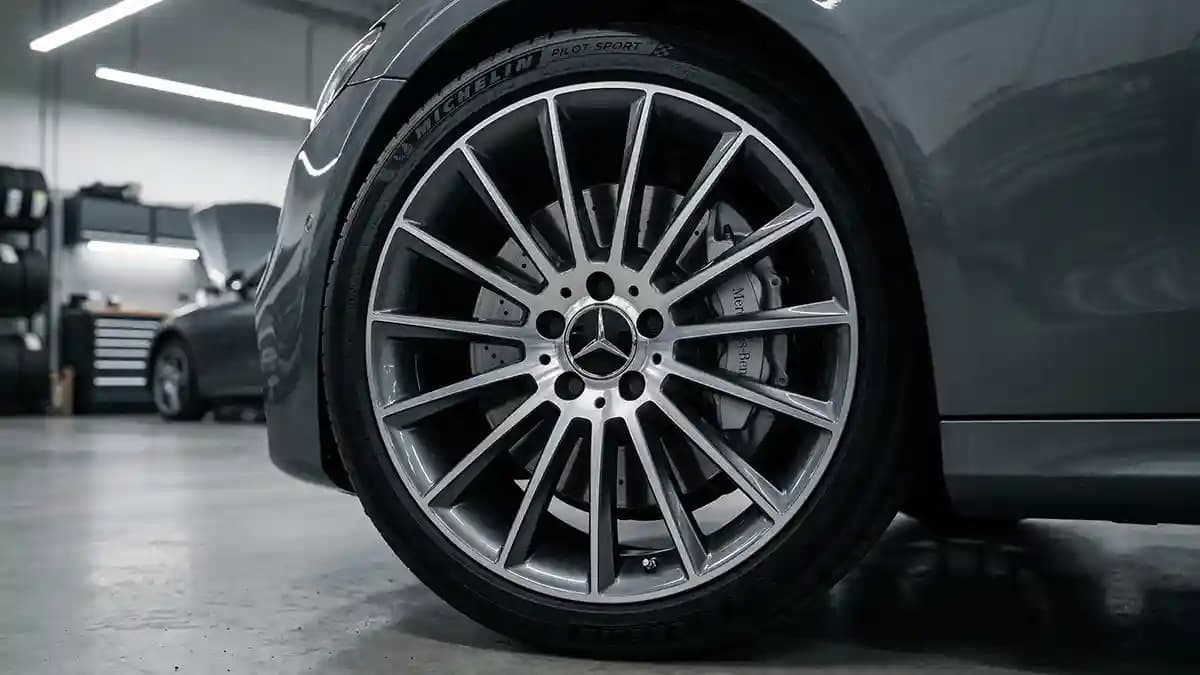
Wheel emblem replacement is usually a simple fix, and if you lost a center cap badge you can make the wheel look right again in one afternoon, as long as you measure the cap, clean it well, and use a badge built for the job. That is the real answer to the title. I learned it in the dumbest way possible, standing next to my car with one perfect front wheel, three decent wheels, and one wheel that looked like it had lost a tooth in a bar fight.
Wheel centers are tiny until one goes missing. Then your eye goes straight to the gap every single time you walk up. I have watched people wash, polish, and ceramic coat a whole set of wheels, then ignore the center because it feels like a small problem. It is not small. The wheel center is the bullseye.
The good news is you do not need to panic and buy four new caps every time a badge falls off. In a lot of cases the cap itself is still fine, only the top emblem is damaged, faded, or missing. That is exactly where a clean overlay or replacement badge makes sense. Impossible Stickers builds wheel emblems and domed stickers around real millimeter sizing, and its product pages list premium vinyl with a clear 3D domed resin layer in sizes from 20 to 120 mm.
I always start with one ugly truth. Most “wrong part” problems are really “wrong measurement” problems. People guess the size, order what sounds close, then blame the badge when it sits on the lip, hangs over the edge, or looks off center. Close enough does not work on a wheel. One millimeter can make the whole thing look crooked.
First, figure out what you actually lost
Before you order anything, stare at the wheel for one minute and be honest about what is missing. There are really only three common situations, and each one needs a different fix. If you skip this part, you waste money fast. Ask yourself these questions.
Is the whole center cap missing, meaning you can see the empty hub opening?
Is the plastic or metal cap still there, but the logo on top is gone?
Is the old logo still there, but faded, scratched, bubbled, or peeling?
If the whole cap is gone, you need hardware first, then the emblem. If the cap is still there and only the face looks bad, you can usually restore the look with a properly sized overlay. That is why I tell people to separate “center cap” from “wheel emblem” in their head. A lot of buyers say they lost the cap when they only lost the top badge.
BMW even describes center cap replacement as a simple remove the old cap and replace it job on its official accessories pages. This is not some rare garage mystery. It is normal upkeep for a part that gets hammered by heat, brake dust, soap, grit, and pressure washers.
The one measurement that saves the whole job
This is where most people mess it up. They measure the full outer face because it is the easiest thing to see. Then the new badge arrives and overlaps the curved lip or misses the flat center zone. What you need to measure is the actual landing area, the flat face where the emblem will sit and bond.
I do this with digital calipers when I want the number exact, but a good ruler can get you close if the circle is large and clear. Wipe the cap first so dirt does not fake the edge. Measure straight across the flat part, not the outer ring, and write the number down in millimeters. If the cap has a raised border, ignore it.
Here is the simple method I use every time.
Clean the face just enough to see the edges clearly.
Find the flat circle where the emblem would actually stick.
Measure straight across the middle in millimeters.
Check the number twice.
If you are between sizes, go a hair smaller, not bigger.
That last part matters more than people think. A badge that is one millimeter small usually looks neat and intentional. A badge that is one millimeter big looks like a mistake from the second you press it down. Impossible Stickers says its wheel emblems are cut to real cap sizes in millimeters, not “close enough” sizes, and that is exactly the mentality you want here.
Why emblems fall off in the first place
I wish I could tell you it is always old age. It is not. A lot of wheel emblems get knocked loose because the edge takes constant abuse and the surface under the badge was never very clean to begin with. Brake dust is nasty stuff. Tire shine overspray is even worse because it leaves an oily film that adhesive hates.
Then comes the pressure washer. People get way too close and blast the edge like they are stripping paint off a fence. That will ruin a weak badge fast. 3M’s vehicle care guidance says hand washing is best, and if you must use a car wash, a touchless wash is safer because brush contact can scratch the surface and lift edges.
Cold weather makes things worse too. Adhesive wants contact, and cold plastic makes it lazy. Acura’s center cap emblem instructions specify installing at 15°C or above and avoiding a wash for 24 hours, while 3M guidance for vehicle graphics also says to avoid washing for at least 24 hours and keep the vehicle above 16°C for the first 12 hours so the bond can build properly. Different products, same lesson, warm surface, clean surface, then leave it alone.
The smart way to choose the replacement
Once you know your size and whether you need a full cap or just the emblem, the buying part gets easy. I look for three signals right away, real sizing, real material details, and clear install instructions. If the product page hides all three, I am out. Life is too short for mystery glue.
A good replacement should tell you what the base is, what the clear top layer is, and what sizes are available. On Impossible Stickers product pages, that looks like premium vinyl plus a 3D domed resin coating, with scratch resistant, waterproof, tear resistant, and UV resistant properties listed clearly. The site’s manufacturing page also explains the process in plain language, print, precision cut, dome, and final QC.
If you want a place to start, the wheel emblems collection is the obvious entry point, and Shop all products is useful when you want to browse by brand. If you like seeing how the part is built before you buy, How It’s Made is worth a quick look too.
I also like checking one or two real product pages before I commit. An Audi domed emblem and a Porsche wheel emblem show the usual spec pattern clearly and make it easier to spot vague junk listings later.
The prep work nobody wants to do
This is the least sexy part of the job and the most important. I do not care how pretty the badge is if you stick it onto wax, road film, or wet brake dust. All you did was glue a badge to dirt. The badge will leave with the dirt later.
My prep routine is boring for a reason. Boring works. Wash the area with normal car soap and water. Dry it fully. Then wipe the exact bonding area with isopropyl alcohol on a clean microfiber cloth. 3M says most substrates are best prepared with an IPA and water mix before adhesive application, and that lines up perfectly with what I see in real installs.
Do not touch the bonding area with your fingers after that final wipe. Skin oil is sneaky. You think your hands are clean, then you leave a little fingerprint on the exact spot where the edge needs to seal. That tiny mistake is how people end up saying, “It looked fine on day one.” Day one is not the test. Week two is.
My install routine, start to finish
By this point the hard thinking is done. Now you just need to not rush. I always dry fit the emblem first without peeling the backing. I check the circle from straight on, then from a slight side angle, because your eye catches bad centering fast.
When it looks right, I make tiny visual reference points in my head, or I use two small bits of painter’s tape if the cap design is plain. Then I peel the backing, hold the badge by the edges, and place it carefully without sliding it around. Once it touches, I press from the center outward. Then I go around the edge with firm pressure for about thirty seconds.
This is the exact order I trust.
Dry fit first.
Confirm the center visually.
Peel the backing without touching the adhesive.
Set the badge down once.
Press the middle first.
Seal the edge with steady pressure.
Leave the wheel alone after that.
The last step is where impatient people kill their own work. Just because the badge is stuck does not mean the bond is fully built. Acura says do not wash for 24 hours after emblem install, and 3M’s care guidance ranges from 24 hours to 72 hours before washing, with touchless washing preferred over aggressive brush contact. My own rule is simple, give it at least a day, longer if it is cold, and do not point a pressure washer at the edge the second you are done.
When you need a full restoration, not just a new badge
Sometimes the missing emblem is not the only problem. The cap face can be gouged, bubbling, or crusted with old adhesive. If that is what you are dealing with, the badge is the final step, not the first one. You need to make the landing zone worth saving.
I keep it simple. Remove old glue carefully. Clean the face. Check for deep chips or lifted clear coat on the cap itself. If the cap is warped or cracked, replace the cap. If the cap is ugly but flat and solid, you can still rescue the look with a well sized emblem.
That is also why I like reading build details before buying. If the part is made with a crisp print, precise cut, clean dome, and final QC, you have a better shot at ending with a wheel that looks intentional, not patched together. Impossible Stickers says its goal is sharp print, clean edges, a smooth dome, and a finish that looks centered from every angle.
The look you really want
Most people say they want to customize the wheel. What they really want is for the wheel to stop looking broken. A good restoration does not scream for attention. It just makes the wheel look whole again. That is why subtle finishes usually win.
If you like understanding why a domed badge looks deeper and cleaner than a flat print, read The Anatomy of a Dome. If you want the blunt version of why cheap badges go yellow or crack, Epoxy vs. Polyurethane is the right rabbit hole. Both are useful because they explain why some restorations still look good later and some look rough by the next season.
The payoff
I love this job because the result is way bigger than the part. You fix one small circle and the whole wheel looks sorted. Then the whole car looks more cared for. And you get that payoff without spending the kind of money people assume wheel restoration always costs.
Last time I did one of these, I stepped back maybe ten feet and laughed. Same wheel. Same tire. Same car. But the empty middle was gone, and suddenly the car stopped looking like it had a missing button on a nice jacket. That is the whole magic of wheel emblem replacement. Tiny part, huge visual return.
Quick Q and A
Q: Can I replace just the emblem and keep the old center cap?
Yes, if the cap is still flat, solid, and worth saving. If only the logo is missing or ugly, a properly sized overlay is often the smartest fix.
Q: What is the best way to measure a wheel emblem?
Measure the flat landing area where the badge will actually stick, not the full outer lip of the cap. Millimeters matter here more than people expect.
Q: Should I clean the cap with alcohol first?
Yes. 3M surface prep guidance recommends cleaning with an IPA and water mix for many adhesive applications, and that lines up with real world badge installs.
Q: How warm should the wheel be before I install the badge?
Do not install on a cold surface. Acura’s emblem instructions call for 15°C or above, and 3M vehicle guidance also favors keeping the surface warm while the bond builds.
Q: When can I wash the car after installing a new wheel emblem?
Give it at least 24 hours, and be gentler than usual at first. Depending on the adhesive system, 3M guidance stretches to 72 hours before washing, with touchless washing safer than brush contact.
Q: Why did my old wheel badge fall off anyway?
Usually bad prep, edge abuse, heat, grime, or aggressive washing. Wheels live a hard life, and the edge of the emblem is where weak installs fail first.