
Mercury Free Manufacturing: Our Commitment to Non Toxic Materials
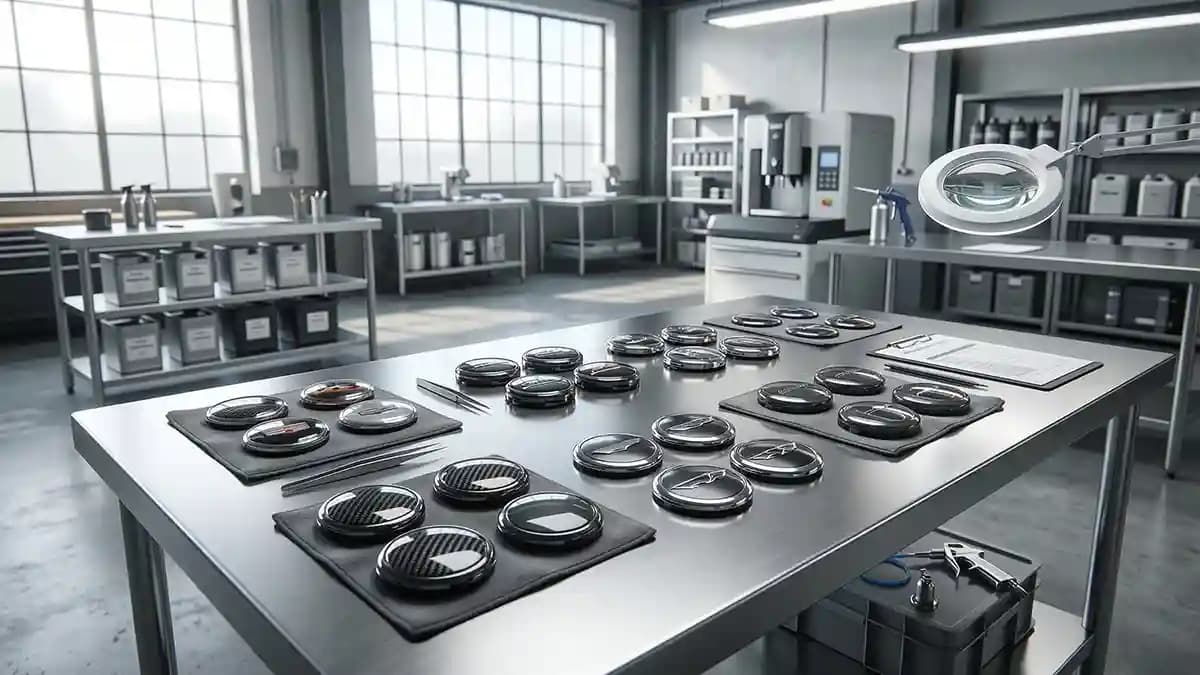
Mercury free manufacturing is not a fluffy slogan, it is the kind of promise that tells you what sort of shop you are dealing with, and for me it comes down to one simple thing, if a product sits on your car, your keys, or your hands every day, the material story should be clean and the product should last. I started thinking about this harder when I was standing in the shop with a fresh batch of domed emblems in one hand and a cheap yellowing badge from somewhere else in the other. One looked like it belonged on a real car. The other looked like it belonged in a gas station bargain bin. That gap is not magic, it usually starts with choices nobody sees, the resin, the coatings, the suppliers, and the stuff a good shop refuses to sneak into the mix.
The weird part is most people only ask about size, gloss, and color. Fair. That is what you see first. But the longer I do this, the more I think the smarter question is what is actually in the thing. If a brand says it cares about quality and modern standards, mercury free materials and a non toxic mindset should not be treated like some bonus feature, they should be part of the baseline.
What mercury free manufacturing actually means
Let me make this painfully simple. Mercury free manufacturing means you are trying to keep mercury out of the material stack and out of the production story, not just out of the sales copy. In the EU, that matters because mercury is one of the restricted substances that sits inside the bigger compliance conversation around electronics and product safety, and the wider mercury rules got tighter again when the revised EU Mercury Regulation entered into force on July 30, 2024.
For automotive adjacent products, the logic lines up with the End of Life Vehicles framework too. The ELV rules restrict hazardous substances in new vehicles, especially lead, mercury, cadmium, and hexavalent chromium, because cleaner material choices make recycling easier and reduce toxic waste later.
That does not mean every wheel emblem suddenly turns into a legal textbook. It means responsible brands should think like adults. If your products live around cars, garages, workbenches, packing tables, and customer hands, you do not wait to be dragged into modern standards. You build with those standards in mind from the start.
Here is how I think about it when I am judging whether a material claim is real or just dressed up nonsense.
No legacy junk in the recipe. I do not want old school chemistry surprises hiding in pigments, coatings, or weird bargain adhesives.
Suppliers who understand restricted substances. If the supplier gets vague the second you ask a basic compliance question, that is already your answer.
Materials picked for long life, not fast sales. A badge that fails early creates more waste, more shipping, and one more replacement nobody needed.
Clear language. If a brand can explain what it is avoiding and why, good. If it talks like a politician, run.
Why this matters for a tiny part on your car
A small sticker can still be a stupidly important detail. You notice it every time you walk toward the car, and if it is faded, cracked, or cheap looking, it drags the whole wheel down with it. I do not want something that looks good for twelve minutes and then starts aging like milk.
There is also a practical side people skip. A cleaner material approach is usually tied to a cleaner process, better storage, tighter supplier control, and fewer surprises from batch to batch. It helps the actual customer who wants four matching domes that stay clear, stay stuck, and do not turn odd colors after one summer.
That is also why I like talking about this topic next to wheel emblems instead of in some sterile corporate page nobody reads. On a wheel, the truth comes out fast. Heat, sun, brake dust, soap, road grime, fingerprints, and pressure washing do not care about marketing. The part either holds up or it gets embarrassed in public.
What a non toxic mindset looks like in a real shop
A non toxic mindset is not one hero ingredient. It is a chain of boring decisions made correctly. I know that sounds less sexy than some giant green claim, but boring is usually where the good stuff lives.
First comes the base material. Then the print layer. Then the clear dome. Then the adhesive. Then the way all of that is stored, handled, cured, checked, and packed. When you look at our How It’s Made page, that step by step flow matters because every stage is a chance to either protect quality or ruin it.
The easiest way to explain it is this. I do not want a nice looking top layer sitting on a sketchy foundation. If the clear dome is solid but the adhesive is junk, the product still fails. If the print looks sharp but the resin yellows, the product still fails. If the material story sounds clean but the batch control is sloppy, the customer still loses.
So when I say mercury free manufacturing, this is the real checklist running in my head.
Choose modern inputs. Materials should be sourced with current substance restrictions in mind, not old leftovers bought because they were cheap.
Keep the stack simple and proven. The more random chemistry tricks you pile in, the more chances you create for failure.
Use the dome as protection, not as camouflage. A clear dome should protect and enhance the print, not hide bad work under a shiny blob.
Check every batch like it matters. Because it does. One bad batch can trash trust faster than any ad campaign can rebuild it.
Durability is part of the safety conversation
A longer lasting product is often the cleaner product choice because you are not replacing it over and over. I have seen people buy three cheap sets in a year, then finally buy one decent set and realize they spent more money to get a worse result. Classic mistake.
That is why I keep coming back to polyurethane domes when the job is outdoor use. A well made dome protects the print, adds depth, and helps the emblem survive the daily nonsense that wheels deal with. If you want the durability side broken down in plain English, the post on self healing graphics is worth a read because it shows why a good dome is not just there to look glossy.
And if you are thinking about sustainability from the other side, less waste matters too. One set that lasts is better than three sets that peel. People still buy garbage, then act shocked when garbage behaves like garbage.
Where the compliance talk actually helps the customer
Most shoppers do not wake up excited to read about RoHS or ELV. I get it. But the reason I still care is simple, those frameworks force the market to get more honest about hazardous substances. RoHS currently restricts ten substances in electrical and electronic equipment, including mercury, lead, cadmium, hexavalent chromium, certain flame retardants, and four phthalates. That kind of rules based pressure shapes supplier behavior far beyond one single product category.
So even when you are buying something as small as a domed badge, that compliance culture still matters. It helps push better documentation, cleaner sourcing, and fewer old habit materials hanging around the supply chain. No, a nice wheel emblem is not going to save civilization. But it can still reflect whether a brand is stuck in the past or paying attention now.
I also think this matters more for wholesale customers and businesses than people realize. If you are ordering custom domes for products, packaging, equipment, or resale, you do not want material questions showing up after the fact. You want the material story sorted before the order goes live, not after somebody in procurement starts asking sharp questions. That is one reason pages like our shop and production content matter, because they show what kind of product stack you are actually buying into.
Why honest material claims beat fake green language every time
I am going to say the quiet part out loud. Some brands use clean sounding words the same way bad restaurants use mood lighting. It hides things. You see terms like eco, safe, premium, advanced, and responsible thrown around like confetti, but nobody tells you what they actually mean. That drives me nuts.
A real claim should survive one annoying follow up question. What is restricted. What is avoided. What standards are you building toward. Why is this material a better choice for the use case. If the answer falls apart under that tiny bit of pressure, the claim was probably built from vibes.
This is where recent EU mercury policy matters beyond legal paperwork. The direction is clear, intentional mercury uses keep getting squeezed harder, not softer, and that tells every decent manufacturer the same thing, clean up now or get left behind.
I would rather under promise and be precise. Say the materials are mercury free. Say the approach is non toxic minded. Say the product is built for long outdoor life. Good. That is useful. Do not act like a wheel badge is a sacred environmental artifact flown in by angels. It is still a manufactured object. The goal is to make it responsibly and make it last.
How this connects to Impossible Stickers
At Impossible Stickers, the whole point is that the tiny detail should feel premium, not sketchy. The brand is built around parts people touch, wash, stare at, and compare up close, which means material shortcuts get exposed fast. That is one reason I like pairing this topic with older posts like Bio Urethanes for Eco Conscious Hybrids, because the bigger question is not only “does it look good,” it is also “is the material story moving in the right direction.”
The commitment, at least the way I see it, has three parts. Use materials that fit modern restrictions and expectations. Build products that do not need replacing every five minutes. Be honest about what the product is and what it is not. That sounds simple because it should be simple.
And yes, style still matters. I am not pretending people buy domed emblems because they want to celebrate regulatory frameworks over coffee. They buy them because they want the car to look right. I just think the best looking result gets even better when the material choices behind it are cleaner, smarter, and less likely to age badly.
The customer side of this is pretty straightforward
If you are shopping for any domed sticker, wheel badge, or small branded part, here is the fast filter I use.
Ask what the clear layer is. If the seller cannot explain the dome material in plain language, that is not a great sign.
Ask how it handles outdoor life. Sun, water, heat, and washing are the real test.
Look for process transparency. A brand that shows how it makes the part usually has less to hide.
Watch for fake miracle claims. The more magical the wording gets, the less I trust it.
Choose long life over cheap price. You are almost always buying the replacement in advance when you buy the cheapest option.
Everybody loves a deal. Me too. But there is a difference between smart cheap and dumb cheap. Smart cheap gets the job done. Dumb cheap shows up shiny, peels off later.
Why I think this topic will matter even more from here
Cars are getting cleaner looking. Buyers are getting pickier. Compliance pressure is not going backward. And customers are slowly getting better at smelling fake claims from ten feet away. Put all that together and material honesty becomes part of the brand, not just a back office task.
For a shop like this, that is a good thing. It forces better habits. It also helps separate a real premium part from a shiny little liar.
So yes, mercury free manufacturing is our commitment to non toxic materials, and I think that commitment should be boringly normal by now. That is the goal. Not drama. Not fake sainthood. Just clean material choices, clear standards, and domed emblems that look right and last long enough to justify their place on the car.
Quick Q&A
Q: What does mercury free manufacturing mean for a domed emblem?
It means the product is built with a cleaner material mindset and avoids mercury in the manufacturing story rather than treating hazardous substance control like an afterthought.
Q: Does mercury free mean the sticker is weak or less durable?
No. Done right, cleaner material choices and good durability go together. The whole point is to make a premium part that lasts without relying on old problem chemistry.
Q: Why should car owners care about RoHS or ELV at all?
Because those rules push the market away from hazardous substances and toward better documented materials. Even small accessories benefit when the supply chain gets cleaner and more modern.
Q: Is non toxic the same thing as eco friendly?
Not exactly. Non toxic usually focuses on safer substance choices, while eco friendly can also include durability, waste, sourcing, and broader environmental impact.
Q: What is the smartest way to shop for a safer domed sticker?
Look for clear material language, outdoor durability, honest process information, and a seller who can answer direct questions without tap dancing around them.