
What Are Domed Resin Stickers? How They're Made and Why They Last
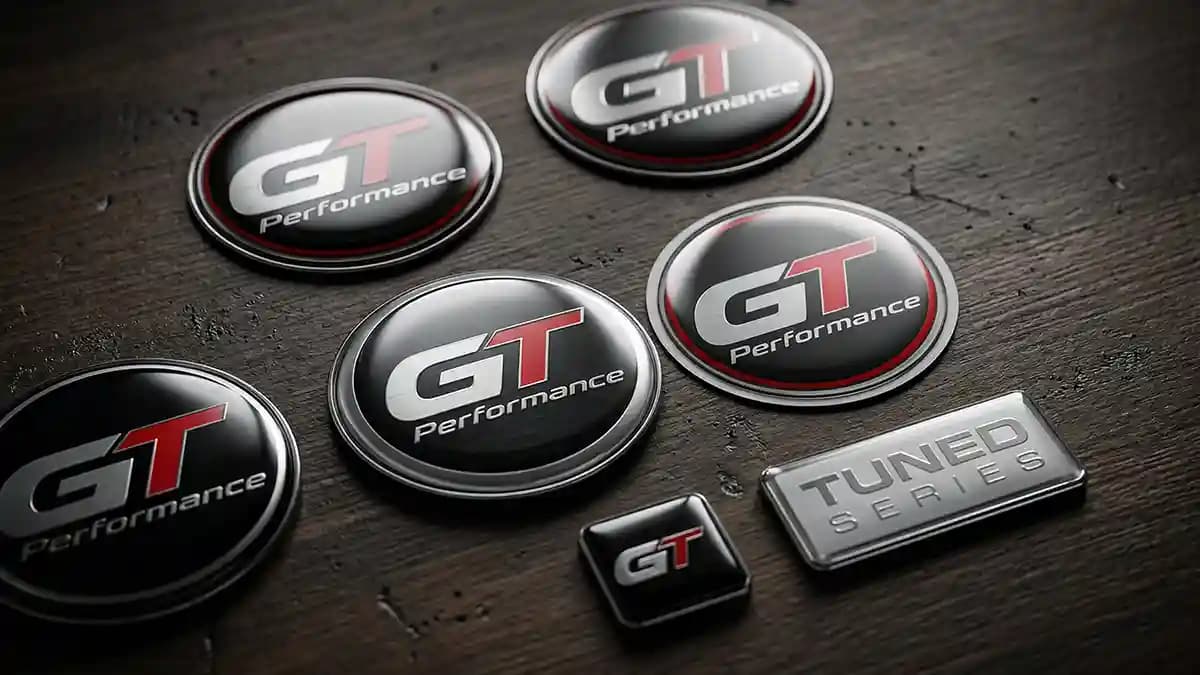
What is a domed sticker? It is a printed sticker with a clear resin layer on top that cures into a raised, glossy lens, and that little dome is what gives it the rich look and extra protection people notice. A proper domed resin sticker is not just flat vinyl with a shine slapped on it. It is a layered part with print, adhesive, and a clear top that changes both the look and the way the sticker handles weather, scratches, and daily abuse. The short answer is simple, domed stickers last because the clear dome does real work, not just pretty work.
I learned this standing next to a friend’s car in a dirty parking lot, coffee in one hand, center cap in the other, figuring out why one wheel looked fresh and the other looked tired. Same car. Same wash. Same road. The only real difference was the badge in the middle, one had a dome that still looked deep and clean, and the other had a cheap flat piece that looked like it had already given up on life.
That is why people get pulled toward domed stickers so fast. Your eye goes straight to the center of a wheel, a badge, a key fob, or a panel button, and a raised clear dome catches light in a way a flat sticker just cannot. It adds depth, makes colors look fuller, and gives the surface that badge like feel people usually connect with factory trim. On recent Impossible Stickers pages and product materials, that dome is described as the step that adds depth, gloss, and a more premium finish, and that lines up with what domed label makers say about the effect of a clear resin lens over print.
What a domed resin sticker actually is
Most people hear “resin sticker” and picture one blob of clear goo sitting on top of a logo. Close, but not quite. A domed sticker is really a stack of layers working together, and when one layer is bad, the whole thing goes south. The clear top gets all the attention, but the print, base film, glue, and liner matter just as much because that is what holds the design, sticks to the part, and keeps the edge from lifting.
The top layer is the clear dome. On many quality domed labels, that clear layer is polyurethane resin, and once it cures it becomes clear, flexible, and abrasion resistant.
Under that sits the printed design. This is where the logo, color, pattern, or text lives, and the print itself needs to stand up to abrasion and weather.
Under the print is the base film. That is usually a self adhesive material such as vinyl or another plastic film that gives the sticker shape and body.
Then comes the adhesive. A good adhesive has to grip the surface hard enough to stay put without fighting the print or letting the edge curl.
The last layer is the liner. That is just the backing that protects the adhesive until you peel it off and apply the sticker.
When all five parts are right, the result feels simple. That is the funny part. The good ones always look easy. But there is a lot going on in that tiny circle, and if the resin is poor, or the glue is weak, or the edge shape is wrong, the sticker starts losing the fight long before you notice it.
How domed stickers are made
The making part is where flat print turns into something that looks almost molded. On the current How It’s Made page, the process is broken into print, precision cutting, doming, curing, and final QC, and that matches the broader doming process described by label makers who coat a printed sticker with clear resin and let it settle into shape. The reason this matters is simple, the dome does not get hand carved after the fact. It forms because the liquid resin flows, levels, and stops at the edge while it cures.
Here is the garage version of the process.
First, the design gets printed on the base film.
Then the sticker gets cut to its final shape.
After that, clear resin is dispensed over the top.
Surface tension pulls that liquid into a smooth raised cap instead of letting it run everywhere.
The resin then cures in a controlled space until the dome hardens.
After curing, the batch gets checked for edge quality, centered print, bubbles, dust, and even dome height.
This is also why shape matters more than people think. Rounded corners are not just some design trend cooked up by a sleepy graphic designer. Domed label suppliers still note that radius corners are required, often with at least a 1 mm radius, because the liquid resin needs a shape it can settle into cleanly. Sharp corners are where the process starts acting weird, and weird is expensive.
The cure step is the boring hero here. If the resin does not get enough time to level and harden, you end up with waves, dust, bubbles, or an edge that looks fine for a week and ugly after that. Recent doming guides describe cure windows around 12 to 24 hours in a controlled environment, and Impossible Stickers also talks openly about curing and final QC because that wait is what turns wet resin into a clean 3D finish. Rush that step and the sticker can look decent on day one and rough on day ten.
Why the dome changes the look so much
This is the part people feel before they can explain it. A good dome works like a clear lens over the print, so colors look deeper, blacks look richer, metallics pop more, and the whole badge gets visual thickness that flat stickers cannot fake. That tiny lens trick does a lot of heavy lifting for such a small part. Several recent Impossible Stickers pages describe the dome as a lens that adds depth and gloss, and that is the cleanest way to say it.
A domed sticker usually looks better for four plain reasons.
It adds visual depth, which makes small logos feel more substantial.
It reflects light in a smoother way, so the finish looks more like a badge than a print.
It gives the surface a tactile feel, which is a fancy way of saying it feels nice when you touch it.
It hides tiny print harshness because the clear top softens the edges just enough to make the design feel richer.
That last point matters a lot on wheels. The center cap is small, but it sits in the exact spot your eyes keep checking. You can have clean paint and nice brake calipers, and one dead looking cap will still annoy you every time you walk up to the car. That is why a lot of people spend money on a tiny badge without blinking.
It is not about size. It is about where your eye lands. The center of the wheel acts like a bullseye, and a domed badge can make that target look calm and finished instead of cheap. Tiny part, big effect.
Why some domed stickers last for years and some die young
Now we get to the part nobody loves, the material choice. “Domed” tells you the shape, not the chemistry. Recent doming guides and Impossible Stickers posts make the same point again and again, a cheap epoxy style dome can look shiny at first, but polyurethane is generally preferred for outdoor use because it stays clearer, flexes better, and resists yellowing more effectively. Technical and industry sources also keep making the same comparison, polyurethane tends to beat standard epoxy on UV resistance, gloss retention, and color stability.
That difference matters most in sunlight. Epoxy systems are well known for yellowing under UV exposure, and even epoxy technical material aimed at coatings still warns that UV can discolor the surface. Once a clear dome yellows, every color under it gets dragged down with it. Whites go cream and silver starts looking dusty.
Blue gets weird fast. Black loses that sharp wet look people pay for. And the whole badge starts feeling old before the rest of the car does.
Flex matters too. Wheels heat up, cool down, get hit with grit, and flex in tiny ways you never see. DomeTag’s help material says cured polyurethane domes are clear, flexible, abrasion resistant, and good at taking hits, and it even separates flexible urethane for flat parts from extra flexible urethane for curved ones. That tells you right away that the dome material is supposed to match the job, not just look pretty in the listing photo. That matters, because the longer a dome can move with the part instead of fighting it, the better chance it has of staying clean at the edge.
If I am trying to guess whether a domed sticker will age well, I look for these signs.
The clear looks truly clear, not warm or slightly tea colored.
The edge line looks smooth and even all the way around.
The dome height looks consistent instead of lumpy.
The material description mentions polyurethane, UV resistance, or outdoor use.
The seller talks about curing, surface prep, and fit, not just how shiny it looks.
And here is where cheap stickers usually wave the white flag.
The dome turns amber.
The edge starts lifting.
Tiny cracks show up at the edge.
The sticker feels hard in a bad way, almost brittle.
Water and grit start getting under the perimeter.
Where domed resin stickers work best, and where they do not
This saves people a lot of money, so I say it bluntly. A domed resin sticker is not magic. It still needs a good landing zone. Impossible Stickers says its domed wheel emblems are intended for flat, smooth surfaces only, and DomeTag also treats flat and curved applications differently by offering different urethane options. That tells you the rule right away, the flatter and cleaner the surface, the happier the sticker.
Good places for domed stickers include wheel center caps with a flat face, key fobs, smooth product panels, equipment badges, and other hard surfaces with full contact around the edge. Bad places include deep bowls, strong curves, rough grain, soft rubber, and any recess where the sticker lands on a slope instead of a flat floor. If the edge cannot seal, the sticker is living on borrowed time. That is not drama, just physics being rude again.
This is also why exact sizing matters so much. A sticker that is 1 mm too large can climb onto a bevel or lip, and that is the start of edge lift. A sticker that is a hair smaller but lands flat usually lives a better life. If someone wants the measuring side of this, I would point them to Millimeters Matter: How to Use Digital Calipers for a Perfect Fit, because that tiny size gap is where good installs go to die.
So who should choose a domed sticker
For the short answer, choose a domed sticker when the part is visible, the surface is flat, and the finish matters. It is a smart pick for wheels, branded parts, key fobs, dashboard details, product badges, and custom pieces where a flat print would look cheap. If you just need the lowest cost label for a short run indoors, a flat sticker can do the job and that is fine.
But when the sticker sits outside, gets washed, or lives in a place your eye keeps checking, the dome earns its keep. You get the nicer look, the extra surface protection, and a finish that feels more intentional. That is why recent Impossible Stickers product and blog pages keep pushing the “badge like” result, because once people see a good one on a wheel, they get it fast. Epoxy vs. Polyurethane: The Science of Why Cheap Stickers Fail is worth reading for the material rabbit hole, and the full shop shows how many styles this format can cover.
I like domed stickers because they solve a boring problem in a satisfying way. They take a small logo, protect it, thicken it, sharpen the whole look, and make a part feel finished. Not flashy. Not silly. Just right. And when they are printed clean, cut clean, cured right, and applied to a flat surface, they do exactly what you hoped they would do the first time you saw them.
For that factory clean center look without buying a full new cap every time the face gets tired, domed stickers make a lot of sense. Start with the right size, make sure the landing area is flat, and pick quality resin over cheap shine. Do those three things and you skip most of the dumb mistakes people make. Then go look at the How It’s Made page and browse the wheel emblems, because once you know what the dome is actually doing, shopping gets a whole lot less stupid.
Quick Q and A
Q: Are domed resin stickers the same as epoxy stickers?
No. A 3D epoxy sticker is one type of domed sticker, but not every domed sticker is epoxy. Some use polyurethane instead, and that difference matters a lot outdoors because polyurethane is generally favored for better UV stability and flexibility.
Q: Why do domed stickers look more premium than flat stickers?
Because the clear raised top acts like a lens over the print. It adds depth, gloss, and a badge like finish that a flat surface usually cannot match.
Q: Can I stick a domed emblem on a curved center cap?
Only if the part still has a real flat landing area, or if the dome and adhesive are made for that kind of curve. Strong curves and deep bowls are where edge lift starts.
Q: Why do some clear domes turn yellow?
UV exposure and chemical degradation are the big reasons epoxy based clear systems yellow over time. Once the clear shifts color, the print under it looks worse too.
Q: How are domed stickers made?
The design is printed, cut, coated with clear resin, then left to cure before final quality checks. That curing step is what turns the wet resin into the raised, glossy finish people want.