
Why Do Factory Emblems Fall Off? Heat, Salt, and High Pressure Washes
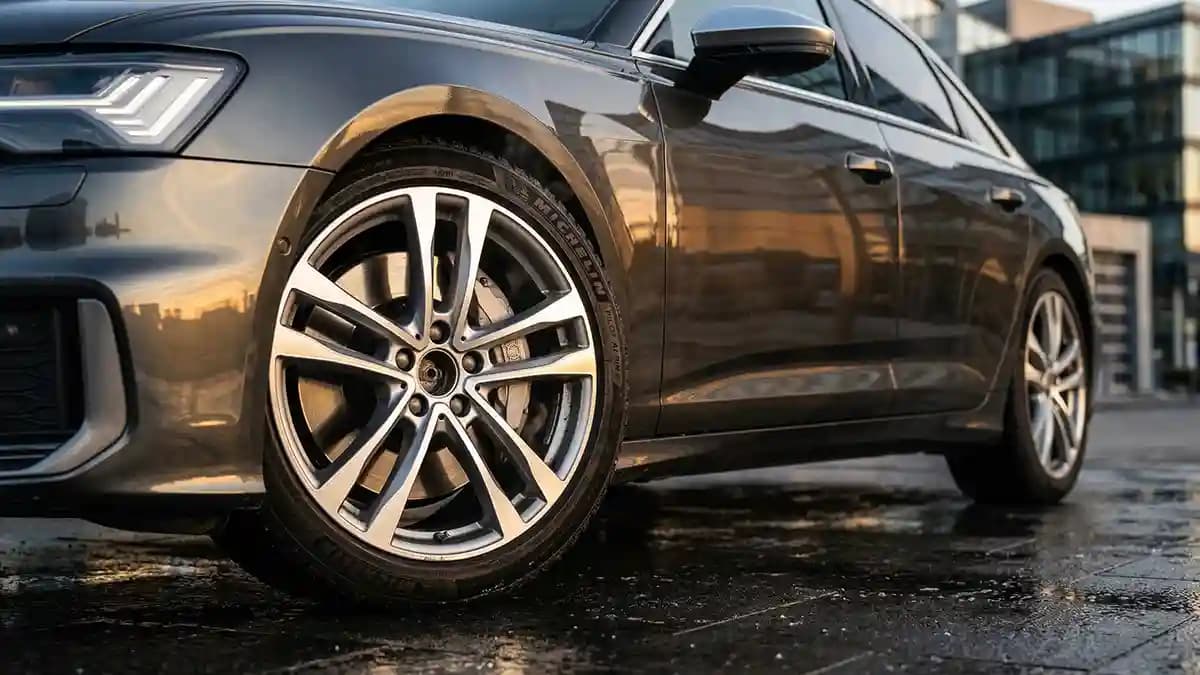
Factory emblems fall off because heat softens a tired bond, road salt creeps into tiny gaps, and high pressure washes finish the job by hitting the weak edge over and over. I know that sounds annoyingly simple, but that is the real answer to factory emblem failure, not some mystery defect from the sky. I was crouched next to a friend’s wheel last winter, coffee in one hand, missing center cap in the other, and the whole crime scene was right there on the rim. The glue had not failed all at once, it had been getting bullied for months.
That slow failure is what tricks people. One day the badge looks totally fine, then the next day it is gone and you blame the last car wash like it was a random act of violence. Most of the time, the wash was just the final punch. The bond was already cooked, crusted, or half lifted, and the water simply found the weak spot and did what water does best, it got rude.
I have seen this on OEM wheel caps, trunk badges, steering wheel overlays, and those tiny center emblems people never think about until one goes missing. The badge sits low on the car, right where brake dust, grit, hot water, cold water, salt spray, and every bad decision at the wash bay show up first. That is why I always tell people to treat a wheel emblem like a wear item with a fighting chance, not like a magic jewel that lives forever.
And here is the part nobody likes hearing, the emblem is often not the real problem. The weak point is the bond under it. Good adhesive systems are made to handle water and heat, and 3M says its automotive emblem adhesive fully cures in 24 hours and is built to resist both. 3M also says trim tapes should be applied around 60 to 110 degrees Fahrenheit if you want the bond to start strong.
The little death spiral starts at the edge
I learned this the dumb way on an old set of caps that looked perfect from five feet away. Up close, one edge had lifted maybe the width of a fingernail. Tiny. Easy to ignore. Two weeks later that same cap looked like it had been through a divorce.
That is how this goes. The edge lifts first, then water gets under it, then dirt sticks to the damp line, then the next heat cycle bakes that grime in place. Now the badge is not sitting on a clean smooth surface anymore, it is sitting on a nasty little crust ring that keeps growing every time the wheel gets hot and wet.
Once that ring starts, three things happen fast.
Water gets pulled under the emblem during washes and rain.
Brake dust and road grit act like sandpaper at the perimeter.
The adhesive loses full contact, so every hit of air and water pulls on less and less surface.
That is why a badge can hold for months looking almost normal, then vanish in one afternoon. The failure happened in slow motion. The disappearance just happened on camera.
Heat is the quiet bully
People blame winter first, because salt is dramatic and easy to see. But heat does damage long before snow shows up. Wheels live next to brakes. They sit in direct sun. They go from cold morning to hot highway to cool rinse in a stupidly short time. That kind of repeated expansion and contraction is rough on any bond that was installed dirty, installed cold, or installed with cheap tape.
I do not mean the emblem melts and slides off like cheese on a burger. Heat softens a marginal bond, helps trapped moisture move around, and lets a slightly lifted edge flex more every time the wheel warms up. Then the wheel cools, the material shrinks back, and the stress repeats. Again and again. Same tiny weak spot. Same tiny punishment.
Good automotive attachment systems are sold on heat stability for a reason. 3M describes its attachment tapes as chemically resistant and temperature stable, and says they are built for harsh exterior environments. Their high performance acrylic adhesive lines also emphasize resistance to edge lifting and short term heat exposure.
Here is where most people mess up in real life.
They install a new emblem in a freezing garage.
They press the middle, but not the full edge.
They wash the car the same day because it “looked stuck.”
Then spring sun hits the wheel and the weak bond starts moving.
If you want to browse options that are actually built for this kind of abuse, start with the wheel emblems section, then compare sizes in the BMW collection or the Mercedes collection. A cap that is off by one millimeter can look wrong even before it fails.
Salt does not need much space to cause trouble
Road salt is sneaky because it does not have to rip the emblem off by itself. It just has to help the weak edge stay wet and dirty. Once salty slush dries around the perimeter, you get residue sitting exactly where the badge needs a clean seal.
Tesla tells owners to thoroughly rinse road salt from the underside of the vehicle, wheel wells, and brakes during winter cleaning, and its maintenance guidance says salted roads can cause brake corrosion and justify regular service in those regions. AAA says salty water that clings to vehicles can accelerate rust and corrosion, which matters here because wheel emblems sit right in that splash zone.
The emblem itself may still look shiny. That is what makes people trust it. But the bond line can be filthy while the face still looks great. I have popped off old caps that looked decent from the front and found a horror movie on the back. White crust. Brown grime. Sticky residue that smelled like every slush puddle in February.
The bad part is that salt also changes how you wash. In winter, people rinse the car more aggressively because they are trying to blast grime off fast. That sounds smart, until the nozzle spends ten seconds hammering the very edge that is already contaminated. Now the salt weakens the bond, and the wash provides the force.
This is the routine I trust when a car sees winter roads.
Rinse the wheel and cap face with normal water first.
Wash with mild car shampoo, not random kitchen soap.
Dry the cap face fully.
Wipe the exact bonding spot with isopropyl alcohol if you are installing a new emblem.
Let the part sit, dry, and warm before you press anything down.
It is boring. It works. Most good installs are boring, and that is why they last.
High pressure washes get blamed last, but they are usually the finisher
Here is my honest opinion. A healthy bond can survive normal washing. A dying bond cannot survive a bad wash routine. That is why people swear the car wash “caused” the badge to fall off. It probably did, but only in the same way a final kick knocks over a chair that was already missing two legs.
3M’s car personalization cleaning guidance is pretty blunt about pressure washing around films and graphics. It says use a wide spray pattern, keep pressure to 1,200 psi or less, and keep the nozzle at least 12 inches away when spraying perpendicular to the surface, or much farther if spraying at an angle. That is because concentrated water is violent when it hits an edge.
I have watched people do the exact opposite. They get six inches away, use a tight stream, and aim right at the seam because they think the seam is “where the dirt is.” Yes, and it is also where the adhesive ends. Congratulations, you found the part you should stop attacking.
The worst combo looks like this.
Old emblem with one corner slightly lifted.
Winter grime packed at the perimeter.
Hot wheel from driving.
High pressure nozzle aimed straight at the edge from too close.
That is basically a physics lesson with a sad ending.
This is also why I keep telling people not to judge a badge only by the face. The face is just the pretty part. The edge is the truth. If the edge looks dry, rough, or dirty, the badge is already on borrowed time.
What usually fails first, the emblem, the tape, or the cap
Most of the time it is the bond to the cap surface, not the printed face. That matters, because replacing only the pretty part without fixing the surface is like painting over mold and acting surprised when it comes back. You need a clean landing zone. You need the right size. And you need the adhesive to sit on a flat area that actually matches the part.
That is why I like pairing this post with the guide on aero wheel caps without losing range and the post on stealth domed emblems for Tesla and Rivian. Different cars, same lesson. Clean surface. Correct diameter. Calm install. Leave it alone.
If you are replacing a lost badge on something nicer, I would rather see you use a properly sized Porsche wheel center caps overlay or a clean set of Porsche wheel emblems than fight a half dead OEM face that already started lifting. Sometimes the cheapest route is the one that makes you buy twice.
My garage test for whether a badge is about to leave your life
You do not need a microscope. You need eyes and maybe one clean fingernail. I check five things.
Look for a dark dirt ring around the edge.
Look for one side that reflects light differently from the rest.
Touch the perimeter very lightly and feel for a sharp edge lift.
Check whether the cap surface under the emblem looks flat or slightly bubbled.
Think about the last month, heat, winter salt, or aggressive wash bay use.
If you check three of those boxes, I stop trusting the badge. Not because I like drama, but because I know where this movie ends. Usually in a parking lot. Usually when you notice one wheel looks weird. Usually right after the badge has taken a one way trip into traffic.
How to stop it before it happens
You are trying to protect the bond line. That is the whole game. Everything else is decoration.
Do this.
Clean the cap face like you mean it.
Remove salt and grime often in winter.
Keep strong water away from the emblem edge during the first day after install.
Avoid installing in a cold garage when the part feels like ice.
Use the right size so the emblem sits inside the flat circle, not over a lip.
Press the full perimeter, not just the middle.
3M’s surface prep guidance for VHB tapes says most surfaces are best cleaned with an IPA and water mix before bonding, which lines up perfectly with what actually works on wheel caps in the real world. Clean surfaces are not a nice bonus. They are the whole foundation.
And give the adhesive time. If the adhesive system needs a day to fully cure, then washing the car right after install is not “testing quality,” it is sabotaging the bond. 3M states full cure for its emblem adhesive at about 24 hours, and that number is worth respecting even if your badge feels secure right away.
Why some factory badges still fail even when you did nothing wrong
Because life at wheel level is brutal. OEM parts are built to a cost, cars live outside, and not every driver gets gentle weather, gentle cleaning, or clean roads. Even a decent badge can lose the fight after years of heat cycles, salt exposure, curbside grime, and wash bay abuse. Sometimes nothing dramatic happened. Time happened.
That is why I do not get sentimental about worn emblems. I like factory looks, sure. But once a badge starts lifting, fading, or corroding around the edge, I am not hanging on out of loyalty. I want the wheel to look right again. Fast. Clean. Done.
A missing emblem sounds tiny until you see the wheel without it. Then it is all you can see. Like a missing tooth. Small detail, huge irritation.
Quick Q and A
Q: Do factory emblems usually fall off all at once?
No. They usually fail slowly at the edge first, then one wash or one hot day finishes the job. The final moment feels sudden, but the weakness was there for a while.
Q: Is heat really enough to weaken a wheel emblem?
Yes, especially when the bond was dirty, old, or never fully cured in the first place. Heat by itself is not always the killer, but it makes a weak edge move more.
Q: Why is road salt so bad for center caps and badges?
Salt keeps grime sitting right at the seam and makes winter cleaning more aggressive. The emblem lives low on the car, so it gets blasted with the exact mix you do not want near an adhesive edge.
Q: Are high pressure car washes safe for emblems?
They are safe only when the bond is healthy and your technique is not reckless. Too much pressure, too close, aimed right at the seam, that is how a weak badge gets evicted.
Q: What is the best time to replace a lifting emblem?
Before it disappears. Once you see edge lift or a dirt ring, fix it while you still have the cap in your hand, not after the badge is gone and the wheel looks unfinished.