
Custom Wheel Center Cap Stickers: How to Order a Design Made for Your Exact Wheel
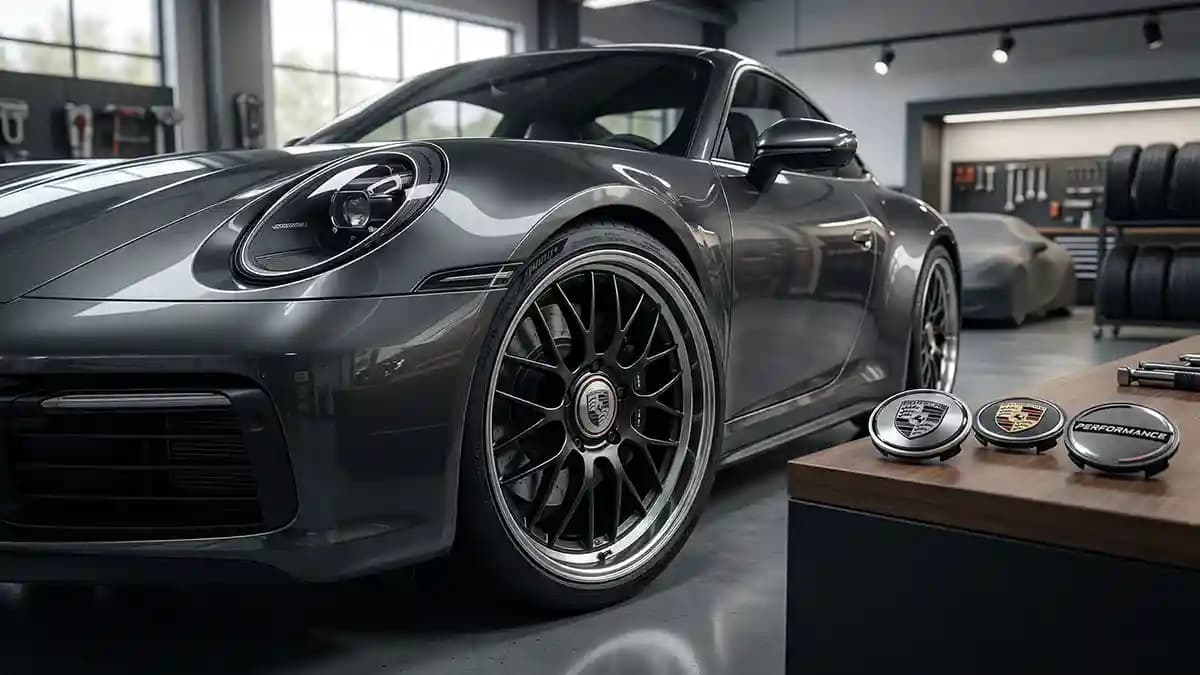
ICustom wheel center cap sticker orders are easy to get right when you buy for the exact wheel in front of you, not the car name in your head. Last week I was crouched next to a clean set of aftermarket rims with a guy who had done the expensive part already. New wheels, nice brakes, good stance, the whole thing looked sharp until you got to the middle. Right there sat four sad blank caps that made the car look half dressed.
A custom wheel center cap sticker fixes the part your eye keeps finding, but only when the size, shape, surface, and artwork all match the cap you actually have. Skip one of those and the whole wheel looks just a little bit wrong.
On the live Impossible Stickers site, custom help is already built into the process, with almost any size available and a request to send a quick photo when you need a custom size, shape, or design. The fit starts with good info, not guessing.
Why custom orders go wrong so fast
Most bad orders do not fail because the print was ugly. They fail because the buyer ordered like a shopper and not like a mechanic. I have done that too. I saw a logo I liked, guessed the size, pressed buy, then spent five minutes staring at a badge that was off by just enough to make me grumpy.
Here is where people waste money.
They measure the whole cap instead of the flat face the sticker will sit on.
They order by car model even when the wheels are aftermarket.
They forget that one trim level can have more than one wheel and more than one cap.
They send one dark blurry photo that looks like it was taken during a mild earthquake.
They choose a design first and ask fit questions later.
That first mistake is the big one. Impossible Stickers has already said in recent posts that the flat visible circle is what matters, and that even a 1 mm mistake is enough to make a badge sit on the lip instead of the flat face.
First, make sure you need a sticker and not a new cap
This sounds obvious, but people mix it up all the time. Some wheels want a full snap in cap. Some only need a face overlay. Some do not use center caps at all. And some treat the cap as an extra part, not a standard part.
Tire Rack says some wheel applications use original equipment hardware, do not use center caps, or have caps only as an optional accessory. That matters because a custom sticker is for the visible face, not for fixing a broken clip system behind it. If the cap body is cracked, loose, or missing, fix that first.
I use this quick rule every time.
If the cap body is there, flat, and solid, a custom domed sticker is usually the smart move.
If the cap is missing but the wheel accepts a replacement cap, get the cap body first, then size the emblem.
If the cap face is curved like a tiny cereal bowl, stop and check whether the surface is really sticker friendly.
If the whole wheel center hardware is weird, send photos before ordering anything.
That last step saves a lot of pain. It is how you catch the weird stuff early, the beveled edge, the recessed face, or the lip that steals a millimeter.
What I measure before I order a personalized wheel emblem
I keep this part simple because fancy routines make people give up. You need the flat face size, the shape of that face, and how much room the dome has before it climbs onto an edge.
Here is my usual measuring checklist.
Clean the cap enough that you can see the true edge of the flat landing area.
Measure the flat visible circle in millimeters, not the full cap from outer lip to outer lip.
Check if the face is truly flat or if it starts curving near the edge.
If the cap has a recess, measure the usable width inside that recess.
Take the same measurement twice, because your first reading is often the liar.
If the wheel is rare or aftermarket, photograph the cap next to the measurement.
Digital calipers are worth it here. Impossible Stickers points out that calipers can measure outside dimensions, inside dimensions, steps, and depth, which is why they beat a cheap ruler for wheel centers and odd cap shapes. Their recent guide on discontinued rims says the job usually comes down to exact millimeter sizing and, when original stock is gone, a custom domed overlay for the visible face.
What to send when you ask for a custom wheel badge
This is the part nobody explains well, so I will. Do not send a message that says, “I need four custom caps for my Audi” and then vanish. That is how you start a long back and forth that feels like homework. Give the person making the badge what they need in one shot.
Send these five things.
A straight photo of the wheel from the front.
A close photo of one cap, or the cap area if the cap is missing.
The exact millimeter size of the flat face.
The design you want, brand style, text, color, logo, or all of that.
The quantity, usually four, unless you are replacing one runaway cap.
That is enough for most jobs. If the shape is unusual, add one angled photo too. On the contact page, Impossible Stickers says the team is happy to answer questions or provide an estimate, and says it gets back within 24 hours during business days.
Also, stop being vague about style. “Black logo” is not a design brief. Gloss black, satin black, brushed silver, color matched accent, heritage look, or clean OEM style, those are actual directions.
How I choose the right custom domed sticker design
The best design is usually the one that looks like it belonged there from the start. People think custom means loud. It does not. Some of the cleanest jobs I have seen were dead simple, black and silver, brushed metal look, or a subtle logo swap that matched the brake calipers and trim.
I break design choices into four lanes.
OEM look
Best when you want the wheel to look fresh again, just not boring.Stealth look
Best for black wheels, smoked trim, and builds that look mean without shouting.Motorsport look
Best when the car already has stripes, bright calipers, or obvious performance cues.Personal joke or club look
Best when you know exactly what crowd you are building for.
The only bad lane is the confused one. Match the cap to the wheel finish first, then the body trim, then the mood of the build.
The material part people ignore
A wheel center gets brake dust, soap, sun, grime, and fingers all year. Impossible Stickers says its domed products are made in house with printed vinyl, precision cutting, and a clear resin dome, and its live listings describe a premium vinyl base topped with a 3D domed resin coating built for scratch resistance, water resistance, tear resistance, and UV resistance.
That is why I lean domed for wheel centers. It has more visual depth and looks more finished than a dead flat print.
Surface prep matters more than your logo file
Here is the rude truth. You can send the cleanest artwork on earth and still ruin the result with a dirty cap. Oil, wax, old glue, road film, and dried dressing products are the little gremlins that make a badge fail early. Then people blame the sticker when the real villain was whatever mystery goo lived on the surface.
3M says most surfaces are best prepared with a 50 to 50 mix of isopropyl alcohol and water before adhesive application, and says heavier oil, grease, or oxidation may need more prep first. That lines up with the simple install routine used across the recent Impossible Stickers posts too, clean the face, degrease it, dry it, align it, press it, and leave it alone.
My prep routine is boring on purpose.
Wash the wheel and cap face first.
Remove old glue, wax, and grime fully.
Wipe the landing area with the IPA mix on a clean cloth.
Let it dry all the way.
Test fit the sticker before you peel anything.
Press from the center out and do not keep lifting it to “just fix one tiny thing.”
That last move kills more installs than people admit. Once adhesive touches clean paint or plastic in the right spot, stop poking it. Set it, press it, done.
When a custom wheel center cap sticker is the best answer
A custom job is not only for people who want a wild logo. Sometimes it is the cleanest fix when stock parts are gone or hard to match. One old wheel, one missing cap, one changed finish, and suddenly you are on page eleven of search results asking yourself bad life questions.
This is where custom shines.
Discontinued rims with no easy OEM support.
Aftermarket wheels with blank caps that look cheap.
Builds where you want the wheel center to match brake calipers or trim.
Club cars, event cars, and shop builds that need a shared identity.
One off restorations where the cap body is fine but the face is ugly.
Impossible Stickers recently tied the demand for these fixes to older cars and discontinued rim emblems, and that rings true the second you start looking for small finish parts no longer stocked by the original wheel maker.
My simple order workflow that saves headaches
When somebody asks me how to order a custom wheel badge without screwing it up, this is the exact flow I give them. It is not sexy. It works.
Confirm whether you need a face sticker or a full replacement cap.
Measure the flat visible landing area in millimeters.
Take clear photos from the front and at a slight angle.
Pick the design mood, OEM, stealth, motorsport, or personal.
Send photos, size, and quantity together in one message.
Order one set with confidence instead of three sets with regret.
And yes, use the contact page when the wheel is odd, the cap is missing, or the design is custom. The site invites custom questions, offers estimates, and says replies come within 24 hours during business days. (Impossible Stickers)
If you want a place to start browsing, look through the Wheel Emblems section first, then use the contact page when your wheel needs a custom path. And before you send the message, read Millimeters Matter: How to Use Digital Calipers for a Perfect Fit and Finding Emblems for Discontinued Rims: A Solution for Older Cars. Those two posts will save you from the usual dumb mistakes.
The mistakes I would avoid every single time
Most ordering mistakes are not tragic. They are just annoying and expensive. Do not do this.
Do not measure with your eyes.
Do not trust a marketplace title over your own wheel.
Do not assume one brand uses one cap size forever.
Do not order for a curved face like it is flat.
Do not skip prep and then blame the adhesive.
Do not choose a loud design when the rest of the car is quiet.
A wheel center is tiny, but it has a weird amount of power. Get it right and the whole wheel looks finished. Get it wrong and the eye goes there every single time.
Quick Q and A
Q: How do I know if I need a custom wheel center cap sticker or a full cap?
If the cap body is still there and the flat face is solid, a sticker is usually enough. If the clips are broken, the cap is missing, or the hardware is damaged, fix that first.
Q: What size should I send when ordering a custom wheel badge?
Send the flat visible face size in millimeters, not the full cap width. That is the number the sticker actually has to live on.
Q: Can I order just one personalized wheel emblem?
Yes, but most people order four so the set matches. One piece makes sense when one cap vanished and the other three still look good.
Q: Are custom domed stickers better than flat printed stickers for wheel centers?
For most wheel builds, yes. A good dome gives more depth, a more premium look, and a cleaner finished feel on the car.
Q: What is the fastest way to get the design right on the first try?
Send a straight wheel photo, a close cap photo, the exact millimeter size, and the style you want in one message. That gives the maker enough to answer with something useful instead of twenty follow up questions.
The short version is simple. Measure the flat face, send clear photos, choose a design that fits the mood of the wheel, and use a proper custom route when the job is not standard. Do that, and a custom wheel center cap sticker stops being a gamble and starts being one of the easiest visual wins on the whole car.