
Customizing the E30: A Restoration Guide for Vintage BMW Badges
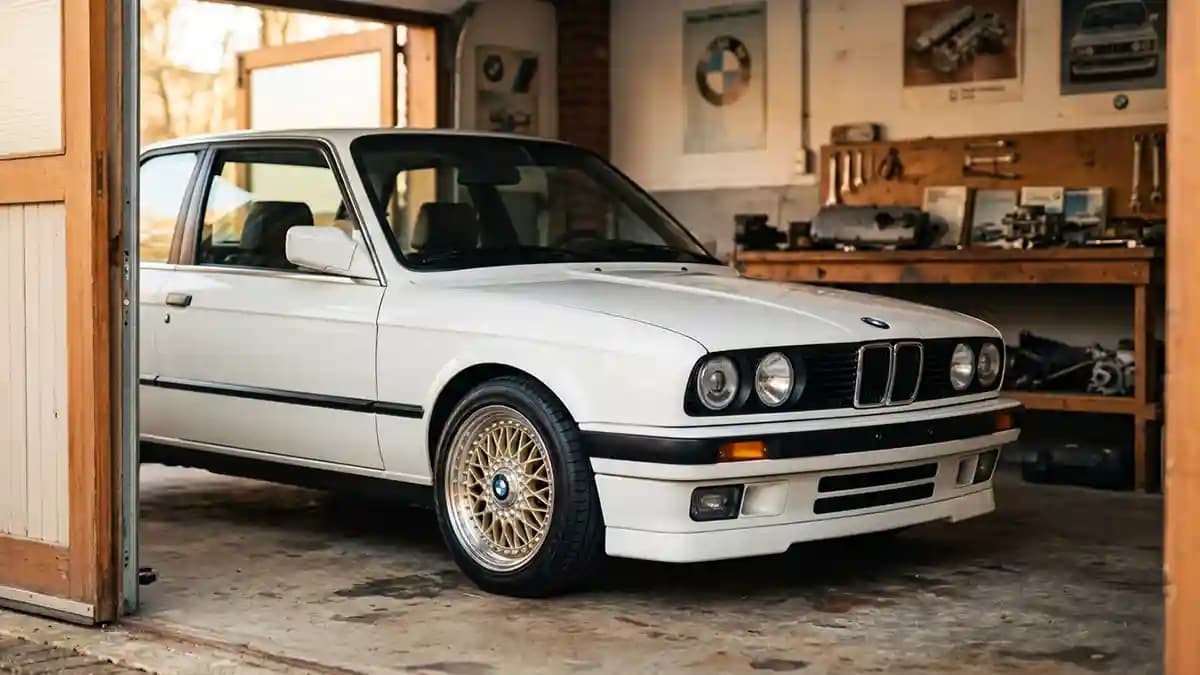
BMW E30 restoration looks right when the badges match the age, face size, and style of the wheel, not when you slap on the first shiny roundel you find. I learned that bent over a red coupe with one clean basketweave and one cap that looked like it came off a toy. From ten feet away the car was gorgeous. Up close, that wrong badge ruined the whole vibe like a cheap button on a nice jacket.
That is the funny thing about old BMWs. You can spend real money on paint correction, bushings, tires, and trim, then get smoked by a tiny circle in the middle of the wheel. The E30 deserves better than that. These cars launched in 1982, grew into a huge family of body styles, and the Touring stayed in production through 1994, while the whole E30 line cleared more than 2.3 million units, so there are a lot of cars, a lot of wheels, and a lot of mixed up parts out there.
And the legend part is real too. BMW M says the M3 was shown in Frankfurt in 1985 and the first road cars arrived in 1986, which helps explain why people get so obsessive about getting the small details right on an E30. When a car has that kind of history, bad badges stand out fast. Nobody wants a proper old school build with a center cap that looks confused.
Why vintage BMW badges matter so much on an E30
I always tell people the wheel center is where your eye lands after the body line and stance. Not the tire brand. Not the valve cap. Right there in the middle, the part staring back at you every time the wheel stops rolling. On an E30, that spot carries a lot of weight because the whole car is clean, square, and honest, so a sloppy badge looks extra sloppy.
BMW Group Classic still supports classic owners with spare parts, reproduction parts, and a network of Classic partners, which is great news if you are trying to keep an E30 close to original. But badge faces and center caps still become a headache because they fade, pit, crack, fall off, or get swapped when wheels change hands three owners ago. I have seen beautiful cars running correct paint and trim with center badges that looked like cereal box prizes. That tiny detail tells on the whole restoration.
Here is where most people mess this up. They shop by logo first. Wrong move. On an E30, you shop by cap body first, visible flat face second, and logo style third. Get that order backward and you end up with a badge that fits like a coin dropped into a sink.
The three badge routes that actually work
I have done this enough times that I sort every E30 into one of three buckets before I buy anything. It saves money, it saves time, and it keeps you from rage staring at your own wheels in the driveway.
You still have the original BMW caps, but the faces are faded.
This is the easy win. Clean the face, measure the flat landing zone, and use an OEM style domed overlay that keeps the original cap body in place. You keep the old hardware and fix the look.Your caps are present, but the old emblem is cracked, yellowed, or bubbling.
This is the classic middle ground. Remove the dead face, clean the glue, and apply a fresh badge sized for the exact visible circle. The cap lives on, the ugly part goes in the trash.Your E30 is on BBS or other period correct aftermarket wheels.
Now you stop pretending one BMW size solves everything. Classic BBS setups often live around the 70 mm area, while other BBS cap families use different sizes, so you measure the cap you have, not the wheel story you were told on the internet at 1 a.m.
That third group is where the real fun starts. Factory E30 wheels and basketweaves have their own logic. BBS wheels have another. And then you get the guy who says, “I think these are original,” while holding a wheel that has changed hands since the Clinton years. You do not need guesses. You need a ruler, a calm brain, and five minutes.
E30 center caps, size first, logo second
The smartest thing you can do in any BMW E30 restoration is measure the visible flat face of the center cap. Not the outer lip. Not the back clip area. Not the part your thumb wants to count because it looks round enough. The sticker or domed badge cares about the front face where it actually sits.
I keep the rule stupid simple.
Remove one cap if you can do it safely.
Measure the flat front circle edge to edge in millimeters.
If the number is exact, buy that size.
If the edge is tight or slightly rounded, go 1 mm smaller.
Dry fit before peeling anything.
That simple check beats forum guessing every single time. Your own size database post says the same thing in plain English, because sticker fitment follows the front face while full cap fitment depends on clips and depth too. That is why one E30 owner swears by one number and another owner swears he bought the same thing and it did not fit. Half the time, they are talking about two different parts.
And if your car runs classic BBS wheels, read the BBS collection with a tape measure in your hand, not blind hope in your heart. Your own BBS sizing guide points out that classic RS style caps often sit in the 70 mm zone, while other BBS families use 56 mm or 70.6 mm, which is exactly why random buying goes bad so fast. That one detail alone saves people from ordering a beautiful badge that fits like a manhole cover on a teacup.
I also like to decide the visual language before I order. A stock, clean, period correct E30 wants a badge that feels close to the original tone and proportion. A mildly tuned car with a lower ride height and sharper wheel finish can handle a darker or glossier look. But even then, size still wins. The coolest badge on earth looks dumb when it leaves a weird ring around the edge.
Choosing the right vintage BMW badges for factory wheels and BBS builds
When I want the safest route, I start with the BMW collection. It keeps the look tight and familiar, and it is the right move when the goal is “make it look correct,” not “make it loud.” The BMW Wheel Emblems Premium Edition page also shows the practical stuff I care about, premium vinyl under a 3D domed resin top, sizes from 20 mm to 120 mm, and durability traits like UV, water, scratch, and tear resistance. That is the sort of boring information that saves money later.
For a factory wheel car, I usually stick with the classic full color roundel look. It fits the age of the E30 and does not fight the lines of the car. On a darker build with shadowline trim, black centers, or a slightly meaner stance, a darker emblem can work, but I still keep the artwork tidy. Vintage BMW badges look best when they act like they belong there, not when they scream for attention.
For BBS builds, I treat the cap body as the boss. If the car is wearing BBS wheels and the goal is a period feel, I want the badge to honor the wheel first and the BMW story second. Sometimes that means a clean BBS face. Sometimes it means a BMW look sized for a BBS cap. Either way, you win by respecting the cap body and the era, not by forcing one logo idea onto every wheel in sight.
The install is where good restorations stay good
I have seen people spend days chasing the right badge and then ruin it in sixty seconds with greasy fingers and bad aim. Do not do that. The install is not hard, but it does punish lazy prep like a school principal with no sense of humor.
This is the routine I trust.
Wash the cap and dry it fully.
Wipe only the bonding area with isopropyl alcohol.
Let that surface flash dry.
Test the badge position before peeling.
Peel the backing without touching the glue any more than needed.
Set one edge, then lower it in a controlled motion.
Press from the center out, then work the full edge.
Leave it alone and skip rough washing right away.
Your recent install and removal posts line up with that exactly. The removal guide says gentle heat and soft tools stop you from chewing up the old cap, and the newer wheel sticker posts repeat the same prep logic, measure the flat circle, clean the landing zone, and press from the center outward. That is not glamorous advice, but it works. And stuff that works is my love language.
If the old badge is crusty, use the process from How to Remove Old Wheel Stickers Without Damaging Your Center Caps before you rush into the new install. Old glue left on the face will print through the new badge and make the surface look lumpy. You want the cap face flat, clean, and boring. Boring wins here.
What makes an E30 badge look period correct instead of fake
This is where taste matters. A real period correct feel usually comes from restraint. The old E30 design language likes clear shapes, good proportion, and finishes that do not look like they were borrowed from a gaming mouse.
I use a quick filter before I buy.
Respect the age of the car.
A bright modern effect on an otherwise stock E30 looks out of place fast.Match the wheel finish.
Silver basketweaves, polished lips, and classic BBS faces want badges that speak the same visual language.Avoid a floating look.
A badge that is too small leaves a ring around the edge and screams “wrong size.”Avoid over thick art on tiny caps.
Small center faces need clean lines or the badge turns muddy.Pick one story and stick to it.
Factory BMW look, Alpina inspired feel, or BBS heritage vibe. Mix all three and the wheel starts arguing with itself.
This is also why I like pointing readers to The Complete Wheel Center Cap Size Database: Common Sizes for 50+ Car Brands when they are still in the guessing phase. It helps people separate cap size from logo fantasy before money leaves the wallet. A little discipline up front beats a drawer full of almost right parts.
My honest rule for BMW E30 restoration
If the cap body is solid, save it. If the face is ugly, cover it right. If the size is unknown, measure it before you buy a single thing. That is the whole play.
I love full OEM restorations, but I also know reality. Sometimes original caps are rare. Sometimes old faces are too far gone. Sometimes your E30 has lived three different lives and now sits on wheels no factory brochure ever imagined. Fine. You still get a clean result when you stop chasing myths and start working with the exact cap in your hand.
And that is why small badge upgrades punch so hard on these cars. The E30 already has the shape, the stance, and the history. It does not need help becoming cool. It needs the tiny details to stop getting in the way.
Quick Q and A
Q: What is the best badge style for a stock E30?
A full color OEM style roundel usually looks the most right on a stock or lightly restored car. It matches the era and keeps the wheel from looking overdone.
Q: Do all E30 center caps use the same badge size?
No. Factory caps, replacement caps, and BBS caps can all use different visible face sizes. Measure the flat front face every time.
Q: Should I replace the whole cap or just the badge face?
If the cap body is solid and only the face looks rough, a domed overlay is the smart move. It saves money and keeps the original cap hardware in service.
Q: Are domed badges a good fit for a classic car restoration?
Yes, when the artwork and size are right. They give you the clean OEM style look people want, without forcing a full cap replacement on every wheel.
Q: What is the biggest mistake people make with vintage BMW badges?
Buying by logo first and size second. Wrong order, wrong fit, wrong look.
Q: How soon can I wash the car after applying new badges?
Give the adhesive time to settle and reach strength before you get aggressive with washing. Patience here saves you from doing the job twice.