
The History of Car Wheel Emblems: From Hood Ornaments to Domed Center Caps
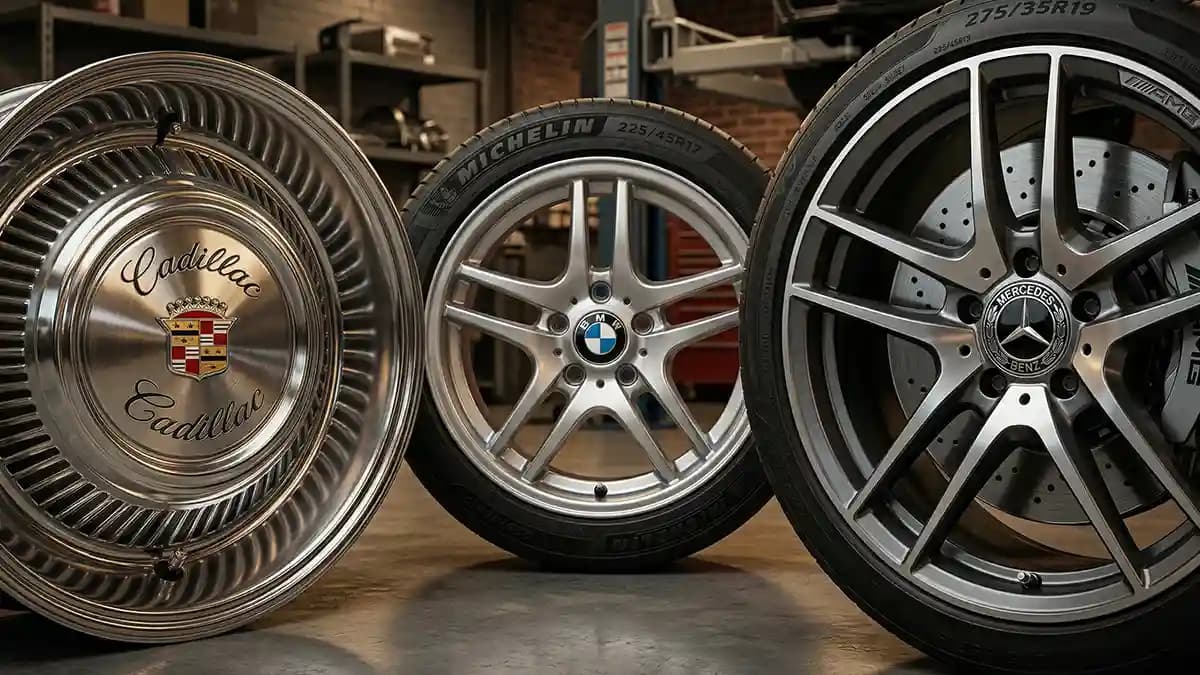
The history of car wheel emblems is really the story of branding moving from tall hood ornaments to neat little center caps, because cars got lower, safer, cleaner, and way more obsessed with the small details. That is the straight answer right up front. What began as a practical bit on an exposed radiator turned into rolling sculpture, then got pushed flatter by safety and design, and finally landed right in the middle of the wheel where your eye still goes first. If you want the short version, the badge did not disappear, it just kept shrinking and getting smarter.
I was standing next to an old luxury sedan at a local meet a while back, coffee in one hand, dusty microfiber in the other, and the thing that grabbed me was not the paint or the chrome. It was the badge path. Up front, this old car had a proud little ornament like it wanted applause. Down at the wheel, a much newer car nearby had nothing dramatic at all, just a tight clean center cap sitting there like it knew drama was for people with free time. That was the whole arc of car emblem evolution in one parking row.
The first car emblem evolution was practical, not fancy
Before hood ornaments became ego on a stick, they had a job. Early motorists used Boyce MotoMeters on top of the radiator to keep an eye on coolant temperature, and car makers turned those visible caps into branded mascots. Museums covering Packard and Studebaker history both point to the same shift, once radiator caps moved under the hood in the 1930s and dash gauges took over, the mascot lost its function and stayed on as decoration. So yes, the first famous car emblems were stylish, but they started with grease, heat, and a driver trying not to cook an engine.
Here is what those early front end emblems were really doing.
They gave drivers a visible point right on the radiator where useful hardware already lived.
They turned a boring cap into a brand signal people could spot from down the street.
They let luxury makers show off in a way that felt theatrical, because early cars loved a bit of theater.
They gave owners something memorable to brag about, which humans have always enjoyed way too much.
They created a habit that never really left, put the brand where the eye lands first. That habit later moved to the grille, the wheel, the steering wheel, and even illuminated EV logos.
Some brand marks from that era still carry huge weight. Rolls Royce says the Spirit of Ecstasy was crystallized in 1911 by Charles Sykes and remains a defining ornament to this day. Mercedes traces its star and Benz laurel wreath back to trademark moves in 1909 and 1911, and Toyota openly frames its own emblem story as a long path from the 1936 Toyoda mark to the 1989 oval design people know now. That matters because car branding was never just a sticker slapped on at the end, it became part of how each maker told you who they were before you even opened the door.
Then the mood changed. Lower hoods, smoother noses, and pedestrian safety pressure made upright ornaments harder to justify, and that is not just nostalgia talking. NHTSA says its proposed pedestrian protection standard uses head to hood impact testing to reduce serious injury, and even broad history pieces from major car media point out that rigid stand up ornaments faded because they were not exactly friendly in a crash. Put simply, the hood stopped being the best stage for a badge that stuck up into the air like a tiny chrome spear.
Center cap history starts with dirt, grease, and one boring little cover
This is the part people skip, and it is why they miss the whole point. The wheel center was not born glamorous. The Henry Ford notes that early automobile wheels had a central hub with a greased bearing, and hub caps kept grease in and dust out. It also points out that by 1915 a supplier in Wisconsin was already making hubcaps for many manufacturers, and that even after they became less necessary for function, they stayed important for style and marketing. That last line is the magic trick, because it explains how a humble protective piece slowly turned into one of the cleanest branding spots on the whole car.
Once you see that, the move from hood ornament to center cap stops feeling random. The car body got smoother. The hood got busier with safety and airflow demands. The grille had to share space with sensors, cooling, and brand cleanup. But the wheel center stayed right there, round, visible, and begging for a logo.
Here is why the wheel took over as the smart place for a badge.
It kept the brand visible without sticking anything dangerous up into the airflow. That mattered more as front ends got cleaner and safety rules got stricter.
It turned a functional cover into a style point. The Henry Ford says hubcaps went from useful hardware to style and marketing, which is basically the whole center cap story in one sentence.
It matched the rise of styled wheels. Once wheels stopped looking like plain hardware and started looking like design pieces, the center needed a proper signature. That is an inference, but it fits the historical shift from protective caps to visible branding.
It let brands stay present even when the hood and grille got visually calmer. A small round logo in the center still says, “Yes, this is the car you think it is,” without shouting.
It gave owners a replaceable detail. A tired center cap can make a clean wheel look cheap, and a fresh one can fix the whole thing in minutes. Anyone who has stared at one faded cap next to three decent ones knows that pain.
Wheel badge design got smaller, flatter, and smarter
You can see the next shift happening right now. Nissan said its redesigned logo would appear in both physical and illuminated forms, with electric vehicles getting an illuminated version lit by 20 LEDs. CUPRA says the Tavascan uses an illuminated logo as part of its new identity, and Tesla still sells official Model 3 Aero Wheel Covers built around the idea that a wheel cover is not just decoration, it is part of the car’s intended setup. The front badge is becoming a light element, the wheel badge is becoming a clean precision detail, and both are being asked to work harder with less fuss.
That cleaner direction is not just a one brand thing. Bentley unveiled a new Winged B in July 2025 and called it only the fifth version in 106 years, which tells you how carefully big car brands now treat emblem shape. Toyota frames its emblem history as a clear path from the older Toyoda mark to the oval form used since 1989. So when people say modern logos look flatter and calmer, they are not imagining it. The loud ornament era gave way to badge systems that have to work on cars, on screens, in lights, and on wheel centers without looking messy.
This is where center cap history gets fun. The badge did not lose meaning when it got smaller. It got concentrated. The hood ornament used to announce the brand from far away. The wheel emblem now finishes the car from up close, where owners and other car nerds do the real judging. Harsh truth, a wheel can be spotless and still look off if the center cap looks like an afterthought.
Why domed center caps feel like the natural ending to the story
Domed center caps make sense because they fix the one problem flat printed badges often have, they can look dead. On the Impossible Stickers production page, the doming step is described as a clear resin layer that settles into a smooth dome, adding depth, gloss, protection, and a more factory badge feel. That is important because the wheel center lives in a tough little zone full of brake dust, road grime, and close up scrutiny from people who squat next to cars for fun. A dome gives that tiny branding space some shape again, almost like a small polite nod to the old sculptural age, just without the sharp metal spear energy.
Here is what a good modern wheel badge is doing, when it is done right.
It lands on the flat visible face, not on a curved lip that will make you hate life later. The site’s fit guides keep hammering that point for good reason.
It adds visual depth without needing a huge ornament. The dome gives the logo some body, which is why it can feel closer to a real badge than a flat print.
It keeps the brand where people still look. Even on aero wheels or quiet EV designs, your eye still checks the center.
It is easier to refresh than a full hardware swap. A worn center can often be fixed faster than people think, which is exactly why the little details sell.
It respects the new design language. Modern cars like cleaner faces, calmer logos, and tighter detail work, and a neat domed center cap fits that mood better than a loud chunky badge fighting the wheel. That last part is my read of where design has gone, based on the official moves brands are making right now.
I like that ending, honestly. The badge has come all the way down from the nose of the car to the center of the wheel, and somehow it still does the same basic job, telling you what kind of machine you are looking at and what kind of owner cared enough to finish it properly. If you are trying to refresh that last little detail, Shop wheel emblems is the obvious place to start, and How It’s Made is worth a quick look if you want to see why a smooth dome and a clean cut matter. If you are still sorting out whether you need a center cap, wheel cover, or dust cap, read The Hubcap Terminology Guide. And if you already know the part but not the size, Millimeters Matter will save you from the classic one millimeter mistake that makes grown adults say rude things at tiny circles.
Quick Q and A
Q: Were hood ornaments the first real car emblems?
They were some of the first highly visible ones, but many started as branded radiator mascots tied to useful hardware like MotoMeters. By the 1930s, the function faded and the ornament stayed as style.
Q: Why did car makers stop using big hood ornaments?
Lower hoods, cleaner airflow, theft concerns, and pedestrian safety pushed them out. Modern safety thinking focuses hard on head to hood impacts, which is bad news for anything rigid and pointy sticking up front.
Q: What was the original job of a hubcap or center cap?
The early job was boring but important, keep grease in and dust out around the hub and bearing area. Later, that same piece became a style and branding spot.
Q: Why do domed center caps look better than flat stickers on many wheels?
Because the dome adds depth, gloss, and a badge like feel while also protecting the print. On a wheel center, that extra shape does a lot of visual work without making the design loud.
Q: What is the biggest mistake people make when replacing a wheel emblem?
They measure the wrong part. Most people measure the outer lip or guess by eye, when the number that matters for an overlay is usually the flat visible landing zone.